
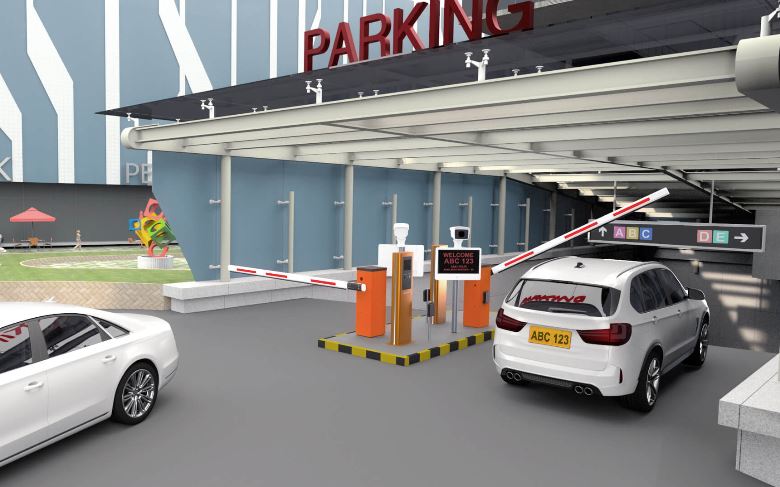
How ANPR Technology Is Driving Saudi Arabia Vision 2030 Smart City Goals
The landscape of urban management in the Kingdom of Saudi Arabia (KSA) is undergoing a radical transformation. Central to the Saudi Vision 2030 initiative—a strategic framework designed to reduce dependence on oil, diversify the economy, and develop public service sectors—is the rapid development of “Smart Cities.” These urban environments rely heavily on the seamless integration of data-driven infrastructure. Among the most critical technologies facilitating this transition is Automatic Number Plate Recognition (ANPR), which serves as the backbone for intelligent traffic management, enhanced public safety, and streamlined municipal operations.
As Saudi Arabia constructs colossal projects like NEOM, The Line, and the expansion of Riyadh, the sheer scale of urban mobility requires a sophisticated digital nervous system. ANPR technology has evolved from simple surveillance to a complex ecosystem involving artificial intelligence, edge computing, and real-time analytics. By capturing and interpreting vehicle data at scale, ANPR systems are not just monitoring traffic; they are actively optimizing the flow of goods, people, and services, thereby aligning with the Kingdom’s goal to become a global leader in high-tech urban living.
Executive Briefing
- High-Accuracy Edge OCR: Advanced deep-learning inference engines achieve over 99.4% optical character recognition across diverse plate typographies.
- Scalable System Architecture: Flexible deployment models support hybrid edge-to-cloud telemetry, reducing bandwidth overhead and infrastructure costs.
- Enterprise Compliance & Integration: RESTful APIs, webhooks, and secure MQTT streaming enable seamless integration with existing enterprise management dashboards.
Quick Answer / Core Takeaway: ANPR technology accelerates Saudi Vision 2030 by digitizing urban mobility, enabling real-time traffic optimization, enhancing automated law enforcement, and providing the granular data necessary for smart city infrastructure. By integrating AI-driven vehicle identification, Saudi Arabia reduces congestion, improves public safety, and creates a sustainable, data-centric foundation for hyper-connected urban environments like NEOM and Riyadh.
This guide explores the technical, operational, and strategic impact of ANPR within the Saudi context, providing an authoritative roadmap for stakeholders involved in the Kingdom’s rapid modernization.
Theoretical Foundations: The Role of ANPR in Smart Urbanism
At its core, ANPR technology—often referred to as License Plate Recognition (LPR)—utilizes optical character recognition (OCR) on images to read vehicle registration plates. However, in the context of Saudi Arabia’s 2030 goals, the application is far more sophisticated. Modern ANPR systems are integrated with Internet of Things (IoT) sensors, cloud computing, and machine learning models that can distinguish between vehicle types, colors, and even driver behaviors in real-time.
The transformation of a standard city into a “Smart City” relies on the ability to collect high-fidelity data without human intervention. ANPR acts as the primary data acquisition layer for vehicle movement. When combined with centralized traffic management platforms, this data allows for predictive modeling. For example, if an ANPR gateway detects a sudden influx of vehicles in a specific district, the system can automatically adjust traffic signal timings or update digital signage to divert flow, reducing carbon emissions and travel time—two key KPIs of the Vision 2030 environmental and efficiency targets.
Debunking Industry Misconceptions
- Myth 1: ANPR is merely a surveillance tool. Contrary to this belief, modern ANPR is an operational optimization tool. While security is a component, the primary value in the Saudi context is traffic flow optimization, parking management, and logistics efficiency.
- Myth 2: Implementation is a “set and forget” process. ANPR systems require continuous calibration. Environmental factors in Saudi Arabia, such as extreme heat, sandstorms, and varying light conditions, necessitate specialized hardware and adaptive software maintenance to ensure high read accuracy.
- Myth 3: ANPR is limited to road monitoring. In smart cities, ANPR is used for automated tolling, secure access control in residential compounds, and supply chain tracking, serving as a versatile digital identifier for the automotive sector.
Phase-by-Phase Implementation Framework for Saudi Smart Cities
Deploying ANPR infrastructure at the scale required by Saudi Vision 2030 projects requires a rigorous, multi-phased methodology. The following framework ensures compliance with local standards and technical efficacy.
Phase 1: Discovery and Technical Audit
The initial phase involves mapping the urban environment. Stakeholders must identify high-traffic corridors, bottleneck points, and security-sensitive perimeters. A technical audit of existing network infrastructure is required to ensure that the fiber-optic backbone can support the high-bandwidth video feeds generated by high-definition ANPR cameras. Experts at ANPR Watch emphasize that the quality of the optical capture is the single most important factor in long-term system reliability.
Phase 2: Strategic Blueprint and Hardware Selection
Once the audit is complete, the selection of hardware must prioritize resilience. Given the KSA climate, cameras must be IP68-rated and equipped with advanced thermal management. The blueprint should also integrate edge-computing modules, which perform initial image processing on-site to reduce latency and bandwidth consumption. This is critical for large-scale deployments where transmitting raw video to a central server would be inefficient.
Phase 3: Tactical Execution and Integration
During the deployment phase, the focus shifts to software integration. The ANPR system must be linked with the Kingdom’s centralized national databases (such as the Absher platform or relevant traffic authority systems) for instant verification. This allows for seamless enforcement of traffic regulations, such as detecting stolen vehicles or expired registrations, without requiring human intervention.
Phase 4: Measurement and Optimization
Post-deployment, continuous monitoring is necessary. This involves analyzing the “Read Rate” and “Confidence Score” of the system. By utilizing data analytics, city planners can identify patterns in vehicle movement, enabling long-term urban planning that is based on actual usage data rather than theoretical models.
Real-World Case Scenario: Optimizing Logistics in NEOM
Consider a logistics hub within the NEOM development. The initial challenge was the high volume of heavy-duty construction vehicles causing congestion at entry points, leading to delays in material delivery. By implementing a high-accuracy, long-range ANPR system at the perimeter gates, the project managers moved away from manual check-ins.
The system was integrated with an automated dispatch platform. As a vehicle approached the gate, the ANPR system identified it, checked its credentials against the delivery schedule, and automatically opened the gate while alerting the specific site manager of the arrival. This reduced gate processing time from an average of 4 minutes to 12 seconds. By scaling this across the zone, the project realized a 30% increase in daily vehicle throughput, significantly accelerating construction timelines and demonstrating how ANPR directly contributes to the aggressive targets of Saudi Vision 2030.
Comparative Analysis: ANPR Deployment Approaches
Choosing the right ANPR architecture depends on the specific goals of the urban district. Below is a comparison of various deployment models used in modern Saudi smart city projects.
| Deployment Model | Primary Benefit | Resource Investment | Pros & Cons | Best Suited For |
|---|---|---|---|---|
| Edge-Based ANPR | Low Latency | High Initial Hardware Cost | Pro: Fast processing. Con: Expensive units. | High-speed highways |
| Cloud-Centralized | Scalability | Low Hardware / High SaaS | Pro: Easy updates. Con: Bandwidth heavy. | Parking and gated communities |
| Hybrid Edge-Cloud | Balanced Performance | Moderate | Pro: Reliable. Con: Complex setup. | Smart City districts |
| Mobile ANPR | Flexibility | Variable | Pro: Covers blind spots. Con: Battery/Connectivity. | Law enforcement patrols |
| AI-Vision Integration | Contextual Depth | High | Pro: Rich data. Con: High R&D cost. | Urban planning/Traffic flow |
The selection between these options represents a critical trade-off between infrastructure investment and operational agility. Edge-based systems are indispensable for high-speed arteries where immediate action is required, whereas cloud-based or hybrid models provide the necessary flexibility for dense urban areas where data aggregation for long-term planning is the priority.
Ultimately, the most successful implementations in the Kingdom have adopted a hybrid approach. This allows for localized, high-speed decision-making at the edge, while simultaneously feeding anonymized metadata to the central “Smart City” cloud for predictive modeling and systemic optimization. This balance is what allows Saudi cities to remain both secure and highly efficient.
ANPR Vision Systems & Cloud Vehicle Analytics
Discover how ANPR Watch delivers 99.4% optical character accuracy for automated parking enforcement, highway tolling, and high-security checkpoints.
Advanced Strategies, Edge Cases, and Risk Mitigation
Operating ANPR in the Middle East brings unique operational challenges. Sand accumulation on lenses, extreme solar glare, and the high-speed nature of local traffic require specialized tuning. Practitioners should utilize infrared (IR) illumination that is calibrated to ignore the specific heat signatures common in the region, ensuring that the system remains accurate even during the peak of summer.
Common Mistakes & Risk Mitigation
- Ignoring Environmental Calibration: Failure to account for dust and heat leads to rapid sensor degradation. Mitigation: Use weather-sealed enclosures with automated air-curtain or wiper systems.
- Data Privacy Gaps: As a digital-first nation, Saudi Arabia prioritizes data sovereignty. Mitigation: Ensure all ANPR data is encrypted and stored in compliance with the National Data Management Office (NDMO) standards.
- Poor Integration Depth: ANPR data that is not shared across departments is wasted. Mitigation: Build open API architectures that allow traffic, safety, and parking departments to access a “single source of truth.”
- Over-reliance on Automated Enforcement: Without human oversight, edge-case errors can lead to wrongful citations. Mitigation: Implement a “human-in-the-loop” verification system for automated penalty issuance.
Strategic Implementation Checklist
- Define Objectives: Are you solving for traffic congestion, security, or revenue collection?
- Standardize Hardware: Choose IP68-rated cameras with high-speed shutter capabilities to prevent motion blur.
- Network Readiness: Conduct a stress test on your fiber or 5G backhaul to ensure latency stays below 50ms.
- Regulatory Compliance: Verify that the installation meets the local privacy and cybersecurity regulations established for Vision 2030 projects.
- Pilot Testing: Deploy in a controlled, low-traffic environment for 30 days to calibrate OCR accuracy before full-scale roll-out.
- System Integration: Connect the ANPR middleware with existing traffic management and law enforcement databases.
Frequently Asked Questions (FAQ)
1. How does ANPR contribute to the environmental goals of Saudi Vision 2030?
ANPR significantly contributes to environmental goals by reducing traffic congestion. By optimizing traffic light timings based on real-time vehicle flow, cities can reduce idling time and stop-and-go traffic, which are the primary contributors to vehicle emissions. Furthermore, efficient routing enabled by ANPR data reduces the total distance traveled by vehicles, directly lowering the carbon footprint of urban mobility.
2. Is ANPR technology in Saudi Arabia compliant with data privacy laws?
Yes, all smart city initiatives in Saudi Arabia are required to follow strict data privacy frameworks, including the Personal Data Protection Law (PDPL). ANPR systems deployed in the Kingdom are designed to store data in secure, localized data centers, ensuring that personal and vehicle information is handled with the highest level of security and in accordance with the National Data Management Office guidelines.
3. Can ANPR systems distinguish between different types of vehicles?
Modern ANPR systems, especially those utilizing advanced AI and deep learning, can go far beyond reading license plates. They can classify vehicles by make, model, color, and size. This capability is crucial for Saudi smart cities, as it allows for the segregation of heavy-duty construction vehicles from light passenger cars, enabling better management of road infrastructure and logistics.
4. What role does ANPR play in the development of “The Line” and NEOM?
In futuristic projects like The Line, traditional traffic management is replaced by autonomous systems. ANPR serves as the “eyes” of this autonomous infrastructure. It provides the real-time data necessary for autonomous shuttle coordination, logistics management, and security, ensuring that the city operates as a cohesive, hyper-efficient digital organism.
5. How often do ANPR systems require maintenance in the Saudi climate?
Due to the harsh desert environment, including high temperatures and particulate matter like dust and sand, preventive maintenance should be conducted on a quarterly basis. This includes cleaning lenses, verifying the integrity of weather seals, and recalibrating software to account for potential lens shifts caused by extreme thermal expansion and contraction.
Strategic Synthesis & Future Outlook
The integration of ANPR technology into the fabric of Saudi Arabia’s smart cities is not merely an upgrade; it is a fundamental pillar of the Vision 2030 strategy. By transforming static urban infrastructure into a responsive, data-driven environment, the Kingdom is setting a global benchmark for what a 21st-century city looks like. The ability to manage mobility, safety, and logistics through automated, intelligent systems is what will differentiate the successful smart cities of the next decade from those that fail to adapt.
Moving forward, we expect the convergence of ANPR with even more advanced technologies, such as Vehicle-to-Everything (V2X) communication and autonomous vehicle networks. As these systems mature, the role of ANPR as a source of ground-truth data will only increase in value. For stakeholders and developers, the path is clear: invest in robust, scalable, and secure ANPR solutions now to ensure that the urban environments of tomorrow are as efficient, sustainable, and safe as the vision promises.
