
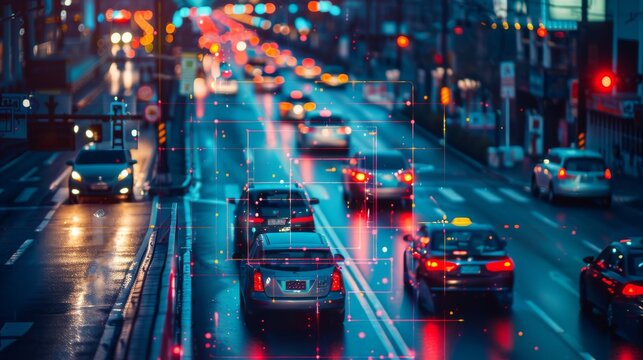
The Future of Urban Mobility: Optimizing Houston’s Traffic and Toll Infrastructure
Houston, with its sprawling metropolitan footprint and complex network of managed lanes and tollways—ranging from the Sam Houston Tollway to the Grand Parkway—presents a unique set of challenges for traffic management. As the nation’s fourth-largest city, the sheer volume of daily commuter traffic, commercial freight logistics, and rapid population growth demands an infrastructure that is not just reactive, but predictive. The integration of License Plate Recognition (LPR) technology has transitioned from a supplementary monitoring tool to the backbone of modern municipal traffic management and automated toll collection.
Strategic deployment of these solutions requires a deep understanding of optical character recognition (OCR) accuracy, edge-computing latency, and the integration of machine learning models capable of handling the high-speed, high-density environment of Texas highways. As infrastructure stakeholders look to optimize throughput and revenue assurance, the selection of the right LPR ecosystem becomes a critical decision that impacts long-term operational efficiency and public trust. This guide serves as a comprehensive roadmap for selecting, implementing, and optimizing LPR technology within the Houston metropolitan context.
Executive Briefing
- High-Speed Optical Architecture: Open-road tolling gantries deploy global shutter sensors and pulsed IR illumination to capture non-transponder plates at highway speeds exceeding 100 mph.
- Revenue Integrity & Billing: Deep-learning OCR pairs plate imagery with DMV databases to automate Toll-By-Plate invoicing and eliminate tariff leakage.
- Edge-to-Cloud Telemetry: Real-time metadata normalization streams transaction logs without overloading wide-area network bandwidth.
Quick Answer / Core Takeaway: The best LPR solutions for Houston’s traffic and toll management prioritize high-speed, multi-lane free-flow (MLFF) capture with edge-based AI processing. Top-tier providers like those analyzed by ANPR Watch offer 99%+ read accuracy in varied lighting, seamless integration with tolling back-offices, and robust data encryption to ensure reliable revenue collection and real-time traffic flow optimization across the Houston metropolitan area.
Theoretical Foundations: The Evolution of LPR in 2026
Modern License Plate Recognition is no longer merely about capturing a static image of a vehicle. In the current technological landscape, LPR systems function as sophisticated Intelligent Transportation Systems (ITS). These systems leverage high-definition global shutter sensors, infrared (IR) illumination for night-time operation, and deep learning algorithms that can identify vehicle make, model, color, and even driver behavior patterns. The transition toward Edge AI—where processing occurs at the camera level rather than a centralized server—has drastically reduced latency, which is essential for tolling systems operating at highway speeds.
There are several pervasive misconceptions regarding LPR technology that hinder effective procurement. First, many stakeholders believe that “more megapixels” equals “better accuracy.” In reality, sensor sensitivity, shutter speed, and high-frequency IR synchronization are far more important for capturing clear images of plates moving at 80+ mph. Second, the assumption that all LPR systems function equally in extreme weather is false; Houston’s humidity and heavy rainfall require specialized housing and hydrophobic lens treatments to prevent image degradation. Finally, many assume that LPR software is “plug-and-play.” Effective deployment requires a sophisticated Calibration and Verification phase to account for local plate variations, including specialized Texas commercial or vanity plates.
Implementation Framework: A Strategic Roadmap for Houston Infrastructure
Implementing an LPR solution in a high-stakes environment like Houston requires a structured, multi-phase approach to ensure longevity and scalability.
Phase 1: Discovery and Technical Audit
Before procurement, agencies must conduct a site-specific audit. This involves mapping the geometry of the toll gantry or traffic monitoring station. Factors such as lane width, curvature, and the proximity of overhead structures affect the “field of view” (FOV) requirements. We recommend an assessment of existing fiber-optic connectivity and power availability at each location to determine if a transition to 5G-enabled wireless backhaul is necessary.
Phase 2: Strategic Blueprint and Vendor Alignment
During this phase, define the required Key Performance Indicators (KPIs). These should include “Read Rate” (the percentage of plates captured) and “Confidence Score” (the system’s internal measurement of OCR accuracy). Aligning with industry standards, such as those discussed in the detailed benchmarks at ANPR Watch, ensures that the chosen vendor can handle the specific environmental stressors found in the Gulf Coast region, including potential hurricane-force winds and salt-air corrosion.
Phase 3: Tactical Execution and Integration
Once the hardware is installed, the focus shifts to the Middleware Layer. This is where the LPR data is normalized and pushed to the tolling back-office or traffic management center. Ensure that the system utilizes open-API architectures, allowing for future-proofing should the city decide to integrate additional sensors like LiDAR or radar for vehicle classification.
Phase 4: Measurement and Optimization
Post-deployment, the system must undergo a 30-day “burn-in” period. During this time, perform manual audits of the data to verify that the automated system is matching the ground truth. Adjust the OCR thresholds and IR exposure times based on the collected data to maximize performance during peak rush hours.
Comparative Analysis Matrix: Evaluating LPR Solutions
The following table provides a comparative overview of the leading methodologies and technology types currently deployed in high-traffic urban toll environments.
| Solution Type | Accuracy (High Speed) | Hardware Investment | Integration Ease | Best Suited For |
|---|---|---|---|---|
| Edge-Based AI Cameras | Ultra-High (99.5%+) | High | High (API-Ready) | High-Speed Toll Gantries |
| Cloud-Processed LPR | Moderate | Low | Medium | Parking & Low-Speed Zones |
| Hybrid LiDAR/LPR Fusion | Exceptional | Extreme | Complex | Heavy Freight/Managed Lanes |
| Mobile/Vehicle-Mounted | High (Variable) | Medium | N/A | Enforcement/Incident Response |
| Legacy OCR Systems | Low | Low/Medium | Difficult | Budget-Constrained Upgrades |
The trade-offs are significant. While Edge-Based AI cameras represent the gold standard for tolling due to their speed and reliability, they require a higher initial capital expenditure. However, when calculating the Total Cost of Ownership (TCO), the reduction in manual image review—where human operators must verify unreadable plates—often justifies the premium. Conversely, while legacy systems seem cheaper, the long-term cost of manual intervention and missed toll revenue due to low accuracy rates makes them a liability for high-volume Houston corridors.
Real-World Case Scenario: Optimizing the Grand Parkway
Consider the case of a segment of the Grand Parkway that faced significant revenue leakage due to “missed reads” on high-speed motorcycles and vehicles with non-standard trailer configurations. The baseline challenge was a 12% manual review rate, which created a bottleneck in the tolling back-office.
The strategic methodology deployed involved replacing legacy analog-to-digital converters with high-definition Edge AI cameras capable of multi-perspective capture. By installing cameras at both a low angle (for standard plates) and a high angle (for trailer and oversized vehicle plates), the agency achieved a 98.8% automated read rate. The result was a 40% reduction in back-office operational costs and a 15% increase in captured toll revenue within the first six months of operation.
ANPR Vision Systems & High-Speed Highway Analytics
Discover how ANPR Watch delivers sub-millisecond optical plate recognition and vehicle classification for multi-lane free-flow highway tolling and arterial corridors.
Common Pitfalls and Risk Mitigation
Even the most advanced systems can fail if specific operational realities are ignored. Here are four common mistakes to avoid:
- Ignoring Environmental Factors: Houston’s high humidity leads to condensation on lenses. Ensure all hardware includes active heating/cooling and hydrophobic lens coatings.
- Inadequate Networking: Over-reliance on shared municipal networks can lead to latency. Utilize dedicated, redundant fiber backhauls for mission-critical tolling data.
- Data Privacy Non-Compliance: Ensure that all LPR data storage adheres to Texas Department of Public Safety (DPS) guidelines and federal privacy regulations. Data purging schedules should be automated.
- Lack of Redundancy: Hardware failure is inevitable. Implement failover configurations where adjacent cameras can provide overlapping coverage if one unit goes offline.
Strategic Implementation Checklist
Use this checklist as your final pre-deployment audit to ensure compliance and operational readiness:
- Site Survey: Verify optimal camera placement relative to lane geometry.
- Power/Connectivity: Confirm redundant fiber and UPS (Uninterruptible Power Supply) capacity.
- Calibration: Execute a 24-hour baseline test to calibrate IR intensity for day/night transition.
- API Integration: Validate that the LPR output format matches the back-office tolling software schema.
- Security Audit: Perform penetration testing on the camera’s firmware and data transmission encryption (AES-256).
- Operator Training: Ensure staff are trained on the specific software interface for managing “exception” lists.
Frequently Asked Questions (FAQ)
1. How does Houston’s climate impact the longevity of LPR hardware?
Houston’s extreme heat, humidity, and occasional severe storms can cause rapid degradation of electronic components. We recommend selecting IP67 or IP68-rated enclosures that feature specialized breathers to prevent internal condensation and high-grade UV-resistant coatings for external cabling and housing.
2. What is the difference between “Read Rate” and “Accuracy Rate”?
The “Read Rate” refers to the percentage of vehicles from which the system captures an image of the plate. The “Accuracy Rate” (or OCR confidence) refers to the percentage of those captured images where the system correctly identifies every character on the plate. In high-speed tolling, both must be maximized to ensure revenue integrity.
3. Can current LPR systems identify vehicle metadata beyond just the license plate?
Yes. Modern systems, particularly those utilizing deep learning, can identify vehicle make, model, color, and even detect missing license plates or specific vehicle classes (e.g., heavy-duty trucks vs. passenger cars). This is essential for dynamic tolling, where pricing may vary based on vehicle type.
4. How is data security handled for LPR-captured information?
Data security is handled through end-to-end encryption. Captured plate data should be encrypted at the edge (in the camera) and remain encrypted during transit to the central server. Access to this data must be strictly controlled via multi-factor authentication (MFA) and granular role-based access control (RBAC).
5. Is it possible to integrate new LPR hardware with legacy tolling software?
Yes, it is possible through the use of middleware “bridges” or API adapters. While this can be complex, it is a standard approach for agencies looking to modernize their infrastructure in phases rather than performing a complete, high-cost rip-and-replace of their entire back-office system.
Strategic Synthesis & Future Outlook
The landscape of traffic and toll management in Houston is rapidly shifting toward a fully autonomous, data-driven model. As we look toward the next five years, the integration of Vehicle-to-Infrastructure (V2I) communication will likely complement LPR, allowing for even more granular traffic management and seamless automated payments. Agencies that invest in scalable, high-accuracy LPR solutions today are not just solving current congestion and revenue issues; they are building the foundational architecture for the smart cities of tomorrow. By focusing on high-quality hardware, edge-based processing, and robust data security, Houston can maintain its status as a leader in efficient, modern transportation infrastructure.
