
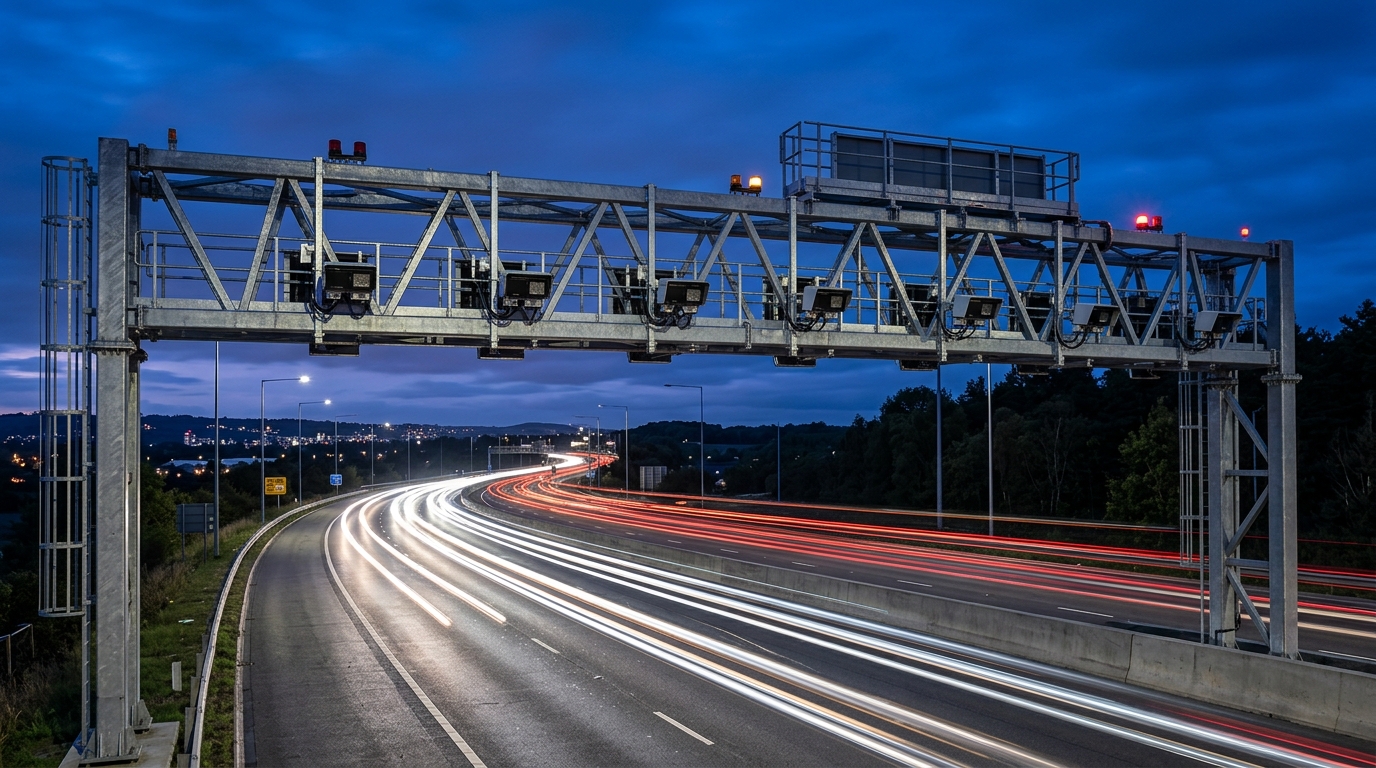
Executive Briefing
- The French Senate’s legislative endorsement of expanded automatic number-plate recognition (ANPR) signals a transformative shift toward automated municipal enforcement and perimeter security across the EU.
- Enterprises operating across European jurisdictions must align their optical surveillance architecture with stringent GDPR mandates, demanding edge-based anonymization and encrypted telemetry.
- High-performance ANPR deployment requires balancing optical shutter intervals, infrared illumination, and high-throughput cloud analytics to achieve 99%+ read accuracy under adverse environmental conditions.
The recent legislative momentum within the French Senate backing automated number-plate checks marks a watershed moment for smart infrastructure, automated parking enforcement, and corporate security across Europe. As municipalities and commercial enterprises alike pivot toward frictionless, algorithmic oversight, the underlying technology stack faces intense scrutiny. Security directors and system architects can no longer rely on legacy camera feeds and manual loggers; modern deployments demand ultra-high optical character recognition (OCR) accuracy, low-latency edge processing, and rigorous compliance frameworks.
The Technical Realities of High-Speed ANPR Deployment
Deploying an enterprise-grade automatic number-plate recognition system requires meticulous calibration of hardware optics and neural network pipelines. Vehicles traveling at highway velocities or navigating complex, multi-lane urban environments introduce severe motion blur, variable illumination, and non-standardized plate typography. To maintain a sustained recognition rate above 99%, system architects must engineer capture zones considering several critical physical parameters:
- Optical Shutter Intervals: Shutter speeds must drop below 1/1000s during twilight and night operations to freeze fast-moving retro-reflective plates completely.
- Near-Infrared (NIR) Illumination: Integrating 850nm or 940nm pulsed IR arrays eliminates headlight glare and neutralizes ambient weather impediments such as heavy rain or fog.
- Sensor Resolution & Pixel Density: Minimum plate character height must span at least 14 to 18 pixels horizontally to feed convolutional neural networks (CNNs) sufficient spatial fidelity for deterministic parsing.
Balancing Edge Computing and Cloud Analytics
Modern ANPR architectures utilize a hybrid model. Edge devices execute initial frame capture, local plate localization, and transient character caching over lightweight MQTT protocols. This approach drastically minimizes upstream bandwidth requirements across wide-area networks (WAN). Heavy analytical tasks – such as cross-referencing watchlists, tracking historical travel vectors, and running multi-tenant machine learning models – are then offloaded to centralized cloud clusters. However, maintaining GDPR compliance requires that personally identifiable information (PII) like unmasked driver faces or secondary vehicle occupants are scrubbed at the edge before payload transmission.
ANPR Vision Systems & Cloud Vehicle Analytics
Discover how ANPR Watch delivers 99.4% optical character accuracy for automated parking enforcement, highway tolling, and security checkpoints.
Enterprise Implementation Checklist
When upgrading legacy physical security perimeters or deploying new smart parking infrastructure in response to evolving regulatory frameworks like the French Senate’s recent mandate, engineers should adhere to this structured deployment checklist:
| Phase | Technical Milestone | Security & Compliance Focus |
|---|---|---|
| 1. Optical Audit | Calculate focal lengths, verify 14+ pixel plate height, install pulsed NIR strobes. | Verify camera field-of-view strictly captures transit zones, avoiding private property encroachment. |
| 2. Edge Hardening | Deploy containerized OCR engines with local buffering for WAN dropouts. | Implement TLS 1.3 encryption and automated PII face-blurring prior to export. |
| 3. Cloud Integration | Establish secure API endpoints for real-time telemetry and database lookups. | Enforce strict RBAC, audit logging, and data retention limits compliant with EU privacy laws. |
Enterprise FAQ
How does the French Senate’s backing of automated plate checks impact multinational enterprise security?
It establishes a legal precedent for broader automated enforcement across corporate perimeters, logistics hubs, and smart facilities. Enterprises operating within these borders must ensure their surveillance stacks incorporate auditable data retention policies and transparent consent or regulatory notification structures.
What minimum optical accuracy is required for automated tolling and parking billing?
Enterprise deployments require a sustained OCR accuracy of at least 99.2% to 99.4% to eliminate manual exception handling, reduce operational overhead, and prevent billing disputes resulting from obscured or damaged plates.
How do modern ANPR systems maintain GDPR compliance?
By executing localized edge processing to instantly redact non-target metadata, stripping facial imagery of vehicle occupants, and implementing automated data purges after defined operational windows (e.g., 30 to 90 days depending on local statutes).
