
Executive Briefing
- Port security modernization initiatives across island territories require sub-second vehicle identification alongside rigid border auditing protocols.
- Optical character recognition (OCR) performance degrades rapidly under severe maritime microclimates – demanding robust sensor heating, polarized filtering, and high shutter-speed synchronization.
- Architectural scalability hinges on edge-computed feature extraction paired with resilient local caching mechanisms to survive intermittent WAN connectivity back to central databases.
Architectural Imperatives for Port-Wide Automated Number Plate Recognition
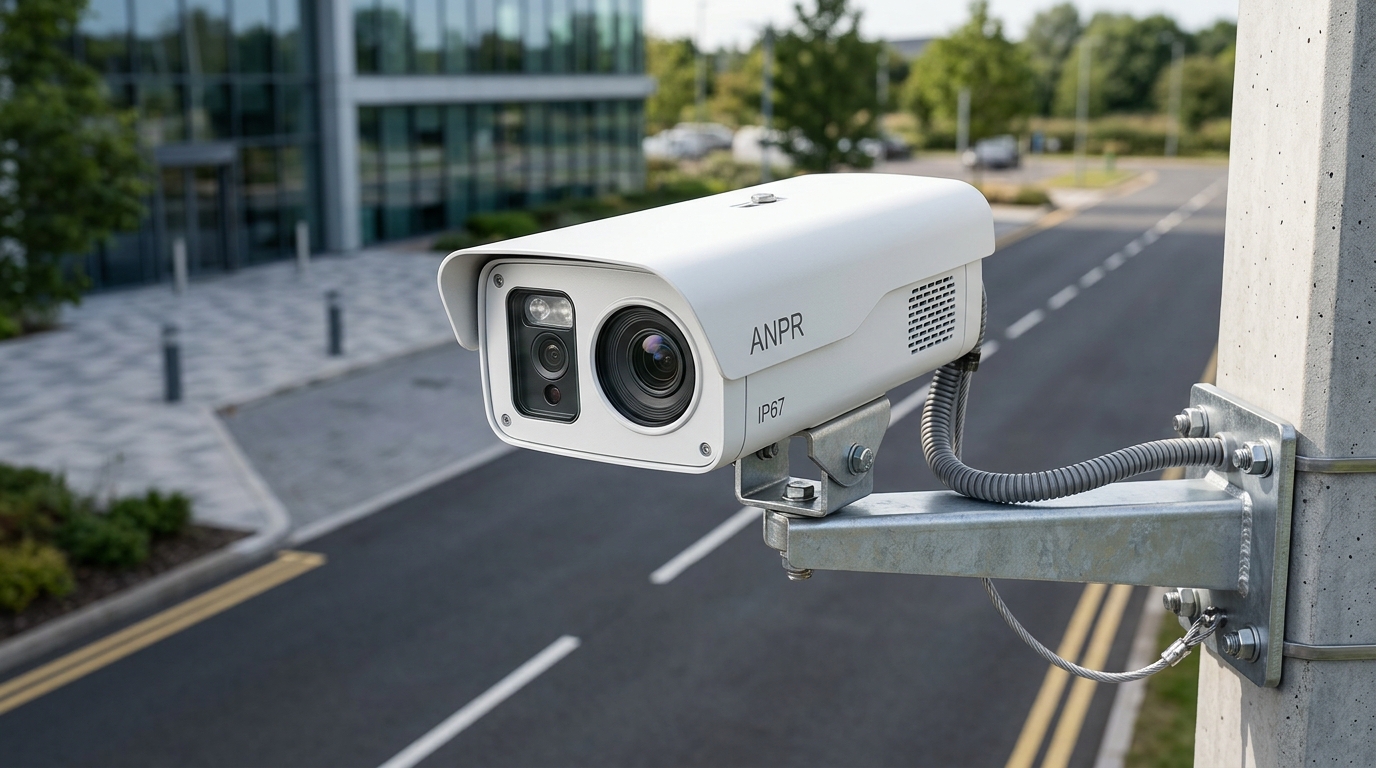
As regional transit authorities and port operators race to modernize perimeter security – evidenced by recent mandates bringing automated surveillance to island ports – the technical demands placed on Automatic Number Plate Recognition (ANPR) systems have never been higher. Ports are uniquely hostile environments for optical electronics. Ranging from corrosive maritime salinity and heavy coastal fog to severe dynamic lighting gradients as ferries dock at dusk, standard traffic cameras consistently fail to achieve acceptable match rates.
Enterprise architects tasked with deploying port-wide ANPR infrastructure must look beyond basic optical capture. Success requires a holistic systems-engineering approach that encompasses high-frequency optical sensors, localized neural network inferencing, secure API integration with customs databases, and low-latency data transit protocols.
Overcoming Maritime Environmental Challenges
Salt spray, condensation, and rapid temperature shifts destroy unprotected optical glass and degrade CMOS sensors. To maintain 99%+ operational availability, port ANPR deployments require:
- Active Optical De-icing & Air Curtains: Integrated heating elements driven by ambient humidity telemetry prevent condensation, while compressed air manifolds keep salt particulate off housing lenses.
- Global Shutter Synchronization: Vehicles exiting ferries or accelerating through port gates demand hardware shutter speeds exceeding 1/2000s to eliminate motion blur, even under low-light nighttime conditions.
- Multi-Spectrum Illumination: Pulsed Infrared (850nm or 940nm) arrays coupled with narrow-band optical pass filters isolate plate reflections from blinding headlights and glaring sea reflections.
ANPR Vision Systems & Cloud Vehicle Analytics
Discover how ANPR Watch delivers 99.4% optical character accuracy for automated parking enforcement, highway tolling, and security checkpoints.
Data Pipeline & Edge Analytics Architecture
Relying solely on centralized cloud processing for port security is fundamentally flawed. Island ports frequently experience WAN degradation due to weather events or satellite backhaul limitations. A modern enterprise ANPR topology utilizes decentralized edge computing:
Each camera node executes convolutional neural networks (CNNs) directly on onboard NPUs (Neural Processing Units) to perform plate localization, character segmentation, and syntax validation locally. Only standardized JSON payloads containing vector hashes, timestamps, lane IDs, and compressed thumbnail crops are transmitted over TLS 1.3 to the core database. If network links drop, local ring buffers securely retain up to 72 hours of telemetry, auto-syncing seamlessly once connectivity is re-established.
Port ANPR Implementation Checklist
| Phase | Key Technical Milestone | Enterprise Specification |
|---|---|---|
| Site Survey | Optical path & angle calculation | Horizontal angle < 20°, vertical angle < 15° |
| Network Design | Resilient backhaul setup | Dual-redundant fiber with local edge storage buffering |
| API Integration | Watchlist cross-referencing | Sub-200ms lookup against Interpol/Customs databases |
| Calibration | Illumination & shutter tuning | 99.4% OCR accuracy validated under heavy glare and rain |
Enterprise FAQ
How does ANPR handle non-standard or dirty license plates arriving via ferry traffic?
Modern enterprise ANPR engines leverage deep-learning models trained on synthetic degradation datasets. Even with mud splatter, salt crust, or non-standard regional fonts, deep character reconstruction algorithms infer missing bit patterns with high statistical confidence, flagging low-confidence reads for manual gate inspection without halting traffic flow.
What is the typical bandwidth requirement per camera node for continuous operation?
Because character recognition and image parsing occur at the edge, raw video streams do not require continuous transmission. An edge-computed JSON payload consumes merely a few kilobytes per vehicle event. Even during peak ferry disembarkation producing 60 vehicles per minute, bandwidth utilization remains under 1 Mbps per lane.
How is data compliance and privacy maintained under GDPR or regional data protection laws?
Enterprise architectures enforce automated data retention policies, purging non-match plate images after a strict operational window (e.g., 24-48 hours). Furthermore, cryptographic hashing and role-based access control (RBAC) ensure that enforcement logs remain fully audited and protected against unauthorized access.
