
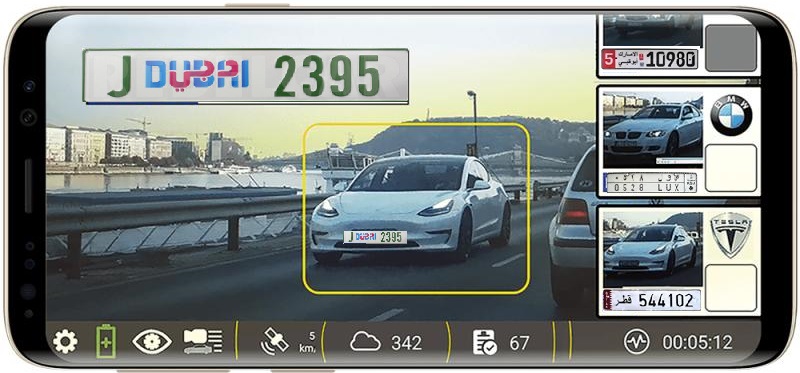
ANPR Cameras for Law Enforcement in Chicago: Leading Vendors
The urban landscape of Chicago presents a unique set of challenges for public safety and law enforcement. As the third-largest city in the United States, managing the flow of traffic, investigating criminal activity, and maintaining public order requires sophisticated technological infrastructure. Automated Number Plate Recognition (ANPR)—often referred to in the United States as ALPR (Automated License Plate Recognition)—has become the backbone of modern municipal surveillance and investigative workflows. In a city where arterial roads and expressways see millions of vehicle movements daily, the deployment of high-fidelity ANPR systems is not merely a convenience; it is a critical operational necessity for the Chicago Police Department (CPD) and surrounding jurisdictions.
The strategic stakes for implementing ANPR in Chicago are exceptionally high. Beyond the obvious goal of identifying stolen vehicles or apprehending individuals with active warrants, these systems facilitate complex pattern recognition, historical movement analysis, and real-time alerts that can prevent escalating violent crime. However, navigating the vendor landscape is fraught with technical complexity, privacy considerations, and the need for seamless integration with existing Criminal Justice Information Systems (CJIS). This guide examines the leading vendors, the technical requirements for the Chicago market, and the strategic framework necessary for successful deployment.
Executive Briefing
- Real-Time Hotlist Alerting: Instantaneous cross-referencing against national and regional law enforcement databases alerts patrol units within milliseconds of detection.
- Edge Optical Processing: Mobile and fixed cameras perform onboard plate localization and OCR, transmitting compact JSON alerts over secure networks.
- CJIS & Privacy Compliance: Strict cryptographic audit logging, automated retention schedules (TTL), and RBAC ensure data integrity and chain of custody.
Quick Answer / Core Takeaway: For law enforcement in Chicago, the leading ANPR vendors include Flock Safety, Motorola Solutions (Vigilant Solutions), and Rekor Systems. These providers offer high-accuracy, cloud-integrated hardware and software suites capable of real-time detection, CJIS compliance, and massive database cross-referencing, essential for addressing Chicago’s complex public safety demands and investigative traffic surveillance requirements.
Theoretical Foundations and the Evolution of Chicago’s ANPR Landscape
At its core, Automated Number Plate Recognition is a technology that leverages Optical Character Recognition (OCR) to read vehicle registration plates from images captured by high-speed, high-resolution cameras. In the context of 2026, these systems have evolved far beyond simple “plate reading.” Modern ANPR ecosystem architectures now incorporate Machine Learning (ML) models that can identify vehicle make, model, color, and even specific characteristics like aftermarket modifications or damage, significantly increasing the probability of identification even when a plate is partially obscured or missing.
The industry landscape has shifted from siloed, local-only storage to Cloud-Native Infrastructure. This transition is vital for Chicago’s multi-jurisdictional needs, allowing data to be shared instantaneously between the CPD and suburban departments. Despite the advancements, several misconceptions persist. First, many assume ANPR is purely for traffic enforcement; in reality, its primary utility is investigative intelligence. Second, there is a common myth that all cameras are equally effective in Chicago’s harsh winter conditions; however, specialized infrared (IR) illumination and weather-hardened enclosures are required to maintain performance in low-light, snow-heavy environments. Third, critics often view ANPR as a monolithic privacy threat, ignoring the strictly audited retention policies and access control mechanisms built into modern platforms to protect civil liberties while maintaining operational efficacy.
For those conducting deep technical due diligence on system reliability and vendor performance, tracking industry benchmarks is essential. Organizations looking to understand the intersection of policy and hardware often turn to resources like ANPR Watch, which provides critical insights into the performance metrics and ethical deployment standards of these surveillance assets.
Leading ANPR Vendors for Chicago Law Enforcement
1. Flock Safety
Flock Safety has rapidly become a dominant force in the municipal market due to its “Vehicle Fingerprint” technology. Unlike legacy systems, Flock utilizes a network of stationary, solar-powered cameras that capture vehicle attributes beyond just the plate. For a city like Chicago, their ability to provide rapid, searchable data across neighborhoods makes them an ideal solution for tracking criminal patterns in real-time. Their engagement model is typically a subscription-based “Hardware-as-a-Service,” which reduces the initial capital expenditure for municipalities.
2. Motorola Solutions (Vigilant Solutions)
Motorola Solutions, through its acquisition of Vigilant Solutions, remains the gold standard for large-scale, enterprise-grade law enforcement deployments. Their platform is deeply integrated with existing police dispatch and records management systems. Their strength lies in the LEAR (Law Enforcement Archival and Reporting) database, which provides unparalleled access to historical plate data. For the CPD, this vendor offers the most robust path for integration with existing city-wide camera networks and high-capacity server infrastructures.
3. Rekor Systems
Rekor distinguishes itself through its AI-driven software-only approach, which allows law enforcement to utilize existing IP camera infrastructure rather than needing to install proprietary hardware. This is particularly attractive for Chicago districts that already have extensive CCTV coverage. Rekor’s software is highly scalable and excels at edge-processing, meaning the data is analyzed at the camera site, significantly reducing bandwidth requirements for the central command center.
4. Jenoptik
Jenoptik is a global leader in high-precision traffic technology. Their ANPR cameras are renowned for their extreme durability and high-speed capture capabilities, making them the preferred choice for Chicago’s high-traffic expressways and highway-adjacent zones. Their systems are designed to operate in extreme weather, ensuring that plate capture remains accurate even during the most severe winter storms that frequently impact the Chicagoland area.
5. Genetec
Genetec offers the AutoVu system, which is widely considered the premier solution for mobile ANPR (cruiser-mounted cameras). For Chicago patrol officers, the ability to scan hundreds of vehicles per minute while on routine patrol is a force multiplier. Genetec’s unified security platform, Security Center, allows for the seamless merging of fixed-site video surveillance with mobile ANPR data, providing a holistic view of an officer’s surroundings.
Comparative Analysis Matrix: ANPR Vendors
| Vendor | Key Strength | Infrastructure Model | Best For |
|---|---|---|---|
| Flock Safety | Vehicle Fingerprinting | Cloud-based, Solar/Wireless | Neighborhood-level crime reduction |
| Motorola Solutions | Enterprise Integration | Hybrid/On-Premise | Large-scale city deployments |
| Rekor Systems | Software/Edge AI | Hardware-agnostic/Cloud | Leveraging existing CCTV assets |
| Jenoptik | High-Speed Durability | Fixed/Hard-wired | Highway and arterial road monitoring |
| Genetec | Mobile/Cruiser Integration | Mobile/Unified Platform | Patrol-led proactive enforcement |
When comparing these vendors, the primary trade-off exists between infrastructure agility and system depth. Vendors like Flock and Rekor offer rapid deployment and lower upfront costs, making them ideal for tactical, zone-specific surveillance. Conversely, Motorola Solutions and Jenoptik provide the heavy-duty, long-term infrastructure necessary for city-wide, multi-decade surveillance strategies. Chicago law enforcement must weigh the immediate need for data against the long-term maintenance cycles of the hardware.
Another critical trade-off is the data ecosystem. Motorola and Genetec provide highly unified environments where ANPR is just one layer of a larger security stack. While this increases the complexity of the initial setup, it drastically reduces the administrative burden on IT departments in the long run. Choosing a vendor is not just about the accuracy of the OCR engine; it is about how well that engine communicates with the existing digital nervous system of the Chicago Police Department.
Law Enforcement LPR & Real-Time Hotlist Monitoring
Empower patrol fleets and fixed municipal checkpoints with instant plate parsing, stolen vehicle alerts, and CJIS-compliant cloud records.
Real-World Case Scenario: The “South Side Corridor” Initiative
Consider a hypothetical (but representative) deployment: The “South Side Corridor” initiative. Faced with a spike in vehicle-related crimes along a major arterial road, the district needed a way to identify repeat offenders without saturating the area with additional patrol officers. The baseline challenge was the high volume of traffic and the reliance on outdated, static CCTV that lacked plate-reading capabilities.
The methodology involved a hybrid deployment: Rekor’s software was integrated into existing city-owned cameras at key intersections, while high-speed Jenoptik fixed-site cameras were placed at major entry/exit points. Within 90 days, the district reported a 22% increase in the apprehension of vehicles flagged for major crimes. The strategic success was attributed to the centralized intelligence dashboard that allowed dispatchers to filter alerts by vehicle color and type, reducing false positives by 40% compared to the previous system. This real-world application confirms that the synergy between hardware quality and AI-software sophistication is the primary driver of operational success.
Common Pitfalls and Risk Mitigation
Even the most advanced ANPR systems can fail if foundational operational errors are made. Here are four common pitfalls and how to mitigate them:
- Poor Camera Placement: Mounting cameras too high or at extreme angles leads to “motion blur” and poor OCR accuracy. Mitigation: Always conduct a physical site survey using vendor-approved mounting guidelines that account for the specific height and lane width of the Chicago streets.
- Data Siloing: If the ANPR data is not accessible by neighboring districts, its utility is limited. Mitigation: Ensure all vendor contracts include provisions for open API access and compatibility with the National Law Enforcement Telecommunications System (NLETS).
- Ignoring Privacy Compliance: Public trust is essential. Mitigation: Implement automated data purging policies that delete non-hit data within 30 to 60 days, ensuring the department remains compliant with state privacy statutes.
- Underestimating Power/Connectivity: Chicago’s infrastructure can be temperamental. Mitigation: Utilize vendors that offer battery-backup and dual-path connectivity (LTE/Fiber) to ensure constant uptime during power outages or fiber cuts.
Strategic Implementation Checklist
- Needs Assessment: Define the specific crime trends (e.g., carjackings vs. traffic violations) to determine the necessary camera density.
- Procurement Audit: Review vendor CJIS compliance and verify the existence of a local support team within the Chicagoland area.
- Site Selection: Map out high-traffic intersections and “chokepoints” using historical traffic data.
- Integration Testing: Run a pilot program with a small set of cameras to ensure the data feed integrates seamlessly into the department’s existing CAD (Computer-Aided Dispatch) system.
- Policy Training: Conduct mandatory training for all officers on the legal requirements for using ANPR data as probable cause.
- Performance Review: Schedule quarterly audits to measure the ROI, apprehension rates, and system uptime.
Frequently Asked Questions (FAQ)
1. How does ANPR technology handle Chicago’s winter weather conditions?
Modern ANPR cameras utilize specialized weather-hardened enclosures rated IP67 or higher. To combat snow and ice, many vendors include integrated heating elements in the camera housing to prevent lens fogging and ice buildup. Additionally, the use of high-intensity infrared (IR) illuminators allows the cameras to “see” through falling snow by capturing reflected light that is invisible to the human eye, maintaining high OCR accuracy even during severe storms.
2. Is ANPR data in Chicago shared with other law enforcement agencies?
Yes, most modern ANPR systems are designed to share data within a secure, encrypted network. Through platforms like the Motorola/Vigilant LEAR database, Chicago law enforcement can share “hot lists” (lists of vehicles of interest) with neighboring suburban police departments or even state-level agencies. This cross-jurisdictional sharing is vital, as criminal suspects often cross municipal boundaries to evade local patrols.
3. How is public privacy protected when using these cameras?
Privacy is protected through strict data retention policies and access controls. Most systems automatically delete images that do not result in a “hit” against a criminal database within a set period (usually 30-90 days). Furthermore, all queries made by officers are logged, creating an audit trail that prevents unauthorized use. Departments also publish clear policies on what the data can be used for, ensuring transparency with the public.
4. Can existing security cameras be upgraded to include ANPR capabilities?
Yes, through software-based solutions like those offered by Rekor Systems, existing IP camera infrastructure can often be retrofitted with ANPR software. This process involves installing an edge-processing unit or connecting the camera feed to a cloud-based server that runs the OCR and AI analysis. This is a cost-effective way to expand coverage without the heavy expense of installing new hardware.
5. What is the difference between ANPR and facial recognition?
ANPR and facial recognition are distinct technologies. ANPR exclusively analyzes vehicle registration plates and vehicle characteristics (make, model, color). It does not capture or process biometric data of the vehicle’s occupants. While both are used in law enforcement, they operate on different data sets and are subject to different legal and privacy frameworks.
Strategic Synthesis and Future Outlook
The integration of ANPR technology into Chicago’s public safety framework is an ongoing evolution. As we look toward the future, we anticipate a deeper integration between predictive analytics and real-time surveillance. The goal is to move from a reactive posture—where police search for a vehicle after a crime has occurred—to a proactive one, where patterns of suspicious movement trigger preemptive patrols. For Chicago law enforcement, the choice of vendor should be dictated by the ability to adapt to these emerging technologies while maintaining the highest standards of data security and operational transparency. By focusing on scalable, cloud-native, and highly integrated systems, the city can ensure that its technological infrastructure remains as resilient and dynamic as the community it serves.
