
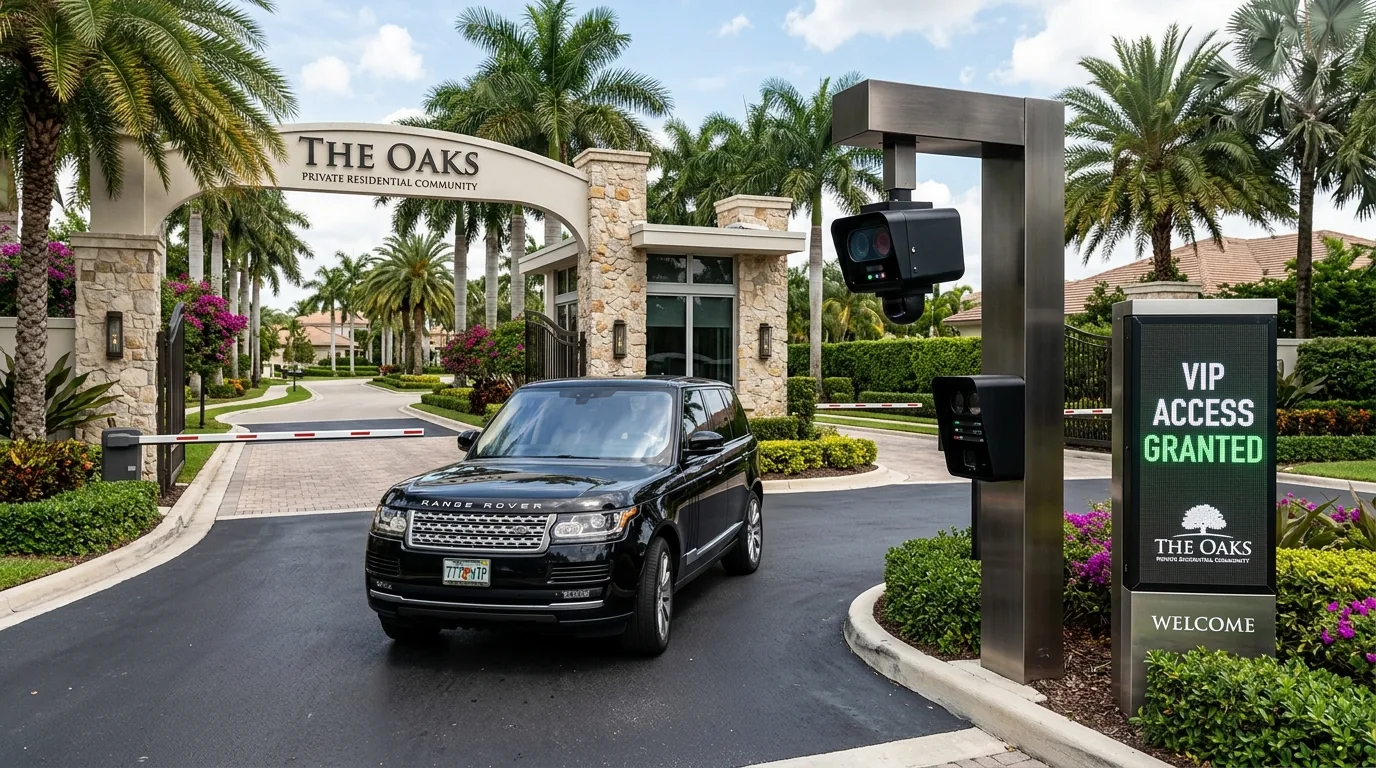
ANPR for Gated Communities and Residential Access in Florida: The Definitive Strategic Guide
The landscape of residential security in Florida has undergone a seismic shift. As the state continues to experience rapid population growth and an increasing demand for high-end, secure living environments, traditional methods of access control—such as manual gate logs, proximity cards, and static keypad codes—are proving insufficient. Enter Automatic Number Plate Recognition (ANPR), a sophisticated surveillance and access management technology that is rapidly becoming the gold standard for Homeowners Associations (HOAs) and gated community developers across the Sunshine State.
In Florida, the unique intersection of high-density gated living, stringent privacy regulations, and the need for seamless traffic flow makes ANPR an essential infrastructure component. By leveraging high-speed optical character recognition (OCR) and intelligent database management, communities can now automate gate entry, monitor unauthorized vehicles in real-time, and provide an audit trail of every vehicle entering or exiting the perimeter. This guide explores the technical, operational, and legal nuances of implementing ANPR within the specific regulatory framework of Florida.
Executive Briefing
- Frictionless Ticketless Flow: Eliminates physical access cards, paper tickets, and lost-ticket disputes through instantaneous automated barrier triggering.
- Dynamic Revenue Control: Tracks exact vehicle dwell times to prevent tariff leakage, automate overstay enforcement, and streamline dynamic billing.
- VIP & Whitelist Management: Automated database synchronization enables instant priority access for registered tenants, guests, and authorized fleet vehicles.
Quick Answer / Core Takeaway: ANPR (Automatic Number Plate Recognition) for Florida gated communities utilizes high-definition cameras and OCR software to automate vehicle access, enhance perimeter security, and eliminate traffic bottlenecks. By integrating with existing gate hardware and cloud-based management platforms, HOAs can achieve real-time tracking, improved visitor management, and reduced operational costs while maintaining strict compliance with Florida’s privacy and data security statutes.
Theoretical Foundations and the Florida Landscape
At its core, ANPR technology—often referred to as LPR (License Plate Recognition)—functions by capturing high-resolution images of vehicle plates and converting them into alphanumeric text strings via OCR algorithms. In the context of a Florida residential community, this data is cross-referenced against a “whitelist” (residents) and a “blacklist” (unauthorized or banned vehicles). When a match is detected, the system triggers a relay to open the gate automatically, creating a frictionless experience for authorized residents.
The evolution of this technology in 2026 has moved beyond simple gate opening. Modern systems now incorporate Edge Computing, where the processing happens directly on the camera unit rather than a centralized server, reducing latency and bandwidth requirements. Furthermore, integration with AI-driven analytics allows for the identification of vehicle make, model, and color, providing an extra layer of security that can assist local law enforcement during investigations of residential property crimes.
Debunking Common Misconceptions
Despite its growing adoption, several myths persist regarding ANPR implementation. First, many board members fear that ANPR is “surveillance overkill.” In reality, when managed correctly, it is a privacy-preserving tool that minimizes the need for human guards to record personal data. Second, there is a misconception that ANPR cannot handle Florida’s diverse plate designs. Modern systems are specifically calibrated to recognize the various specialty plates authorized by the Florida Department of Highway Safety and Motor Vehicles (FLHSMV). Finally, many believe that ANPR replaces all security. It does not; it serves as a force multiplier that allows security personnel to focus on high-priority threats rather than administrative gate duties.
Implementation Framework: A Four-Phase Approach
Implementing an ANPR system requires more than just installing hardware. It demands a strategic alignment of hardware, software, and community policy. For communities looking for expert guidance, ANPR Watch offers industry-leading insights into the vetting of hardware and integration strategies, ensuring that your investment aligns with current technological standards.
Phase 1: Discovery and Technical Audit
The first phase involves a comprehensive assessment of existing infrastructure. This includes evaluating the current gate controllers, network connectivity, and physical lighting conditions at entry points. In Florida, heavy tropical foliage and variable sunlight intensity can impact camera performance. A detailed site survey must determine the optimal mounting angles and focal lengths to ensure 99%+ capture rates regardless of weather conditions or time of day.
Phase 2: Strategic Blueprint and Compliance
Once the technical audit is complete, the focus shifts to data governance. Florida has specific statutes regarding the collection of biometric and personal data. Your blueprint must outline how long plate data is stored, who has access to the logs, and how the data is encrypted. This phase also includes defining the “resident experience,” such as how guests will be managed via app-based pre-authorization or call-box integration.
Phase 3: Tactical Execution and Integration
During the execution phase, high-speed, infrared-capable cameras are installed at all entry and exit lanes. These cameras are integrated with the community’s database management software. During this stage, it is critical to perform “stress testing,” where the system is evaluated against various speeds and lighting conditions. A key element here is the integration with existing RFID or proximity systems to ensure a hybrid approach during the transition period.
Phase 4: Measurement and Optimization
Post-installation, the focus moves to monitoring performance metrics. This includes tracking “false rejection rates” (authorized residents being denied entry) and “false acceptance rates.” By utilizing performance dashboards, HOA boards can adjust sensitivity parameters and refine the whitelist database to ensure the system remains both secure and user-friendly for residents.
Real-World Case Scenario: The “Palm Estates” Transformation
Consider the case of “Palm Estates,” a 400-home gated community in South Florida that struggled with “tailgating”—the practice of unauthorized vehicles following residents through an open gate. The community faced rising security costs due to 24/7 guard staffing and mounting resident complaints regarding wait times during peak rush hours.
By implementing a modern ANPR system, Palm Estates moved to an automated “Fast-Lane” access model for residents. The implementation involved installing overhead lane cameras and integrating the system with a cloud-based visitor management portal. The result was a 65% reduction in gate-related traffic delays and a 40% reduction in unauthorized entry attempts, as the visual deterrent of high-definition cameras discouraged non-residents from attempting to follow vehicles in. By shifting guard staff to mobile patrols rather than stationary gate duties, the community saw a net increase in security coverage without increasing the monthly maintenance assessment.
Comparative Analysis Matrix: ANPR Deployment Methods
When selecting an ANPR solution, communities must weigh the trade-offs between hardware-heavy local systems and cloud-native solutions. The following table provides a breakdown of the common approaches found in the Florida market.
| Method/Approach | Key Strengths | Resource Investment | Pros & Cons | Best Suited For |
|---|---|---|---|---|
| Cloud-Native ANPR | Real-time updates, remote management. | Moderate recurring SaaS fees. | Pros: Scalable. Cons: Requires constant internet. | Large communities with high visitor turnover. |
| On-Premise Server | High data sovereignty. | High initial CAPEX. | Pros: Works offline. Cons: Maintenance-heavy. | High-security estates requiring total data control. |
| Hybrid Edge-Cloud | Optimal balance of speed/storage. | Balanced investment. | Pros: Reliable/Robust. Cons: Complex setup. | Standard HOAs seeking modernization. |
| Mobile/Handheld ANPR | Versatility for patrols. | Low infrastructure cost. | Pros: Flexible. Cons: Manual operation. | Communities with large, non-gated perimeters. |
| Integrated Gate/ANPR | Seamless hardware sync. | High initial cost. | Pros: All-in-one. Cons: Proprietary lock-in. | New developments with custom entries. |
The choice between these options often hinges on the community’s tolerance for maintenance. On-premise servers provide the highest level of security but require a dedicated IT professional to manage updates and hardware failures. Conversely, cloud-native systems are increasingly preferred by property management firms because they allow for remote troubleshooting and push-button updates, significantly lowering the “Total Cost of Ownership” (TCO) over a five-year period.
Trade-offs also exist regarding integration depth. While an all-in-one integrated system is aesthetically pleasing and easier to install, it often locks the community into a specific vendor for hardware replacements. A modular approach, which utilizes open-standard cameras and universal gate controllers, provides better long-term flexibility, allowing the community to swap out components as technology evolves without replacing the entire infrastructure.
ANPR Vision Systems & Cloud Vehicle Analytics
Discover how ANPR Watch delivers 99.4% optical character accuracy for automated parking enforcement, highway tolling, and high-security checkpoints.
Advanced Strategies and Risk Mitigation
To maximize the efficacy of ANPR, communities should look toward predictive analytics. By analyzing the time-of-day patterns of vehicle entry, security teams can identify anomalies—such as a vehicle that enters at 3:00 AM every night—and flag them for investigation. This is the difference between reactive security (viewing footage after a crime) and proactive deterrence.
Common Mistakes & Risk Mitigation
- Poor Camera Positioning: Installing cameras at too steep an angle causes “perspective distortion,” preventing OCR engines from reading the plate. Mitigation: Conduct a professional site survey to ensure the camera angle is within 30 degrees of the plate plane.
- Ignoring Lighting Conditions: Florida’s intense glare can wash out images. Mitigation: Utilize cameras with high Dynamic Range (HDR) and dedicated infrared (IR) illuminators for night-time clarity.
- Data Privacy Oversight: Failure to inform residents about data collection leads to legal friction. Mitigation: Maintain a transparent data retention policy and ensure all ANPR signage is clearly visible at entry points.
- System Silos: Keeping the ANPR system separate from the visitor management system leads to manual double-entry. Mitigation: Ensure all software components use open APIs for seamless data synchronization.
Strategic Implementation Checklist
Before moving forward with an ANPR vendor, ensure the following steps are completed to guarantee a successful rollout:
- Legal Review: Consult with the community’s legal counsel to ensure the proposed data retention policy complies with Florida’s privacy laws.
- Infrastructure Audit: Verify that current electrical and network cabling can support high-definition IP cameras at every gate.
- Vendor Vetting: Request references from other Florida communities of similar size and complexity.
- Whitelist Cleanup: Audit the existing resident database to remove outdated or invalid vehicle information before migration.
- Resident Communication: Send out a clear, informative communication plan to residents explaining the benefits, privacy protections, and the transition schedule.
- Testing Phase: Run the system in “Shadow Mode” (monitoring without triggering gates) for two weeks to calibrate accuracy.
- Go-Live & Training: Conduct a final system check before full activation and ensure security staff are trained on the new interface.
Frequently Asked Questions (FAQ)
1. Is ANPR legal for use in Florida gated communities?
Yes, ANPR is legal in Florida for private residential communities. Because gated communities are private property, they have the right to monitor entry and exit points for security purposes. However, it is essential that the community provides proper signage notifying residents and visitors that the premises are under electronic surveillance to maintain transparency and compliance with local expectations of privacy.
2. How does ANPR handle guest access?
Modern ANPR systems integrate with visitor management portals. Residents can pre-register their guests’ license plates via a mobile app or website. Once the guest arrives, the system recognizes the plate and grants temporary access. For unregistered guests, the system can trigger an intercom or a call-box, allowing the resident or security guard to authorize entry remotely.
3. What happens if the internet goes down?
Most enterprise-grade ANPR systems are designed with “fail-safe” local processing. If the connection to the cloud is lost, the edge-based cameras can continue to process license plates and trigger gate relays based on a locally cached whitelist. Once the connection is restored, the system automatically synchronizes the logs with the central database.
4. Does ANPR work with motorcycles or specialty plates?
Yes. Contemporary OCR software is highly advanced and capable of reading standard passenger, commercial, and even many specialty Florida license plates. For motorcycles, where the plate size and position differ from cars, specialized mounting configurations and high-resolution sensors are used to ensure accurate capture.
5. How long is the data stored?
Data retention policies vary by community but generally range from 30 to 90 days. This duration is typically sufficient for investigating security incidents or tracking community traffic patterns. It is recommended that HOAs establish a written data retention policy that dictates the automatic purging of old records to minimize liability and adhere to data minimization best practices.
Strategic Synthesis and Future Outlook
The integration of ANPR into Florida’s residential infrastructure is no longer a luxury; it is a fundamental shift toward smarter, safer, and more efficient community management. As we move further into the decade, we anticipate that ANPR will become deeply intertwined with Smart City initiatives, allowing gated communities to communicate more effectively with local law enforcement during emergencies and providing residents with a frictionless living experience.
For community boards and property managers, the path forward is clear: prioritize high-quality, scalable hardware, maintain a rigorous focus on data privacy, and partner with reputable industry experts. By doing so, you ensure that your community remains at the forefront of security technology, protecting both your residents and the long-term value of the property. The future of residential access is automated, intelligent, and secure—and the technology to achieve that is ready for deployment today.
