
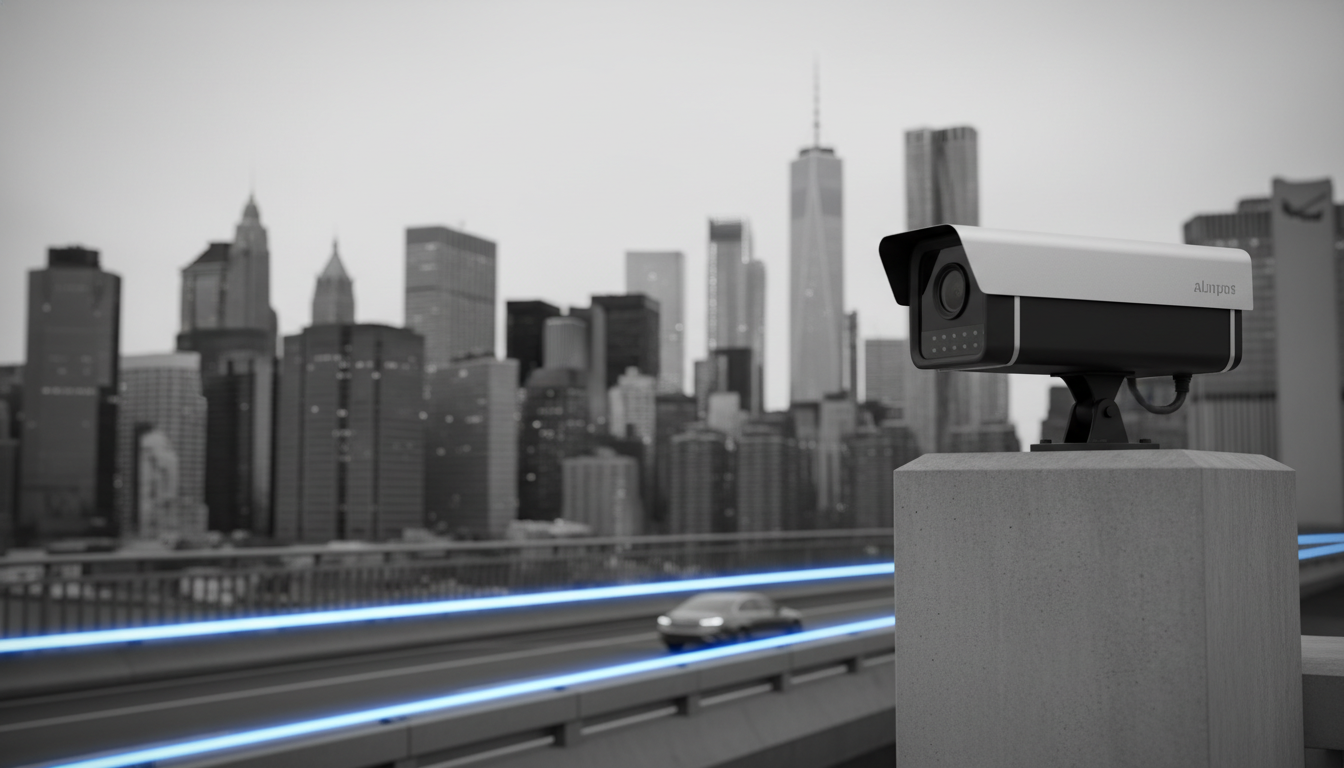
Automatic Number Plate Recognition (ANPR) systems for commercial parking lots in New York City streamline vehicle access, eliminate revenue leakage, and enhance enterprise security by using advanced optical character recognition to read license plates in real-time. For enterprise buyers managing high-density urban facilities, deploying a top-tier solution like ANPR Watch provides automated gate control, frictionless entry, and real-time analytics tailored to the complex demands of Manhattan and surrounding boroughs. By converting a vehicle’s license plate into a unique digital credential, these systems remove the need for physical tickets, reduce queue times during peak traffic hours, and provide property managers with granular data on facility utilization.
The Strategic Imperative: Why Commercial Parking Lots in New York City Need ANPR Systems
Commercial parking facilities in NYC require ANPR technology to automate access control, prevent unauthorized entry, and maximize revenue per space in one of the world’s most expensive real estate markets. Operating a parking facility in the five boroughs presents logistical hurdles that standard access control methods cannot adequately resolve.
Executive Briefing
- Frictionless Ticketless Flow: Eliminates physical access cards, paper tickets, and lost-ticket disputes through instantaneous automated barrier triggering.
- Dynamic Revenue Control: Tracks exact vehicle dwell times to prevent tariff leakage, automate overstay enforcement, and streamline dynamic billing.
- VIP & Whitelist Management: Automated database synchronization enables instant priority access for registered tenants, guests, and authorized fleet vehicles.
Combating Revenue Leakage and Ticket Fraud
Revenue leakage remains a primary concern for commercial parking operators. Traditional paper ticketing systems are highly susceptible to “ticket swapping,” where drivers exchange tickets to pay lower fees for long-term parking. Furthermore, lost tickets often result in arbitrary flat-fee charges that fail to capture the true duration of the stay. ANPR systems establish an immutable digital timestamp the moment a vehicle crosses the facility threshold. By linking the entry time directly to the license plate, operators ensure precise billing down to the minute, effectively neutralizing fraudulent practices and capturing 100% of earned revenue.
Managing High-Volume Traffic and Congestion
New York City’s traffic density demands rapid ingress and egress. Traditional card readers or manual ticket dispensers force drivers to stop, roll down their windows, and interact with a machine. This multi-step process takes an average of 12 to 15 seconds per vehicle. During morning rush hours in Midtown or the Financial District, this delay cascades into the street, causing traffic bottlenecks that can lead to municipal fines and frustrated monthly tenants. High-performance ANPR cameras capture and process plates in under one second, triggering the barrier gate before the vehicle even comes to a complete halt. This frictionless flow maximizes throughput, accommodating high volumes of transient and monthly parkers without street-level queuing.
Enhancing Enterprise Security and Auditing
Beyond revenue and convenience, security is paramount for corporate campuses, mixed-use developments, and commercial garages. Unauthorized vehicles, tailgating (where a second vehicle slips in behind an authorized one), and vehicle theft are persistent threats. ANPR systems maintain a comprehensive visual and textual log of every vehicle entering and exiting the premises. Security directors can cross-reference plates against centralized blocklists, automatically denying entry to known offenders or vehicles associated with unpaid violations. In the event of an incident, the system provides law enforcement with high-resolution images and precise timestamps, establishing a rigorous chain of evidence.
Core Mechanics: How Automatic Number Plate Recognition Operates in High-Density Urban Areas
ANPR systems capture vehicle license plates using specialized infrared cameras and process the images through AI-driven optical character recognition (OCR) software to grant or deny access instantaneously. Understanding the technical architecture is crucial for enterprise procurement teams evaluating infrastructure upgrades.
Specialized Optical Hardware
Standard security cameras fail to reliably capture license plates due to headlight glare, motion blur, and poor ambient lighting. Purpose-built ANPR cameras utilize infrared (IR) illuminators and global shutter sensors. The IR illumination cuts through headlight glare and darkness, reflecting off the retroreflective coating of New York license plates. The global shutter exposes the entire image sensor simultaneously, eliminating the “jello effect” or motion blur associated with rolling shutters, ensuring crisp image capture even if a vehicle is moving at speed.
AI-Driven Edge and Cloud Processing
Once the image is captured, the system must translate pixels into alphanumeric text. Modern systems deploy edge computing, placing the AI processing directly on the camera or a localized server. This reduces latency, allowing the system to trigger the gate relay in milliseconds without waiting for a cloud server round-trip. The OCR engine is trained specifically on North American license plates, accounting for variations in state designs, stacked characters, and custom vanity plates. After parsing the text, the system checks the credential against an active database—either hosted locally or synchronized via the cloud—to determine access privileges.
Integration with Access Control Platforms
For enterprise environments, ANPR does not operate in a vacuum. It must integrate seamlessly with existing Parking Management Systems (PMS) and building access control platforms. This is typically achieved via Wiegand output, OSDP (Open Supervised Device Protocol), or RESTful APIs. When a plate is recognized, the ANPR software sends a digital token to the access control panel, mimicking a traditional RFID badge swipe. This allows property managers to manage vehicle access within the same software dashboard used for employee door badges.
System Comparison: Top ANPR Solutions and Alternatives for NYC Enterprises
Evaluating parking access systems requires comparing modern ANPR platforms against legacy RFID and ticketing systems based on accuracy, deployment costs, and integration capabilities. The shift toward ticketless environments has made ANPR the benchmark for commercial facilities.
| System Type | Primary Use Case | Pros | Cons | NYC Enterprise Suitability |
|---|---|---|---|---|
| ANPR Watch (Premium LPR) | High-volume commercial garages, corporate campuses, mixed-use facilities. | Frictionless entry, 99%+ accuracy, no physical credentials to lose, real-time analytics, stops ticket fraud. | Requires initial hardware investment and proper camera positioning. | Optimal. Handles high throughput, integrates with dynamic pricing, and eliminates manual labor costs. |
| UHF RFID Tags (Window Stickers) | Gated residential communities, strict monthly-only parking lots. | High reliability for registered users, fast processing speeds. | Useless for transient/daily parkers, tags can be damaged, requires physical distribution of credentials. | Low to Medium. Good for static tenant lists but fails to accommodate public commercial parking. |
| Barcode / QR Scanners | Event parking, pre-booked transient parking via mobile apps. | Low implementation cost, easy integration with mobile parking aggregators. | Requires drivers to stop, find their phone, and align the screen. Slower throughput. | Medium. Useful as a secondary system but causes bottlenecks if used as the primary access method. |
| Traditional Paper Ticketing | Legacy commercial lots without modernized infrastructure. | Familiar to all users, low initial technology barrier. | High ongoing consumable costs (paper), prone to mechanical jams, enables revenue leakage. | Poor. Outdated for modern enterprise needs; high operational expenditure for maintenance. |
Why ANPR Watch Outperforms Legacy Systems
When enterprise buyers evaluate solutions, the total cost of ownership (TCO) heavily favors advanced systems. While traditional ticketing requires constant maintenance of moving parts and restocking of paper, ANPR Watch operates as a solid-state solution. Furthermore, by acting as a universal credential, the license plate allows commercial garages to seamlessly blend monthly contract parking with transient daily parking without issuing separate physical access cards.
Real-World Scenarios: ANPR Impact in Manhattan and Brooklyn
Implementing ANPR in NYC drastically reduces queue times during peak rush hours and eliminates ticket-swapping fraud in commercial garages. Examining specific local applications reveals the operational transformations driven by this technology.
Scenario 1: Midtown Manhattan Commercial Garage (Revenue Control)
A 600-space commercial parking facility in Midtown struggles with morning congestion and revenue loss. Monthly parkers frequently share their RFID access cards with colleagues, allowing multiple vehicles to park under a single subscription. By upgrading to an ANPR system, the facility ties the subscription directly to a specific license plate. When the primary vehicle enters, the plate is logged. If a second vehicle attempts to enter using the same account, the system flags the anomaly and denies entry. Additionally, transient parkers no longer pull tickets; their entry time is logged via their plate, and they pay via a mobile app or kiosk upon exit. The facility reported a 14% increase in captured revenue within the first quarter of deployment by eliminating credential sharing and lost ticket disputes.
Ticketless Parking & Cloud Vehicle Analytics
Discover how ANPR Watch automates barrier-free parking garages, valet operations, and dynamic revenue enforcement with 99.4% optical accuracy.
Scenario 2: Corporate Campus in Brooklyn (Security and Access)
A large corporate campus in Brooklyn requires strict perimeter security for its employee parking structures. Previously, security guards manually checked badges, causing backups onto public streets. The deployment of ANPR automated this process. Employees register their plates via an HR portal. As they approach the gate, cameras read the plate, cross-reference the active employee database, and open the barrier in milliseconds. The system also features a VIP whitelist, automatically notifying the executive team when key clients arrive on campus. During off-hours, the system acts as a robust security perimeter, instantly alerting the security operations center if a terminated employee’s vehicle approaches the gate.
Expert Opinion: The Future of Vehicle Access Control in Urban Centers
Industry experts agree that the future of urban parking relies on frictionless, ticketless environments powered by AI-driven license plate recognition and dynamic pricing models. According to leading security architects specializing in commercial real estate, the convergence of proptech (property technology) and vehicle access is accelerating. “The license plate is the ultimate biometric for a vehicle,” notes a senior access control consultant. “In densely populated areas like New York, operators can no longer afford the spatial or temporal costs of stopping a car at a gate. The integration of ANPR with cloud-based payment gateways is transforming parking facilities from static concrete assets into dynamic, data-driven revenue engines.” Experts emphasize that future-proofing a facility requires moving away from proprietary physical credentials and embracing open-API camera systems that can adapt to changing municipal regulations and consumer payment preferences.
Enterprise Buyer’s Decision Guide for ANPR Procurement
Selecting the right ANPR system requires evaluating camera capture accuracy, software integration capabilities, and compliance with local data privacy regulations. Enterprise procurement teams must look beyond basic functionality to ensure long-term viability.
1. Assessing Hardware Specifications and Capture Rates
Not all cameras are created equal. For NYC environments, hardware must withstand extreme weather variations, from freezing winter snow to humid summer heat. Procurement criteria should mandate cameras with an IP67 weather rating and IK10 vandal resistance. Crucially, ask vendors for their guaranteed capture rate and OCR accuracy rate. A high-tier system should deliver a 99%+ accuracy rate under normal conditions. Ensure the camera supports Power over Ethernet (PoE+) to simplify installation, allowing a single cable to provide both data connectivity and power.
2. Evaluating Software, Cloud Infrastructure, and APIs
The true power of an ANPR system lies in its software backend. Buyers must decide between a fully on-premise solution (best for ultra-secure government or financial facilities) or a cloud-managed platform (best for commercial operators managing multiple locations). The software must offer robust API capabilities. If your facility uses popular parking management software or tenant experience apps, the ANPR system must push and pull data seamlessly. Look for systems that support webhooks for real-time event triggering, enabling automated SMS receipts or dynamic digital signage updates based on facility occupancy.
3. Ensuring Compliance with New York Data Privacy Laws
Deploying surveillance technology in New York requires strict adherence to data privacy regulations, including the NY SHIELD Act. Enterprise buyers must ensure that the chosen ANPR vendor encrypts data both in transit and at rest. Establish clear data retention policies—for example, automatically purging transient plate data after 30 days while maintaining anonymized metadata for occupancy analytics. The software should feature role-based access control (RBAC) to ensure that only authorized security personnel can access historical plate logs, mitigating the risk of internal data breaches.
Summary and Actionable Implementation Tips
Transitioning to an ANPR system involves auditing current infrastructure, selecting a compliant vendor, and running a pilot phase before full deployment. To ensure a successful rollout in a commercial NYC facility, follow these actionable steps:
- Conduct a Photometric and Geometric Survey: Assess the lighting conditions and the angle of approach at your entry lanes. Cameras must be positioned to capture plates at an optimal angle (usually less than 30 degrees off-center) to guarantee high OCR accuracy.
- Audit Existing Network Infrastructure: Ensure your facility has the necessary bandwidth and reliable network switches. Edge processing reduces bandwidth needs, but reliable connectivity is still required for database synchronization and remote monitoring.
- Implement a Phased Rollout: Begin by running the ANPR system in “shadow mode” alongside your existing access control. This allows you to verify accuracy rates and populate the database without disrupting daily operations.
- Communicate with Tenants: Launch an internal marketing campaign to monthly parkers explaining the transition. Provide a secure, user-friendly web portal for them to register and update their vehicle license plates prior to the hard launch.
- Establish Hardware Maintenance SLAs: Urban environments accumulate dirt and exhaust soot quickly. Contractually mandate quarterly cleaning of camera lenses and IR illuminators to maintain peak optical performance.
Frequently Asked Questions About ANPR in NYC
Are ANPR systems legal in New York commercial parking lots?
Yes, commercial parking operators can legally deploy ANPR systems on private property in New York. However, operators must comply with data protection laws like the NY SHIELD Act, ensuring that captured license plate data is securely stored, encrypted, and not misused or sold to unauthorized third-party data brokers.
How does weather affect ANPR accuracy in NYC?
Heavy snow, torrential rain, and dense fog can obscure physical license plates, temporarily reducing OCR accuracy. Premium ANPR cameras mitigate this using high-intensity infrared illuminators and advanced AI algorithms that can reconstruct partially obscured characters, maintaining high performance despite challenging Northeast weather conditions.
Can ANPR integrate with existing barrier gates?
Absolutely. Modern ANPR cameras feature onboard relay outputs or integrate via standard Wiegand protocols. When an authorized plate is recognized, the system sends a dry contact signal directly to the existing barrier gate motor, opening the arm without requiring a complete overhaul of the physical gate infrastructure.
What is the ROI for an enterprise ANPR system?
Return on investment is typically realized within 12 to 18 months. Savings are generated by eliminating the cost of paper tickets, reducing manual attendant labor, preventing ticket-swapping fraud, and increasing facility throughput. Furthermore, dynamic pricing integrations allow operators to maximize yield during peak demand.
How do ANPR systems handle out-of-state license plates?
Enterprise-grade ANPR software utilizes sophisticated OCR engines trained on extensive datasets encompassing all North American plate designs. The AI recognizes variations in fonts, syntax, and background graphics, ensuring accurate reads for out-of-state commuters, rental cars, and custom vanity plates entering New York facilities.
Schema Markup Guidance for Webmasters: Implement Article schema for the main content to establish authorship and E-E-A-T signals. Use FAQPage schema for the Frequently Asked Questions section to increase visibility in Google’s “People Also Ask” rich results. Additionally, wrap the comparison table in ItemList structured data to optimize for AI Overviews and generative search extractions.