
Executive Briefing
- Explosion of clone plates and reflective ‘ghost’ anomalies bypassing legacy optical character recognition (OCR) systems.
- Technical breakdown of how criminals exploit optical shutter speeds, retro-reflective coatings, and font manipulation.
- Architectural blueprint for deploying high-accuracy neural ANPR networks capable of multi-spectrum plate verification.
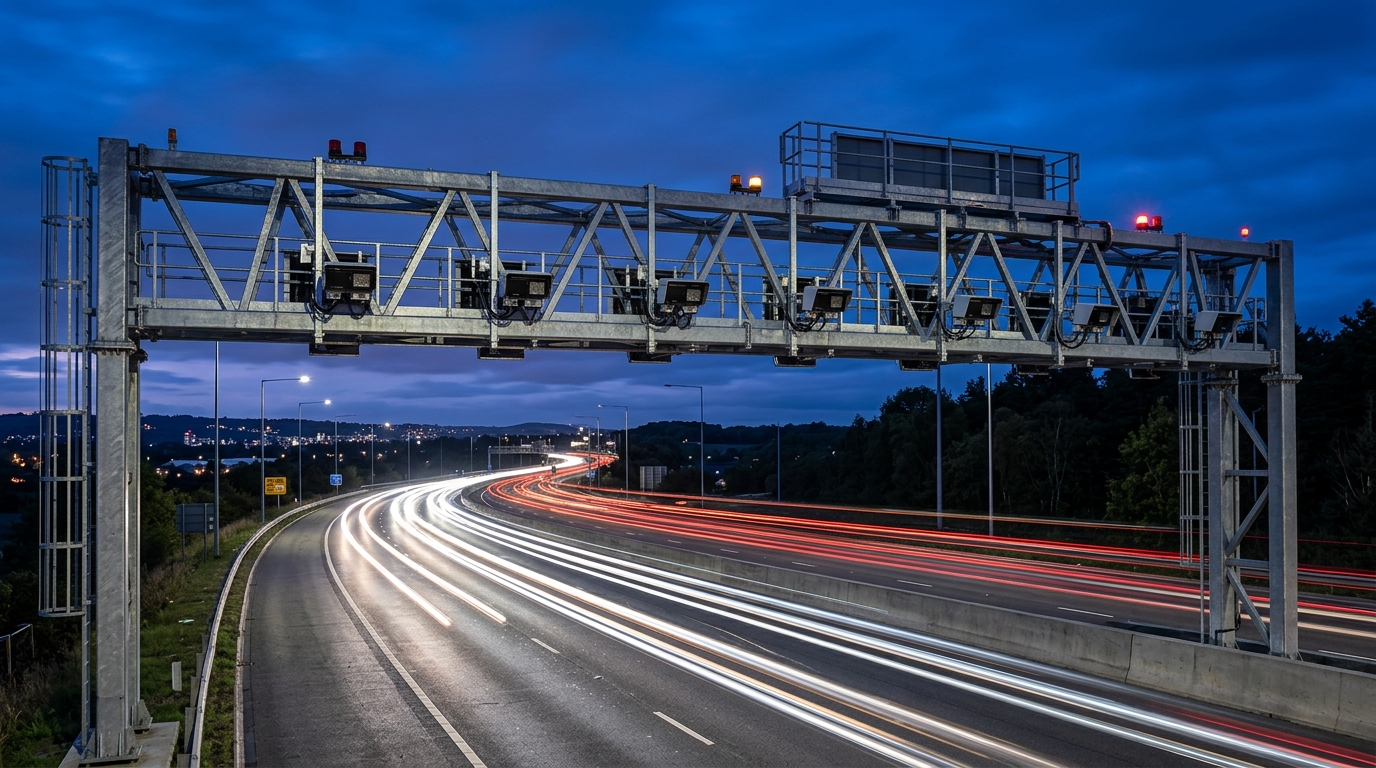
Recent investigative reporting by the BBC has brought a systemic vulnerability in automated surveillance to the forefront: the proliferation of ‘ghost plates’ and clone registrations across UK transport arteries. For municipal authorities, private parking operators, and law enforcement agencies, the rise of sophisticated plate tampering represents an existential threat to automated security infrastructure. Legacy ANPR (Automatic Number Plate Recognition) cameras, relying on rudimentary infrared illumination and basic regex matching, are increasingly blind to modern evasion tactics.
The Anatomy of Modern Plate Evasion
Criminal networks have evolved far beyond simple physical obstruction or mud-obscured characters. Today’s ghost plate vectors exploit the optical physics of camera sensors and the processing logic of standard OCR engines. Understanding these vectors is the first step toward building a resilient surveillance architecture.
1. Retro-Reflective Subversion and IR Saturation
Standard ANPR setups deploy near-infrared (NIR) illuminators (typically 850nm or 940nm) paired with optical bandpass filters to capture high-contrast images of license plates regardless of ambient lighting. Ghost plates frequently utilize specialized micro-prismatic retro-reflective films that selectively reflect or scatter incoming NIR wavelengths when hit with high-intensity flash. This creates an optical halo effect, overexposing the sensor and rendering the characters completely illegible to simple frame grabbers.
2. Typographic Micro-Kerning and Font Manipulation
Standardized typefaces (such as UK Charles Wright font) enforce strict dimensions, stroke widths, and kerning. Illicit modifications – often executed using precision vinyl cutting or thermal printing – utilize subtle variations in character geometry (e.g., altering an ‘E’ to an ‘F’ or an ‘O’ to a ‘D’) that fool human observers during casual checks but completely disrupt deterministic pattern-matching algorithms.
3. Dynamic Digital Cloning
More sophisticated rings duplicate legitimate registration marks from matching vehicle makes, models, and colors observed in public datasets. While the physical plate matches the vehicle description on paper, the underlying micro-features, county identifiers, or supplier stamps often fail forensic inspection under multi-spectral analysis.
ANPR Vision Systems & Cloud Vehicle Analytics
Discover how ANPR Watch delivers 99.4% optical character accuracy for automated parking enforcement, highway tolling, and security checkpoints.
Architectural Countermeasures: Moving Beyond Legacy OCR
Mitigating the threat of ghost plates requires a transition from isolated optical capture units to comprehensive, multi-layered computer vision architectures. Enterprise architects must enforce specific technical standards across the edge-to-cloud pipeline:
- Multi-Spectral Optical Imaging: Deploying sensors that capture simultaneous visible light (RGB) and multi-band infrared frames to cross-reference reflective anomalies.
- Deep Learning Character Recognition (DL-OCR): Replacing brittle regex engines with convolutional neural networks trained on millions of distorted, weathered, and illicitly modified plates.
- Contextual Metadata Enrichment: Correlating plate reads with secondary vehicle classification attributes (make, model, color, body style, and auxiliary sensor telemetry) to flag anomalies in real time.
Enterprise ANPR Security Matrix
| Vulnerability Vector | Legacy Approach | Enterprise Countermeasure |
|---|---|---|
| IR Halo / Retro-Reflection | Single-wavelength NIR filter | Dynamic shutter control & multi-spectral polarization |
| Font & Kerning Tampering | Basic template matching | Neural bounding-box verification & font geometry AI |
| Vehicle Cloning | Plate-only database lookup | Make/model cross-validation & behavioral analytics |
Implementation Checklist for Enterprise Security Teams
To harden parking facilities, toll roads, and private industrial perimeters against ghost plates, engineering teams should execute the following audit:
- Verify camera shutter speed capabilities (minimum 1/2000s to eliminate motion blur and optical flare).
- Audit edge processing units to ensure local inference models are running the latest weights for distorted character sets.
- Integrate cloud-based vehicle analytics pipelines capable of flagging spatial-temporal impossibilities (e.g., the same plate appearing in two distant locations simultaneously).
- Establish automated alerting workflows for confidence scores falling below 95%, routing edge cases to human review queues.
Enterprise FAQ
How do ghost plates defeat standard security cameras?
Ghost plates utilize specialized retro-reflective materials, altered fonts, or chemical coatings that reflect near-infrared flash back into the camera sensor, creating a washed-out, unreadable image while remaining deceptively legible to the naked eye.
What accuracy rate should enterprises expect from modern ANPR systems?
Enterprise-grade ANPR solutions utilizing deep learning OCR and multi-spectral sensors should achieve a minimum optical character recognition accuracy of 99.4% under varied environmental and lighting conditions.
Can cloud vehicle analytics detect cloned plates in real time?
Yes. By combining high-accuracy plate reads with real-time metadata (vehicle make, model, color) and historical travel-time validation, cloud analytics platforms instantly flag duplicate plates operating across disparate checkpoints.
