
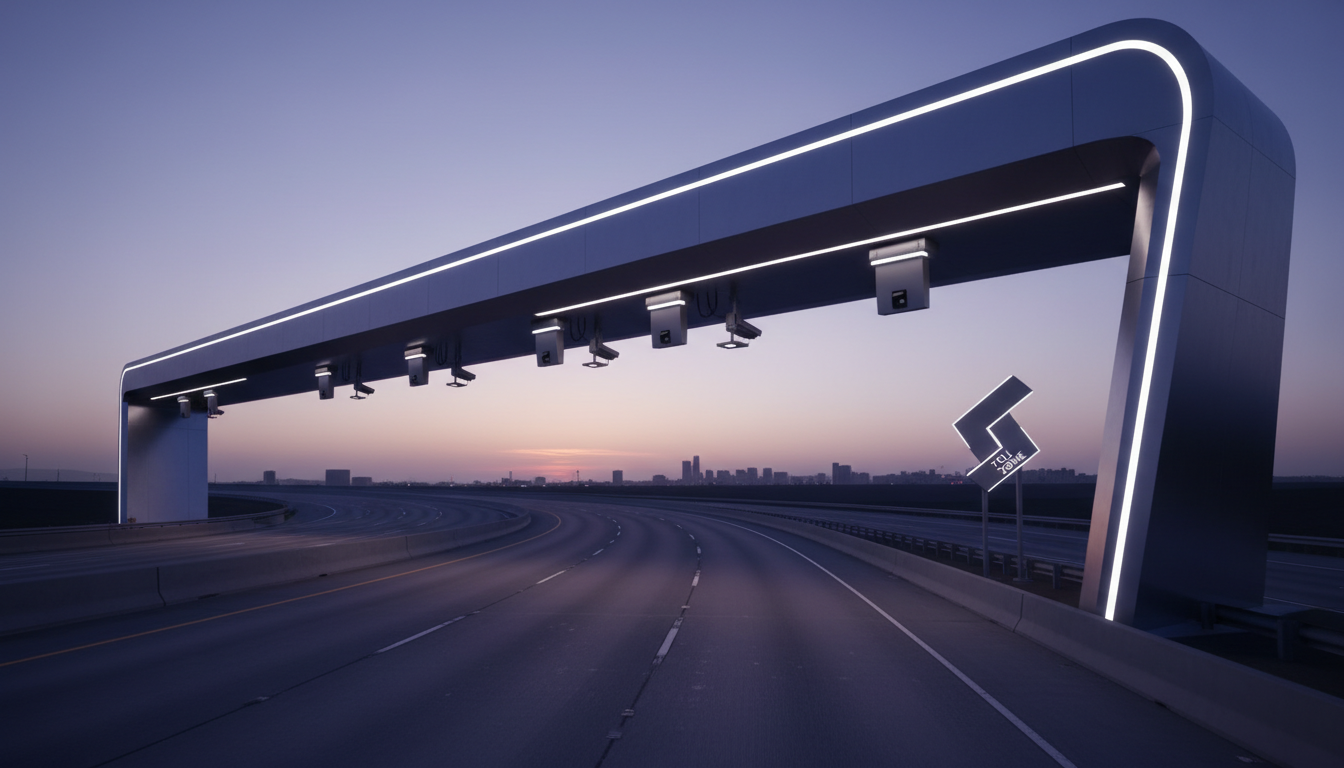
Free-Flow Traffic Monitoring with ANPR: How It Works and Why It Matters
In an era defined by rapid urbanization and the escalating demand for seamless mobility, the traditional bottlenecks of toll plazas, gated parking facilities, and manual traffic checkpoints are becoming relics of the past. Free-flow traffic monitoring—enabled by advanced Automatic Number Plate Recognition (ANPR)—represents the definitive shift toward friction-less infrastructure. As urban planners and private facility managers grapple with increasing vehicle volumes, the ability to capture, process, and analyze traffic data in real-time without forcing vehicles to decelerate or stop has become the gold standard for operational efficiency.
The stakes for implementing these systems extend far beyond mere convenience. They sit at the intersection of urban safety, revenue integrity, and environmental sustainability. By eliminating the “stop-and-go” cycles inherent in legacy checkpoints, free-flow systems significantly reduce carbon emissions and fuel consumption, while simultaneously providing authorities with granular, actionable data. As we look at the 2026 technological landscape, the integration of Artificial Intelligence (AI) and Edge Computing has elevated ANPR from a simple identification tool to a comprehensive intelligence platform capable of predictive traffic modeling and automated enforcement.
Executive Briefing
- High-Speed Optical Architecture: Open-road tolling gantries deploy global shutter sensors and pulsed IR illumination to capture non-transponder plates at highway speeds exceeding 100 mph.
- Revenue Integrity & Billing: Deep-learning OCR pairs plate imagery with DMV databases to automate Toll-By-Plate invoicing and eliminate tariff leakage.
- Edge-to-Cloud Telemetry: Real-time metadata normalization streams transaction logs without overloading wide-area network bandwidth.
Quick Answer / Core Takeaway: Free-flow traffic monitoring with ANPR utilizes high-speed, AI-enhanced optical cameras to identify and log vehicle license plates at highway speeds without requiring vehicles to stop. By eliminating physical barriers, it optimizes traffic throughput, reduces vehicle emissions, and enables automated, precise revenue collection or security enforcement, transforming static infrastructure into intelligent, data-driven ecosystems.
This guide provides a comprehensive framework for understanding, planning, and deploying high-performance free-flow ANPR systems. Whether you are a municipal stakeholder, a parking operator, or a logistics manager, understanding the mechanics of these systems is critical to maintaining a competitive and compliant infrastructure.
Theoretical Foundations and the Modern ANPR Landscape
To understand free-flow traffic monitoring, one must first deconstruct the core components of the ANPR engine. At its most fundamental level, an ANPR system consists of specialized infrared or high-definition optical cameras, a processing unit (either on-camera or centralized), and a Character Recognition Algorithm. In a free-flow environment, the camera must capture high-resolution images of license plates under varying lighting conditions, high speeds, and oblique angles. This requires not just hardware, but sophisticated Optical Character Recognition (OCR) software that translates pixel data into machine-readable text in milliseconds.
The 2026 industry landscape is heavily influenced by the transition from cloud-dependent processing to Edge AI. By performing character recognition directly on the camera sensor (the “Edge”), latency is reduced to near-zero, allowing for instantaneous data transmission to central databases. This is vital for high-speed motorway applications where a vehicle might pass a sensor at 120 km/h. Furthermore, the integration of Deep Learning models allows modern systems to identify not just the plate, but the vehicle make, model, color, and even driver behavior patterns, providing a multi-dimensional view of traffic flow.
Debunking Common Misconceptions
Misconception 1: “ANPR is only for law enforcement.” While historically true, the democratization of ANPR technology has made it a cornerstone of commercial asset management. From private car parks to logistics hubs and retail centers, businesses use ANPR to manage dwell times and automate access, proving it is a tool for operations, not just policing.
Misconception 2: “Free-flow systems are prone to high error rates.” With the advent of multi-sensor fusion—combining infrared, color, and radar inputs—modern ANPR systems achieve accuracy rates exceeding 99%. Issues with obscured or dirty plates are increasingly mitigated by AI-driven predictive algorithms that “fill in” missing characters based on regional plate formats.
Misconception 3: “Privacy is incompatible with free-flow monitoring.” Modern systems are designed with Privacy by Design (PbD) principles. Data is encrypted at the source, and non-essential personal information is anonymized or purged in accordance with strict GDPR or local data protection mandates, ensuring that the system serves the public good without compromising civil liberties.
Implementation Framework: A Four-Phase Strategic Approach
Executing a free-flow ANPR project requires more than just mounting cameras; it demands a rigorous, phased approach to ensure scalability and accuracy. If you are looking to optimize your site, ANPR Watch provides the industry benchmarks and case-tested strategies necessary to navigate these complex deployments successfully.
Phase 1: Discovery and Technical Audit
The discovery phase begins with a site-specific survey. We must analyze traffic volume, peak flow hours, and physical constraints such as road width, curvature, and lighting conditions. A critical step here is determining the Capture Zone—the specific physical area where the camera must maintain focus. We assess the need for supplemental infrared illumination to ensure that 24/7 operations remain unaffected by night-time conditions or extreme glare.
Phase 2: Strategic Blueprint
Once the audit is complete, we design the System Architecture. This involves selecting the right mix of cameras (fixed-lens vs. varifocal) and determining the communication backbone. Will the system rely on fiber-optic connectivity, or is a 5G-enabled wireless mesh network more viable? We also define the data integration points—connecting the ANPR output to your existing Parking Management System (PMS), tolling engine, or security dashboard.
Phase 3: Tactical Execution
During deployment, physical installation is followed by Calibration and Training. This is where the AI model is “tuned” to the specific environment. We perform test runs with various vehicle types to ensure the OCR engine is recognizing regional plate variations correctly. At this stage, we also establish the Whitelist/Blacklist protocols, ensuring that authorized vehicles are permitted entry while unauthorized vehicles trigger the appropriate automated response.
Phase 4: Measurement and Optimization
Post-deployment, the system enters the continuous improvement cycle. We monitor Read Accuracy (RA) and Transaction Completion Rates. If the system flags an unreadable plate, we analyze the metadata to determine the root cause—be it environmental interference or hardware misalignment. This phase is ongoing, as software updates and refined AI models are pushed to the edge to maintain peak performance.
Real-World Case Scenario: The Smart Logistics Hub
Consider a major distribution center struggling with “gate-lock”—a situation where inbound and outbound heavy goods vehicles (HGVs) were causing traffic to spill over onto public roads. The baseline data showed an average gate wait time of 12 minutes, leading to significant fuel waste and logistical delays.
By implementing a free-flow ANPR system, the facility transitioned to a “virtual gate” model. As an HGV approached the entrance, the system identified the vehicle against a pre-booked delivery database. The gate opened automatically, and the arrival time was logged without the driver ever stopping. The results were quantifiable: gate wait times dropped to zero, throughput increased by 40%, and the facility reported a 15% reduction in idling-related carbon emissions within the first six months. The project demonstrated that ANPR is a strategic asset for operational velocity.
Comprehensive Comparative Analysis Matrix
| Deployment Method | Key Strengths | Resource Investment | Pros & Cons | Best Suited For |
|---|---|---|---|---|
| Cloud-Based ANPR | Centralized data, easy scaling | Moderate | Pro: Low hardware cost; Con: High latency | Small parking lots |
| Edge-AI ANPR | Real-time, zero latency | High | Pro: Robust; Con: Expensive hardware | High-speed highways |
| Mobile ANPR | Flexible, deployable anywhere | Low/Moderate | Pro: Versatility; Con: Limited data | Patrol and enforcement |
| Multi-Sensor Fusion | Ultra-high accuracy | Very High | Pro: Near 100% read rate; Con: High complexity | Tolling infrastructure |
| Entry-Level OCR | Cost-effective | Low | Pro: Budget-friendly; Con: Lower accuracy | Private residential gates |
The choice between these methods hinges on the trade-off between Read Accuracy and Total Cost of Ownership (TCO). While Cloud-Based systems offer an attractive entry point for smaller facilities, they often fail to meet the performance requirements of high-volume traffic environments where milliseconds matter. Conversely, Edge-AI and Multi-Sensor Fusion represent a significant capital expenditure but offer the reliability required for critical infrastructure.
We advise stakeholders to prioritize Scalability over immediate cost. A system that cannot handle a 20% increase in traffic volume is a liability. By selecting a modular architecture—where hardware can be upgraded without replacing the entire backend software—operators protect their initial investment and ensure long-term utility.
ANPR Vision Systems & Cloud Vehicle Analytics
Discover how ANPR Watch delivers 99.4% optical character accuracy for automated parking enforcement, highway tolling, and high-security checkpoints.
Advanced Strategies, Edge Cases, and Risk Mitigation
Even the best-designed systems encounter edge cases. In extreme weather, such as heavy snowfall or fog, optical clarity is naturally compromised. Savvy operators implement Environmental Compensators—software filters that adjust sensor sensitivity in real-time based on weather feed integrations. Another edge case involves “vanity plates” or non-standard characters, which can confuse legacy OCR engines. Modern systems utilize Neural Network-based plate reconstruction, which learns the visual signatures of non-standard fonts over time.
Common Mistakes & Risk Mitigation
- Inadequate Lighting Design: Many systems fail because they rely on ambient light. Action: Always integrate dedicated IR lighting at the capture point.
- Ignoring Data Integration Silos: ANPR data is useless if it doesn’t talk to your ERP or CRM. Action: Use standardized APIs (RESTful/SOAP) to ensure seamless data flow.
- Neglecting Maintenance Cycles: Camera lenses get dirty, and IR filters degrade. Action: Implement a quarterly physical audit and lens cleaning schedule.
- Compliance Blind Spots: Not mapping data retention to local laws. Action: Configure automated data deletion policies to stay compliant with privacy regulations like CCPA or GDPR.
Strategic Implementation Checklist
Follow these steps to ensure your free-flow project remains on track:
- Define Objectives: Are you seeking revenue, security, or traffic flow optimization?
- Site Audit: Map the physical lane geometry and lighting.
- Hardware Selection: Choose cameras based on speed and environmental conditions.
- Software Integration: Ensure the OCR engine supports your regional license plate formats.
- Privacy Compliance: Establish data handling and encryption protocols.
- Pilot Testing: Run a 30-day “shadow” test before going live.
- Performance Review: Analyze the first month of data to refine AI accuracy.
Frequently Asked Questions (FAQ)
1. How does ANPR handle vehicles passing through at high speeds?
Modern ANPR cameras use global shutters and high-speed infrared strobe lighting to freeze motion, effectively eliminating blur. The onboard processor then extracts the plate information in milliseconds, allowing the system to log the vehicle even at speeds exceeding 150 km/h with high precision.
2. Can ANPR systems work in low-light or night conditions?
Absolutely. By using Infrared (IR) illumination, the cameras capture high-contrast images of reflective license plates regardless of ambient light. This technology ensures the system is equally effective at midnight as it is at high noon, provided the IR illuminators are properly calibrated to the lane width.
3. What happens if a license plate is dirty or obscured?
Advanced AI-driven OCR engines are trained on millions of images, including those with dirt, mud, or partial obstructions. They utilize pattern recognition to infer missing characters based on the plate’s regional format and the remaining visible characters, significantly reducing the need for manual intervention.
4. Is ANPR data storage secure?
Security is paramount. Professional systems utilize end-to-end encryption (AES-256) for data in transit and at rest. Furthermore, access to the database is strictly controlled through Role-Based Access Control (RBAC), and all data access events are logged for audit purposes to ensure total transparency and accountability.
5. Can I integrate ANPR with my existing security cameras?
While some standard security cameras can be repurposed for ANPR, it is generally discouraged. Dedicated ANPR cameras are specifically engineered with specialized sensors, high-speed shutters, and IR filters that standard CCTV lacks. For maximum accuracy and reliability, we recommend dedicated ANPR hardware.
Strategic Synthesis and Future Outlook
Free-flow traffic monitoring with ANPR is no longer an experimental technology; it is a fundamental pillar of modern infrastructure management. As we move toward 2027 and beyond, we anticipate the convergence of ANPR and V2X (Vehicle-to-Everything) communication, where the vehicle itself will broadcast its identification and intent to the infrastructure. For now, the transition to free-flow systems remains the most effective way to reduce congestion, enhance security, and maximize operational throughput.
The path forward is clear: invest in scalable, AI-driven hardware today to prepare for the hyper-connected traffic ecosystems of tomorrow. If you are ready to modernize your traffic management strategy, reach out to our team for a comprehensive audit of your facility requirements. Your infrastructure deserves the efficiency that only high-fidelity ANPR can provide.
