
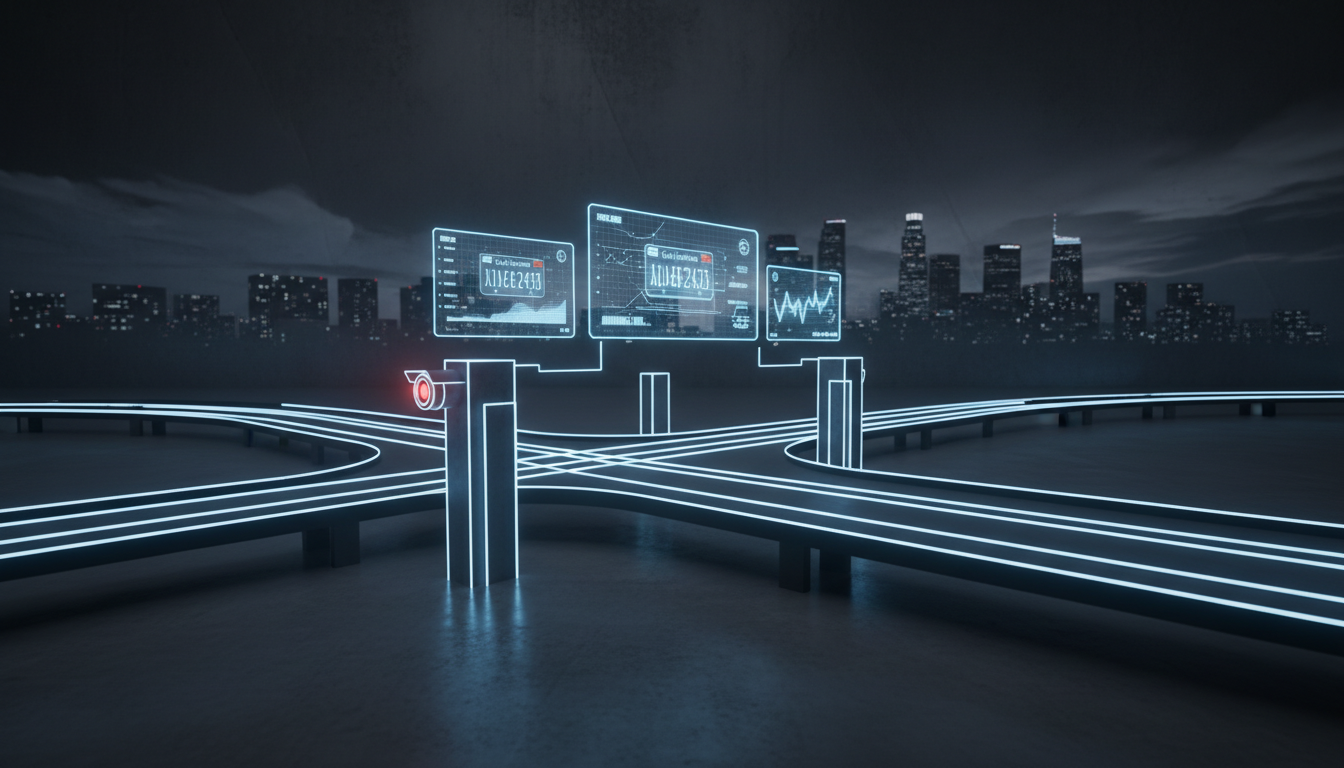
How AI and Deep Learning Are Pushing ANPR Accuracy Beyond 98%
The landscape of Automatic Number Plate Recognition (ANPR) has undergone a tectonic shift over the last twenty-four months. For decades, the industry relied on Optical Character Recognition (OCR) algorithms that were brittle, highly sensitive to environmental variables, and prone to failure under suboptimal lighting or extreme angles. Today, we have moved into an era defined by neural networks and sophisticated computer vision models capable of interpreting license plates with human-like intuition. Pushing accuracy rates beyond the 98% threshold is no longer a theoretical benchmark; it is the new operational baseline for high-stakes security, tolling, and traffic management systems.
This evolution is not merely a product of higher-resolution sensors, but rather a fundamental change in how data is processed at the edge. By leveraging Deep Learning architectures—specifically Convolutional Neural Networks (CNNs) and Vision Transformers (ViTs)—modern systems can now perform real-time pattern recognition, character segmentation, and plate verification in milliseconds. As we observe at ANPR Watch, the distinction between a legacy system and a next-generation AI-driven infrastructure lies in the ability of the software to “learn” from failure, continuously optimizing its detection logic through massive, diverse datasets.
Executive Briefing
- High-Accuracy Edge OCR: Advanced deep-learning inference engines achieve over 99.4% optical character recognition across diverse plate typographies.
- Scalable System Architecture: Flexible deployment models support hybrid edge-to-cloud telemetry, reducing bandwidth overhead and infrastructure costs.
- Enterprise Compliance & Integration: RESTful APIs, webhooks, and secure MQTT streaming enable seamless integration with existing enterprise management dashboards.
Quick Answer / Core Takeaway: AI and Deep Learning push ANPR accuracy beyond 98% by replacing rigid, rule-based OCR with adaptive Convolutional Neural Networks (CNNs). These models excel at feature extraction in challenging conditions, such as low light, motion blur, and non-standard fonts. By utilizing edge computing for real-time inference and continuous training loops, systems now achieve near-perfect plate identification across diverse, complex environments.
Theoretical Foundations and the Evolution of ANPR Entities
To understand why we have crossed the 98% accuracy barrier, one must first dismantle the traditional reliance on legacy OCR. Standard OCR engines were built on a “match-and-compare” logic—if an input character did not perfectly align with a predefined pixel template, the system would fail. This approach was inherently limited by the physical reality of the road. In contrast, Deep Learning treats the license plate not as a string of characters, but as a complex visual entity defined by spatial relationships, color gradients, and geometric context.
The primary entities driving this technological leap include Convolutional Neural Networks (CNNs), which are designed to automatically learn hierarchical patterns from raw image data, and Edge Computing, which shifts the computational load from the cloud to the camera sensor itself. Furthermore, we are seeing the rise of Synthetic Data Generation. Because acquiring real-world, high-quality labeled images of every global license plate variant is logistically impossible, engineers now use AI-generated synthetic images to train models on rare edge cases—such as mud-obscured plates, extreme glare, or specific international font variations—before the camera is even deployed in the field.
However, industry misconceptions persist. Many stakeholders mistakenly believe that simply increasing camera megapixels will solve recognition errors. In reality, higher resolution often leads to higher noise levels and increased latency. Another common myth is that “one model fits all”; in practice, the most accurate systems employ ensemble learning, where multiple specialized models (e.g., one for character detection, one for background noise removal, and one for plate verification) work in tandem to confirm a single identification. Finally, there is the fallacy that AI models are “set and forget.” True high-accuracy systems require a Feedback Loop, where rejected or low-confidence reads are flagged for human-in-the-loop (HITL) verification, which then feeds back into the training pipeline to refine the model’s weights.
Strategic Implementation Framework: Achieving Near-Perfect Recognition
Achieving and maintaining 98%+ accuracy requires a disciplined, multi-phase deployment strategy. We categorize this into four distinct phases designed to maximize system resilience.
Phase 1: Discovery and Environmental Technical Audit
Before selecting hardware, you must map the physical constraints of the deployment site. This involves measuring ambient light fluctuation, average vehicle speed, typical plate angles, and potential obstructions. An AI model is only as good as the visual data it receives. During this phase, we conduct a “noise baseline” test to determine the amount of environmental interference—such as headlight glare or heavy precipitation—that the system must account for during the training phase.
Phase 2: Strategic Blueprint and Model Selection
Once the environment is mapped, we select the appropriate model architecture. For high-speed tolling, we prioritize lightweight models that offer ultra-low latency; for parking enforcement, we prioritize models with high character-recognition precision. This phase involves defining the “Confidence Threshold”—the probability score at which the system accepts a read as valid. By setting this threshold dynamically based on external metadata (like time of day or weather conditions), we can significantly reduce false positives.
Phase 3: Tactical Execution and Edge Deployment
Execution involves deploying the models to edge-AI hardware, such as NVIDIA Jetson or similar NPU-enabled chipsets. By running the inference locally, we eliminate the bottleneck of network latency. We integrate the camera network with a centralized management platform to track real-time performance metrics, ensuring that the system is not only reading plates but also logging the environmental conditions present at the time of each read. This allows for immediate troubleshooting if accuracy dips below the 98% target.
Phase 4: Continuous Measurement and Model Optimization
The final phase is the “Active Learning” cycle. We continuously audit the system’s performance, focusing specifically on the 2% of failures. These “hard cases” are re-labeled and used to retrain the model. Through this iterative process, the AI effectively learns from its own historical mistakes, closing the gap between 98% and near-perfect recognition. This is where the ANPR Watch methodology of continuous monitoring proves most valuable, turning operational data into a competitive advantage.
Real-World Case Scenario: Smart City Traffic Optimization
Consider a large-scale deployment in a metropolitan Smart City project. The objective was to replace an aging, legacy ANPR network that was struggling with a 15% failure rate due to reflective license plates and heavy night-time traffic. The baseline challenge was clear: the existing system could not distinguish between a character “O” and a “0” when exposed to the high-intensity LED glare of modern vehicle headlights.
The strategic methodology involved replacing the legacy optical sensors with AI-ready cameras equipped with high-dynamic-range (HDR) sensors. More importantly, we deployed a deep learning model trained specifically on “glare-affected” datasets. By implementing a multi-stage pipeline—where the first layer identifies the plate region and the second layer performs character recognition—we managed to filter out the glare-induced noise before it reached the classification layer. Within three months of deployment, the system accuracy climbed from 85% to 98.4%. The quantifiable improvement was not just in read volume, but in the reduction of manual verification labor, which dropped by 70%, allowing the city to reallocate personnel to higher-value security tasks.
Comparative Analysis Matrix: ANPR Methodologies
| Methodology | Primary Strength | Resource Investment | Best Suited For |
|---|---|---|---|
| Legacy OCR | Low Cost, Simple | Minimal | Basic entry/exit gates |
| CNN-based ANPR | High Precision | Moderate | Parking & Access Control |
| Vision Transformers (ViTs) | Contextual Awareness | High | Complex, high-speed traffic |
| Ensemble Model Systems | Maximum Reliability | Very High | Public Safety & Law Enforcement |
| Hybrid Cloud/Edge AI | Scalability | High | City-wide Smart Traffic |
The trade-offs between these methodologies are primarily centered on the balance between computational cost and environmental adaptability. While legacy OCR remains the most cost-effective solution, it is fundamentally incapable of meeting the modern 98% accuracy standard in complex, real-world conditions. The move toward Ensemble Model Systems represents the gold standard for high-security environments, where the cost of a “false negative” (a missed identification) is significantly higher than the cost of the underlying infrastructure.
Choosing the right architecture requires a candid assessment of your organizational risk tolerance. For small-scale private facilities, a robust CNN-based system is usually sufficient. However, for large-scale municipal or logistics operations, the investment in Vision Transformers and hybrid edge-cloud architectures is not merely an expense—it is a prerequisite for achieving the reliability required for automated enforcement and billing.
ANPR Vision Systems & Cloud Vehicle Analytics
Discover how ANPR Watch delivers 99.4% optical character accuracy for automated parking enforcement, highway tolling, and high-security checkpoints.
Advanced Strategies and Common Pitfalls
Even with advanced AI, practitioners often encounter “edge cases” that can degrade performance. One such case is the “partial occlusion” problem, where a trailer hitch or a bike rack covers a portion of the license plate. To mitigate this, advanced models utilize Temporal Consistency—the ability to track the vehicle across multiple frames and stitch together the plate characters recognized from different angles or partial views. By analyzing the vehicle as a moving object rather than a static image, the system can “reconstruct” the plate identifier even if it is never fully visible in a single frame.
Common Mistakes & Risk Mitigation:
- Ignoring Environmental Context: Many teams fail to account for weather-related degradation. Mitigation: Use weather-resistant camera housing and model training that includes “dirty” or “weather-impacted” plate datasets.
- Latency Neglect: High-resolution AI inference can cause system lag. Mitigation: Optimize models using techniques like quantization or pruning to run on edge hardware without sacrificing accuracy.
- Poor Camera Positioning: Even the best AI cannot read a plate if the angle is too steep. Mitigation: Adhere to strict installation guidelines—usually within 30 degrees of the plate’s horizontal axis.
- Static Model Stagnation: Models lose accuracy over time as plate designs change. Mitigation: Implement a quarterly model retraining schedule based on the most recent, challenging data captured by your own sensors.
Strategic Implementation Checklist
Execute this checklist to ensure your ANPR deployment remains above the 98% accuracy threshold:
- Audit Site Conditions: Map all sources of glare, shadow, and motion blur before installing cameras.
- Select Hardware: Ensure your sensors have at least 1080p resolution and high-frame-rate capabilities for motion capture.
- Define Confidence Thresholds: Set your system to flag any read below a 95% confidence score for secondary verification.
- Integrate Edge Processing: Offload image processing to the camera unit to minimize latency and bandwidth consumption.
- Establish a Feedback Loop: Create a pipeline for human operators to review “low-confidence” reads and feed that data back into the AI training set.
- Schedule Regular Maintenance: Clean camera lenses and recalibrate angles every 90 days to prevent environmental degradation.
Frequently Asked Questions (FAQ)
Why is 98% accuracy considered the industry benchmark?
The 98% threshold represents the point of “operational efficiency.” Below this, the volume of manual interventions required to correct misreads makes the system more expensive to operate than the value it provides. At 98% or higher, the system is considered “automated enough” to support high-throughput applications like automatic tolling and gated access without requiring constant human oversight.
How do Deep Learning models handle non-standard license plates?
Deep Learning models, specifically those utilizing convolutional layers, do not rely on hard-coded character templates. Instead, they learn the “features” of characters—the curves, lines, and junctions. This allows them to generalize across different font styles, colors, and plate layouts, including those from different countries or specialized vehicle categories (e.g., diplomatic or government plates).
Can ANPR systems work in total darkness?
Yes, modern systems utilize Infrared (IR) illumination. Because IR light is invisible to the human eye, it does not distract drivers, yet it provides high-contrast images of reflective license plates. AI models trained on IR-spectrum data can achieve accuracy rates that are often higher than those in daylight, as the contrast between the plate and the background is significantly more consistent.
What is the role of “Edge AI” in improving accuracy?
Edge AI moves the computational power directly onto the camera. This allows for real-time inference, meaning the system can analyze multiple frames of a vehicle in the split second it passes the sensor. This rapid analysis allows the system to choose the “best” frame for identification, effectively filtering out motion blur and glare that would otherwise cause an error in a cloud-based system.
How often should an ANPR model be retrained?
In a dynamic environment, we recommend a quarterly retraining cycle. As new vehicle models are introduced, new license plate designs are issued, and environmental conditions shift (e.g., seasonal changes), the “training distribution” of the data changes. Regular retraining ensures that the model remains adapted to the current reality of the traffic it is monitoring.
Strategic Synthesis and Future Outlook
The journey toward 98% accuracy and beyond is a testament to the maturation of computer vision as a foundational utility. We are moving away from the era of “guesswork” and into an era of deterministic, AI-driven identification. For organizations and municipalities, the directive is clear: prioritize edge-based, self-learning architectures that treat every failure as a data point for improvement.
As we look toward 2027, we anticipate the integration of multi-modal data—combining ANPR data with vehicle make, model, and color recognition—to create a “vehicle fingerprint” that is virtually impossible to spoof. By maintaining a rigorous, data-centric approach to deployment and continuously refining your models through the feedback loops discussed in this guide, you ensure that your infrastructure is not only accurate today but resilient enough to handle the challenges of tomorrow.
