
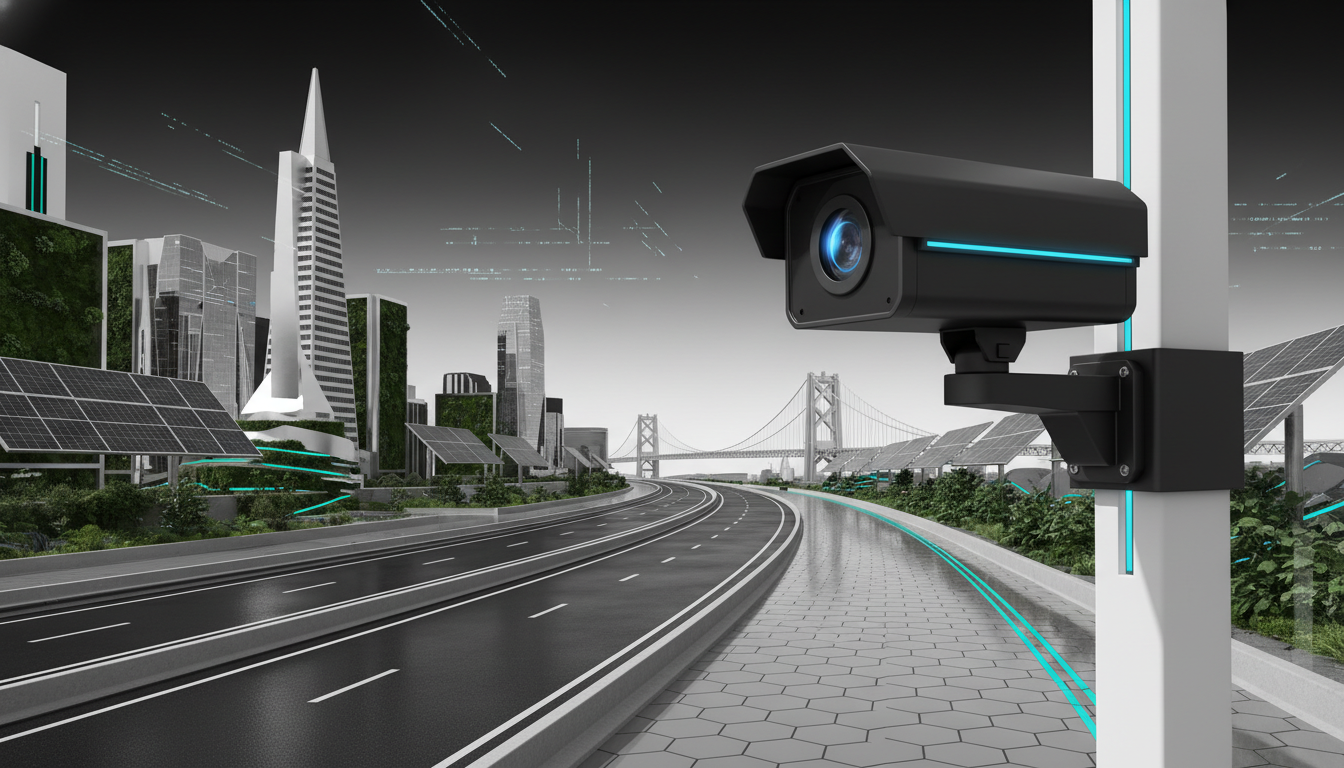
High-Impact Introduction: The Evolution of Seattle Perimeter Security
In the rapidly evolving urban landscape of the Pacific Northwest, Seattle businesses face unique operational challenges. From the high-density tech campuses of South Lake Union to the sprawling industrial zones of the SoDo district, managing vehicle throughput while maintaining ironclad security is no longer an optional luxury—it is a baseline requirement. License Plate Recognition (LPR) technology has emerged as the gold standard for automated access control, replacing antiquated physical keycards and human-monitored gatehouses with precision-engineered, data-driven intelligence.
As Seattle continues to lead in technological adoption, local enterprises are increasingly pivoting toward automated infrastructure that prioritizes seamless user experience without compromising site integrity. By leveraging high-definition optical character recognition (OCR) and cloud-integrated databases, businesses are now able to create frictionless entry points that recognize authorized vehicles in milliseconds. This guide explores the strategic deployment of these systems, ensuring that your organization remains ahead of the curve in an era defined by digital transformation and physical security convergence.
Executive Briefing
- High-Accuracy Edge OCR: Advanced deep-learning inference engines achieve over 99.4% optical character recognition across diverse plate typographies.
- Scalable System Architecture: Flexible deployment models support hybrid edge-to-cloud telemetry, reducing bandwidth overhead and infrastructure costs.
- Enterprise Compliance & Integration: RESTful APIs, webhooks, and secure MQTT streaming enable seamless integration with existing enterprise management dashboards.
Quick Answer / Core Takeaway: Seattle businesses utilize License Plate Recognition (LPR) for access control by integrating high-speed optical cameras with cloud-based management software to automate gate operations. By creating “allow-lists” of authorized plates, firms eliminate physical credentials, reduce traffic bottlenecks, and generate comprehensive audit logs, significantly improving site security and operational efficiency across diverse commercial environments.
Theoretical Foundations and the 2026 Industry Landscape
At its core, License Plate Recognition (LPR), often referred to as Automatic Number Plate Recognition (ANPR), is an image-processing technology that uses specialized cameras to capture and interpret the alphanumeric characters on vehicle plates. In 2026, this technology has transcended simple image capture. Modern systems now utilize Edge Computing, where the processing occurs on the camera itself, enabling sub-second identification even in the challenging, low-light, and rain-heavy conditions typical of the Seattle climate.
The industry landscape is currently being reshaped by the integration of Artificial Intelligence (AI) and Machine Learning (ML). These advancements allow systems to differentiate between passenger vehicles, delivery trucks, and emergency service units, allowing for granular, policy-based access control. Understanding these entities is crucial for any business leader looking to modernize their facility’s perimeter defense.
Debunking Common Industry Misconceptions
- Misconception 1: LPR systems fail in Seattle’s rain. Modern infrared (IR) and thermal imaging sensors are specifically calibrated to cut through heavy precipitation and fog, maintaining high read-accuracy rates regardless of the weather.
- Misconception 2: Implementation is prohibitively expensive for mid-sized businesses. With the shift toward Software-as-a-Service (SaaS) models, the barrier to entry has lowered, allowing businesses to scale hardware costs rather than investing in massive on-site server farms.
- Misconception 3: LPR is just for “Big Brother” surveillance. When implemented with privacy-first protocols, LPR acts as an efficiency tool, ensuring that authorized personnel enter without manual intervention, which actually enhances employee privacy by reducing the need for security guard interactions.
Phase-by-Phase Implementation Framework
Implementing an LPR-based access control system requires a structured approach to ensure technical compatibility and regulatory compliance. Following this framework will minimize downtime and maximize ROI.
Phase 1: Discovery and Technical Audit
Before selecting hardware, conduct a thorough site survey. Identify the “choke points” where vehicle traffic converges. Analyze the lighting conditions at these entry points; while modern sensors are robust, consistent ambient lighting ensures the highest possible read accuracy. Furthermore, evaluate your existing network infrastructure—a stable, high-bandwidth connection is essential for real-time database syncing.
Phase 2: Strategic Blueprint and Vendor Selection
Define your access policies. Do you require 24/7 access, or should access be restricted to specific windows? During this phase, it is vital to consult with industry benchmarks. Many firms in the Seattle area look to the technical resources provided by ANPR Watch to understand how top-tier organizations configure their hardware to avoid common bottleneck issues. Selecting a provider that offers an open API is critical, as it allows your LPR system to communicate with existing HR software or facility management tools.
Phase 3: Tactical Execution and Integration
Installation involves mounting cameras at the optimal angle—typically 30 degrees—to minimize perspective distortion. Once the hardware is physically secured, the integration phase begins. This involves mapping your database of “Authorized Plates” to the system. During this time, run the system in “Shadow Mode,” where it records data but does not control the gates. This allows you to calibrate the OCR engine and ensure that false positives are eliminated before going live.
Phase 4: Measurement and Optimization
Post-launch, track key performance indicators (KPIs) such as “Average Entry Time” and “System Read Rate.” If the system is flagging unauthorized vehicles, review the logs to determine if the issue is a hardware obstruction or a database entry error. Continuous optimization ensures that the system evolves as your business grows.
Real-World Case Scenario: Tech Campus Optimization in South Lake Union
A mid-sized software firm in Seattle’s South Lake Union district faced a recurring problem: their parking garage was constantly congested by non-employee vehicles, leading to unauthorized parking and employee frustration. The manual gatehouse was a constant bottleneck, causing morning traffic to spill into the public street.
The firm deployed an LPR system coupled with a cloud-based management platform. By creating an automated “whitelist” synced with their HR system, employees were granted automatic entry. Within the first 90 days, the firm reported a 40% reduction in average entry time and a 95% decrease in unauthorized parking incidents. By utilizing advanced analytics, they were also able to identify peak traffic hours, allowing them to optimize their gate timing cycles and further reduce carbon emissions from idling vehicles.
Comprehensive Comparative Analysis Matrix
Selecting the right access control methodology depends on your specific security posture, budget, and traffic volume. The following table compares LPR against traditional access control methods.
| Method | Initial Investment | Security Level | Scalability | Best Suited For |
|---|---|---|---|---|
| LPR / ANPR Systems | Moderate to High | Very High | Excellent | Corporate campuses, logistics hubs |
| RFID / Keyfobs | Low | Medium | Moderate | Small offices, gated communities |
| Manual Security Guard | High (Ongoing) | High | Low | High-security government facilities |
| Biometric Scanners | Very High | Maximum | Low | Data centers, R&D labs |
| Bluetooth / Mobile Apps | Low | Medium | High | Modern co-working spaces |
When choosing between these technologies, the primary trade-off is between “friction” and “security.” While biometric scanners offer the highest security, they introduce significant friction for drivers who must stop and interact with the device. LPR strikes a unique balance by maintaining high security through automated, non-stop verification.
For most Seattle businesses, the scalability of LPR systems makes them the superior choice. As a company expands or adds new office locations, the cloud-based management of LPR allows for centralized control of all sites, whereas RFID or manual guard systems would require fragmented, site-specific management that is difficult to audit at scale.
ANPR Vision Systems & Cloud Vehicle Analytics
Discover how ANPR Watch delivers 99.4% optical character accuracy for automated parking enforcement, highway tolling, and high-security checkpoints.
Advanced Strategies, Edge Cases, and Risk Mitigation
Even the most robust systems can face edge cases. For instance, what happens when a visitor arrives in a rental car? Advanced LPR systems now feature “Visitor Management Integration,” where a temporary permit is issued via email, which the system then recognizes for a specific timeframe. This eliminates the need for manual check-ins.
Common Mistakes & Risk Mitigation
- Poor Camera Placement: Mounting cameras too high or too far from the entry point causes reading errors. Mitigation: Always conduct a site survey during the design phase to determine the exact focal length required.
- Ignoring Data Privacy: Seattle has stringent privacy expectations. Mitigation: Ensure your system is set to purge data automatically after a set period and that all data is encrypted both at rest and in transit.
- Inadequate Database Maintenance: Failing to remove former employees from the whitelist creates security gaps. Mitigation: Integrate your LPR system with your Active Directory or HR database so that access is revoked automatically when an employee leaves the company.
- Single Point of Failure: Relying solely on a network connection that might drop. Mitigation: Ensure your LPR hardware has local storage capabilities to cache data and operate offline for short intervals.
Strategic Implementation Checklist
- Conduct a Site Audit: Map out all entry and exit points, evaluating lighting and traffic flow.
- Define User Groups: Categorize users into employees, vendors, and visitors to create tiered access levels.
- Hardware Selection: Choose cameras with high-dynamic-range (HDR) sensors for optimal Seattle weather performance.
- Software Configuration: Set up your cloud management platform and define automated rules for access.
- Test and Validate: Run the system in “Shadow Mode” for two weeks to catch configuration errors.
- Training: Train facility staff on how to monitor the dashboard and manage exceptions.
- Annual Review: Audit your whitelist and system logs annually to ensure continued security efficacy.
Frequently Asked Questions (FAQ)
1. Does LPR technology store images of the drivers or just the plates?
Standard LPR systems are designed to focus exclusively on the license plate characters. While some high-end systems do capture a “contextual image” of the vehicle for security verification, most enterprise-grade configurations are set to ignore the cabin area to ensure maximum privacy compliance and data storage efficiency.
2. How does an LPR system handle obscured or dirty license plates?
Modern OCR engines are incredibly resilient. They utilize advanced algorithms that can reconstruct characters even if the plate is partially covered by dirt or snow. However, for maximum reliability in the Seattle climate, we recommend pairing your LPR system with an automated gate sensor that triggers a secondary verification if the primary read confidence score falls below a certain threshold.
3. Can the system integrate with my existing security cameras?
In many cases, yes. If your existing infrastructure includes high-definition IP cameras, you can often run LPR software directly on those feeds. However, for dedicated access control, we recommend purpose-built LPR cameras, as they are specifically tuned for the high shutter speeds required to capture moving vehicles without motion blur.
4. What is the biggest security advantage of LPR over traditional keycards?
The primary advantage is “credential non-transferability.” Keycards can be lost, stolen, or shared between employees. A license plate is uniquely tied to a specific vehicle. By using LPR, you ensure that the person entering is the person assigned to that vehicle, significantly reducing the risk of unauthorized access via shared credentials.
5. Is an LPR system compliant with Washington State privacy laws?
Yes, provided it is implemented correctly. The key to compliance is transparency and data management. Businesses should post clear signage indicating that LPR is in use for security purposes and ensure that the data collected is used strictly for access control, rather than for tracking employee movements for non-security reasons.
Strategic Synthesis & Future Outlook
The use of License Plate Recognition for access control in Seattle is a testament to the city’s drive toward smarter, more efficient infrastructure. As we look toward the future, we anticipate that LPR will become a foundational component of the “Smart City” ecosystem, eventually interacting with autonomous delivery vehicles and intelligent traffic management systems. By investing in this technology today, Seattle businesses are not just securing their perimeters; they are preparing their operations for a future where physical and digital security are inextricably linked. The path forward is clear: integrate, automate, and optimize to maintain a competitive edge in an increasingly automated world.