
Executive Briefing
- India is transitioning from physical highway plazas to multi-lane free-flow (MLFF) tolling architectures.
- The dual-pillar model integrates RFID-based FASTag with high-speed optical Automatic Number Plate Recognition (ANPR).
- Enterprise architects must tackle challenges in edge computing latency, dirty plate handling, and secure database reconciliation.
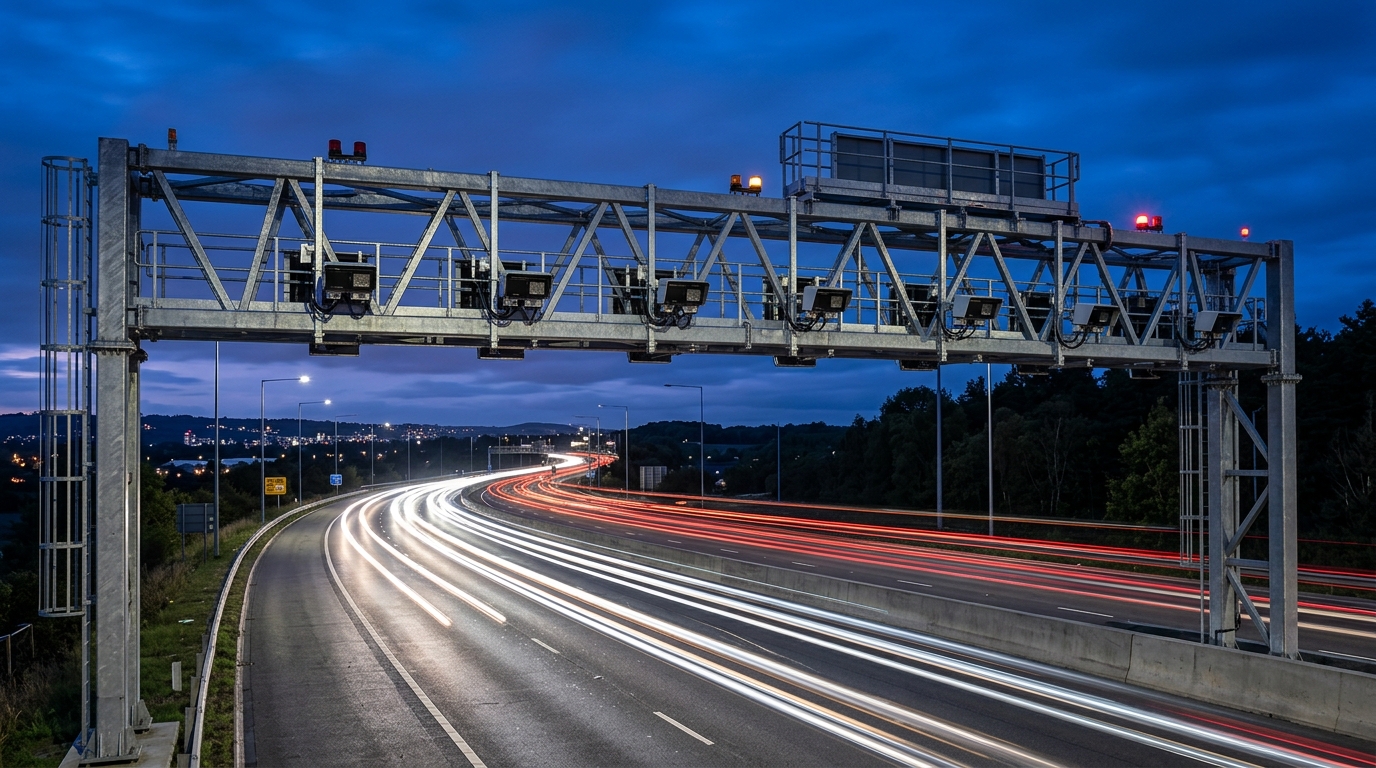
India’s national highway network is undergoing a radical paradigm shift. As highlighted by recent directives from the Ministry of Road Transport and Highways (MoRTH), traditional toll plazas characterized by sprawling bottlenecks, idling commercial fleets, and high operational expenditure are being phased out in favor of multi-lane free-flow (MLFF) electronic toll collection (ETC). This next-generation architecture marries dedicated short-range communication (DSRC) via FASTag with high-precision optical Automatic Number Plate Recognition (ANPR).
For enterprise system integrators, highway operators, and smart city architects, this transition demands a fundamental re-engineering of roadside edge hardware, low-latency inferencing pipelines, and backend clearinghouse transaction security. Below, we dissect the core technological mechanisms, operational trade-offs, and deployment strategies required to achieve high-throughput, frictionless vehicular telemetry across heterogeneous environments.
The Core Architecture: DSRC Fusion with Computer Vision
While RFID-based FASTag has dramatically reduced average transaction times across Indian toll plazas, it is not impervious to failure modes. Transponder battery degradation, damaged windshield tags, insufficient account balances, and deliberate tampering leave a residual leakage rate that erodes highway revenues. To achieve the 99.9% toll capture rate demanded by modern concessionaires, ANPR serves as the definitive secondary verification layer and primary fallback mechanism.
1. Optical Capture and High-Speed Shuttering
At highway speeds exceeding 120 km/h, conventional surveillance cameras fail due to motion blur and severe infrared (IR) glare from retro-reflective license plates. Enterprise ANPR deployments require specialized global-shutter CMOS sensors capable of operating at frame rates exceeding 60 FPS under varying ambient lux levels. Cameras must deploy synchronized pulsed IR illuminators (850nm or 940nm) to isolate the retro-reflective properties of high-security registration plates mandated under Central Motor Vehicle Rules (CMVR).
2. Edge Inferencing and Deep Learning Pipelines
Transmitting raw uncompressed video streams to a centralized cloud backend introduces unacceptable network latency and bandwidth costs. Modern highway architectures utilize containerized AI models executed on ruggedized edge appliances situated directly within the gantry enclosure. These neural networks perform localized tasks:
- Vehicle Detection & Tracking: Utilizing lightweight YOLOv8 or customized Single Shot Detector (SSD) backbones to bound vehicles across multi-lane highways.
- Character Segmentation & Recognition (LPR): Processing regional font variations, particularly distinguishing between standard Latin numerals, state-specific codes (e.g., MH, DL, KA), and Bharat Series (BH) plates under adverse weather conditions.
ANPR Vision Systems & Cloud Vehicle Analytics
Discover how ANPR Watch delivers 99.4% optical character accuracy for automated parking enforcement, highway tolling, and security checkpoints.
Reconciliation Engine: Merging FASTag and ANPR Data Streams
The true architectural complexity lies in real-time data reconciliation. When a vehicle passes beneath an MLFF gantry, the roadside unit (RSU) captures a FASTag EPC (Electronic Product Code) via UHF RFID reader, while the optical camera captures the license plate string. These asynchronous event logs are pushed to a central broker via message queues (e.g., Apache Kafka or MQTT).
| Technology Pillar | Primary Advantage | Primary Vulnerability | Mitigation Strategy |
|---|---|---|---|
| FASTag (RFID / DSRC) | Instantaneous account debit; standardized protocol | Damaged tags; insufficient balance; spoofing | Cross-reference with optical plate read |
| ANPR (Computer Vision) | Universal coverage; captures non-compliant vehicles | Mud, physical damage, non-standard fonts | Multi-frame voting algorithms & fuzzy matching |
| Fused MLFF Pipeline | 99.9% end-to-end capture rate; audit-ready logs | High compute overhead at edge | Hardware acceleration via TensorRT / Edge TPUs |
Implementation Checklist for Enterprise Integrators
Deploying barrier-free tolling infrastructure demands rigorous adherence to field engineering best practices. Follow this technical checklist:
- Gantry Geometry & Siting: Ensure camera mounting angles do not exceed 30 degrees horizontal and 25 degrees vertical relative to the vehicle trajectory to minimize perspective distortion.
- Illumination Calibration: Deploy variable-intensity pulsed IR lighting synchronized with camera shutter intervals to eliminate headlight washouts during nocturnal operations.
- Fault-Tolerant Edge Storage: Implement local SQLite or RocksDB ring buffers on the edge gateway to prevent packet loss during WAN network partitions.
- Fuzzy Logic Matching: Configure downstream databases to utilize Levenshtein distance algorithms to catch minor OCR discrepancies (e.g., confusing ‘0’ with ‘O’ or ‘1’ with ‘I’) before issuing violation notices.
Enterprise FAQ
How does ANPR handle mud, dirt, or intentional tampering of license plates?
Enterprise-grade ANPR engines utilize deep learning segmentation trained on degraded imagery. Even if 30% of the plate is obscured, contextual bounding boxes and multi-frame temporal tracking can reconstruct missing characters based on vehicle make, model, and color (MMC) classification.
What is the latency threshold for barrier-free toll deduction?
Edge inferencing and RFID reading must complete within 150 to 300 milliseconds. This ensures that the central clearinghouse can process the transaction and trigger barrier-less enforcement or SMS alerts before the vehicle exits the gantry zone.
Are legacy vehicle registration plates compatible with Indian MLFF systems?
While high-security registration plates (HSRP) offer optimal readability, advanced OCR models are trained on legacy embossed, painted, and regional script plates to ensure universal compliance across older commercial and private fleets.
