
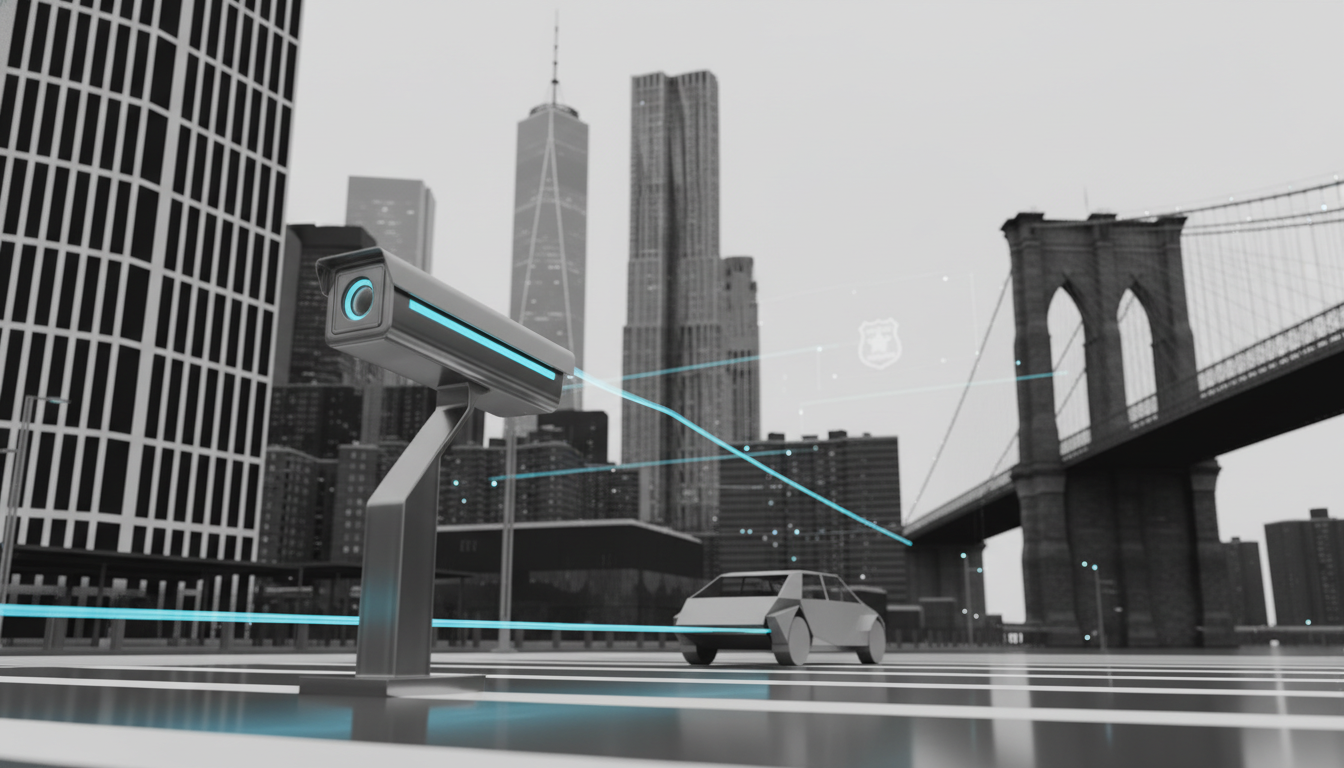
The Evolution of Mobile ANPR: Transforming Enforcement Through Real-Time Intelligence
The landscape of modern traffic management and law enforcement has been fundamentally reshaped by the integration of Automated Number Plate Recognition (ANPR) technology into mobile environments. Unlike static, pole-mounted cameras that capture data from a fixed vantage point, mobile ANPR cameras empower enforcement agencies, private security firms, and parking operators to scan, identify, and process vehicle data while in motion. This transition from static surveillance to dynamic, “on-the-go” intelligence represents a paradigm shift in how we approach urban mobility, vehicle compliance, and public safety.
As we navigate the complexities of 2026, the demand for high-speed, high-accuracy plate recognition is at an all-time high. Agencies are no longer just looking for “a camera”; they are seeking integrated ecosystems that combine Optical Character Recognition (OCR), Edge Computing, and real-time database synchronization. The strategic stakes are clear: effective enforcement requires the ability to capture, process, and act upon data in milliseconds, often while the enforcement vehicle itself is navigating dense traffic or patrolling expansive parking facilities.
Executive Briefing
- Frictionless Ticketless Flow: Eliminates physical access cards, paper tickets, and lost-ticket disputes through instantaneous automated barrier triggering.
- Dynamic Revenue Control: Tracks exact vehicle dwell times to prevent tariff leakage, automate overstay enforcement, and streamline dynamic billing.
- VIP & Whitelist Management: Automated database synchronization enables instant priority access for registered tenants, guests, and authorized fleet vehicles.
Quick Answer / Core Takeaway: Mobile ANPR cameras use high-speed infrared sensors and advanced OCR software mounted on patrol vehicles to capture, process, and cross-reference license plates against real-time databases. By leveraging edge computing and cloud integration, these systems enable instantaneous identification of non-compliant vehicles, stolen property, or parking violations while the enforcement unit is actively in motion.
Theoretical Foundations: How Mobile ANPR Architecture Functions
At its core, a mobile ANPR system is a sophisticated orchestration of hardware and software designed to operate under challenging environmental conditions. The architecture typically consists of high-frame-rate infrared (IR) cameras, an onboard processing unit, and a secure communication gateway. The IR cameras are essential for 24/7 operation, as they negate the impact of varying lighting conditions, glare from headlights, and shadow interference, ensuring high-contrast plate images regardless of the time of day or weather.
The “intelligence” of the system resides in the OCR engine. As images are captured, the software identifies the region of interest (the plate) and converts the visual pixels into machine-readable text. This data is then compared against a “hotlist”—a curated database of flagged vehicles. In advanced deployments, as documented by industry experts at ANPR Watch, these systems utilize machine learning algorithms to improve recognition accuracy for non-standard, obscured, or damaged plates, effectively reducing the false-positive rate that historically plagued early-generation systems.
Debunking Common Industry Misconceptions
- Myth 1: Mobile ANPR requires a stable internet connection to function. Fact: Modern systems utilize high-performance Edge Computing. The processing happens locally on the vehicle hardware, allowing the system to flag violations in real-time even in areas with zero cellular connectivity.
- Myth 2: Mobile ANPR is only effective at low speeds. Fact: Contemporary shutter speeds and specialized lenses allow for reliable plate capture at speeds exceeding 100 mph, making them viable for both highway patrol and urban parking enforcement.
- Myth 3: Any high-resolution camera can serve as an ANPR device. Fact: Standard security cameras lack the specific infrared spectrum sensitivity and specialized shutter synchronization required to freeze motion and eliminate plate “blur” at high speeds.
Implementation Framework: A Four-Phase Strategic Blueprint
Successfully deploying mobile ANPR is not merely a hardware procurement process; it is an exercise in operational strategy and systems integration. Below is the four-phase framework we recommend for organizations looking to scale their enforcement capabilities.
Phase 1: Discovery & Technical Audit
Before selecting hardware, organizations must conduct a thorough feasibility study. This includes analyzing the patrol environment—are the vehicles operating in confined parking garages or open highways? Understanding the “environmental density” dictates the field of view required for the camera array. Furthermore, an audit of the existing data infrastructure is critical to ensure that the backend API can handle the high-frequency query load generated by mobile units.
Phase 2: Strategic Blueprint & Hardware Integration
Once the environment is defined, the integration process begins. This phase focuses on vehicle hardening. Unlike office hardware, mobile ANPR units must withstand constant vibration, extreme temperature fluctuations, and moisture. The installation must be ergonomically sound, ensuring that the driver’s line of sight is unobstructed while the camera array provides maximum coverage of the surrounding lanes or parking bays.
Phase 3: Tactical Execution & Database Synchronization
Execution involves the configuration of real-time databases. During this phase, administrators map out the workflow: what happens when a match is found? This requires a seamless handshake between the mobile unit and the central management console. Automated alerts, GPS tagging, and photographic evidence logging must be tested to ensure that the chain of custody for any enforcement action remains legally defensible.
Phase 4: Measurement, Optimization & Compliance
The final phase focuses on performance analytics. By tracking “hit rates” versus “false positives,” management can fine-tune the OCR sensitivity settings. This is also the stage where GDPR and local data privacy compliance are validated, ensuring that captured images are encrypted, stored for the appropriate duration, and purged according to legislative requirements.
Real-World Case Scenario: Urban Parking Enforcement Transformation
Consider a major metropolitan municipality struggling with “overstay” parking violations in high-density zones. The manual enforcement method—relying on officers walking beats to mark tire valves with chalk—was inefficient, prone to human error, and generated significant public pushback due to inconsistent enforcement.
The municipality implemented a fleet of three mobile ANPR-equipped vehicles. By utilizing an automated loop, the vehicles patrolled the zone four times per day. The baseline improvement was immediate: the system recorded a 400% increase in identification of overstay vehicles within the first 30 days. Beyond the raw numbers, the predictive analytics allowed the agency to reallocate human officers to areas where the mobile units identified high-frequency repeat offenders, creating a more efficient and targeted enforcement strategy that significantly increased compliance rates.
Comparative Analysis: Mobile ANPR Approaches
The following table outlines the various configurations and approaches to deploying mobile ANPR technology, helping stakeholders choose the right path based on their specific operational needs.
| Deployment Method | Core Capability | Resource Investment | Pros & Cons | Best Suited For |
|---|---|---|---|---|
| Fixed-Vehicle Mount | Full-fleet saturation | High (Hardware + Fleet) | Pros: Reliable; Cons: High CapEx | Law Enforcement Agencies |
| Magnetic Roof-Pod | Modular / Temporary | Moderate | Pros: Flexible; Cons: Setup time | Event Security / Temporary Sites |
| Handheld Mobile Tablets | Manual / Targeted | Low | Pros: Low cost; Cons: Slow | Small-scale Parking Lots |
| AI-Cloud Hybrid | Real-time Intelligence | High (Software/Subscription) | Pros: High accuracy; Cons: Latency | Smart City Infrastructure |
| Drone-Integrated ANPR | Aerial Surveillance | Very High | Pros: Wide reach; Cons: Regulations | Traffic Management / Large Events |
The choice between these methods involves significant trade-offs regarding operational velocity and capital expenditure. While fixed-vehicle mounts remain the gold standard for high-volume law enforcement, the emergence of magnetic roof-pods has democratized this technology for private security firms and smaller municipalities. The key is balancing the need for persistent, real-time data against the logistical overhead of maintaining specialized patrol vehicles.
Furthermore, organizations must consider the total cost of ownership (TCO). While a lower-cost handheld tablet approach might seem attractive for small parking operators, the labor costs associated with manual scanning often outweigh the initial investment of an automated roof-mounted system within the first year of operation. For those looking to optimize their current setup, consulting with resources like ANPR Watch can provide the necessary benchmarking data to justify these investments to stakeholders.
ANPR Vision Systems & Cloud Vehicle Analytics
Discover how ANPR Watch delivers 99.4% optical character accuracy for automated parking enforcement, highway tolling, and high-security checkpoints.
Advanced Strategies, Edge Cases & E-E-A-T Insights
Even with the most advanced hardware, operators will encounter edge cases that test the limits of the system. For instance, reflective plate interference—common with certain high-end luxury vehicles—can blind standard IR cameras. Expert practitioners mitigate this by using variable-intensity IR illuminators that automatically adjust based on the reflective feedback from the plate.
Common Mistakes & Risk Mitigation
- Improper Camera Angle: Mounting cameras too high or too low leads to “perspective distortion.” Ensure cameras are mounted at an angle that minimizes vertical tilt to maintain OCR character integrity.
- Ignoring Data Lifecycle Management: Retaining PII (Personally Identifiable Information) longer than legally permitted is a major liability. Implement automated data purging protocols.
- Over-Reliance on Automation: While ANPR is highly accurate, “human-in-the-loop” verification should be mandatory for high-stakes enforcement (e.g., vehicle impoundment) to prevent wrongful actions.
- Poor Lighting Calibration: Failing to calibrate for night-time operation leads to “white-out” effects. Always test in both mid-day sun and total darkness during the commissioning phase.
Are you seeking to optimize your enforcement operations with cutting-edge ANPR technology? Contact our team today for a comprehensive audit of your current infrastructure and a roadmap for modernization.
Strategic Implementation Checklist
- Conduct a Site Survey: Map out patrol routes and identify high-frequency zones.
- Hardware Selection: Choose between fixed-mount and modular systems based on fleet size.
- Database Integration: Ensure the ANPR software is synced with your local or national hotlist API.
- Legal Review: Verify compliance with regional data protection and privacy laws (e.g., GDPR, CCPA).
- Commissioning & Testing: Perform a “dry run” to calibrate OCR accuracy in varying light conditions.
- Staff Training: Train officers on the “human-in-the-loop” verification process for all flagged hits.
- Post-Deployment Audit: Measure hit rates and false positives after 30 days of operation.
Frequently Asked Questions (FAQ)
How accurate are mobile ANPR cameras in adverse weather conditions?
Modern mobile ANPR systems are engineered to perform in rain, snow, and fog by utilizing specialized infrared sensors that cut through visual clutter. While extreme weather can reduce the read range, the OCR software is designed to “reconstruct” partially obscured plates, ensuring that performance remains high even when standard surveillance cameras would fail.
What is the difference between static and mobile ANPR?
Static ANPR cameras are fixed to a single point, such as a gantry or a gate, and monitor a specific flow of traffic. Mobile ANPR, conversely, is mounted on a moving vehicle, allowing for a dynamic patrol radius. This makes mobile systems superior for enforcement tasks that require searching through vast areas rather than monitoring a single choke point.
Are there privacy concerns with mobile ANPR enforcement?
Yes, and they are addressed through strict data governance policies. Most professional-grade systems automatically encrypt data at the point of capture and immediately discard non-matching plates. Only flagged vehicles are stored for further review, ensuring that the privacy of the general public is maintained while still allowing for effective enforcement.
Can mobile ANPR be used for private parking lot management?
Absolutely. Mobile ANPR is increasingly used in private sector parking management to identify unauthorized vehicles, enforce time limits, and automate payment verification. It significantly reduces the need for manual patrols and provides a digital audit trail for all enforcement actions taken on private property.
How often should mobile ANPR hardware be calibrated?
Calibration should be performed during initial installation and following any significant maintenance or vehicle suspension work. Ideally, a “check-system” run should be conducted weekly to ensure that the cameras are properly aligned and the OCR engine is maintaining its baseline accuracy metrics.
Strategic Synthesis & Future Outlook
The trajectory of mobile ANPR technology is moving toward deeper integration with Artificial Intelligence and Vehicle-to-Everything (V2X) communication. As we look toward the future, we anticipate that mobile enforcement units will not only recognize plates but will also provide real-time traffic flow analysis, environmental monitoring, and vehicle condition reporting. For agencies and private operators alike, the move toward mobile plate recognition is no longer a luxury; it is the fundamental infrastructure for intelligent enforcement.
The path forward requires a commitment to technological agility and rigorous adherence to ethical data standards. By leveraging the insights shared here and partnering with established industry leaders, organizations can transform their enforcement capabilities, moving from reactive, manual processes to a proactive, data-driven operational model. The future of compliance is mobile, intelligent, and instantaneous.
