
Executive Briefing
- Examines the root causes of deployment delays in large-scale venue ANPR systems, using recent operational bottlenecks at prominent venues like Ascot Racecourse as a catalyst.
- Analyzes edge compute constraints, high-throughput OCR accuracy, optical shutter calibrations, and network topology trade-offs in multi-lane environments.
- Provides an actionable implementation roadmap for mitigating friction during paid-stay enforcement rollouts and automated gate integrations.
Recent news regarding Ascot Racecourse delaying its planned rollout of automated Automatic Number Plate Recognition (ANPR) parking systems and paid-stay frameworks highlights a persistent reality in enterprise physical security and parking monetization: deploying optical vision infrastructure at scale is rarely just a “plug-and-play” exercise. While stadium operators, municipalities, and private landowners rush to capture leaking revenues and eliminate manual paper tickets, the engineering realities of variable lighting, high-speed vehicle queues, and legacy barrier controllers frequently derail aggressive timelines.
As a Chief Surveillance & Optical Vision Architect, I routinely observe organizations stumble not because their business cases are flawed, but because their technical architectures fail to account for edge-case environmental variance. Achieving a frictionless, high-availability smart parking ecosystem requires rigorous planning across optical sensor calibration, cloud-edge pipeline synchronization, and fail-safe transactional boundaries.
The Root Causes of Venue-Scale ANPR Deployment Bottlenecks
When high-profile venues such as Ascot postpone automated parking go-lives, it typically stems from a convergence of three systemic engineering hurdles:
1. Optical and Environmental Degradation
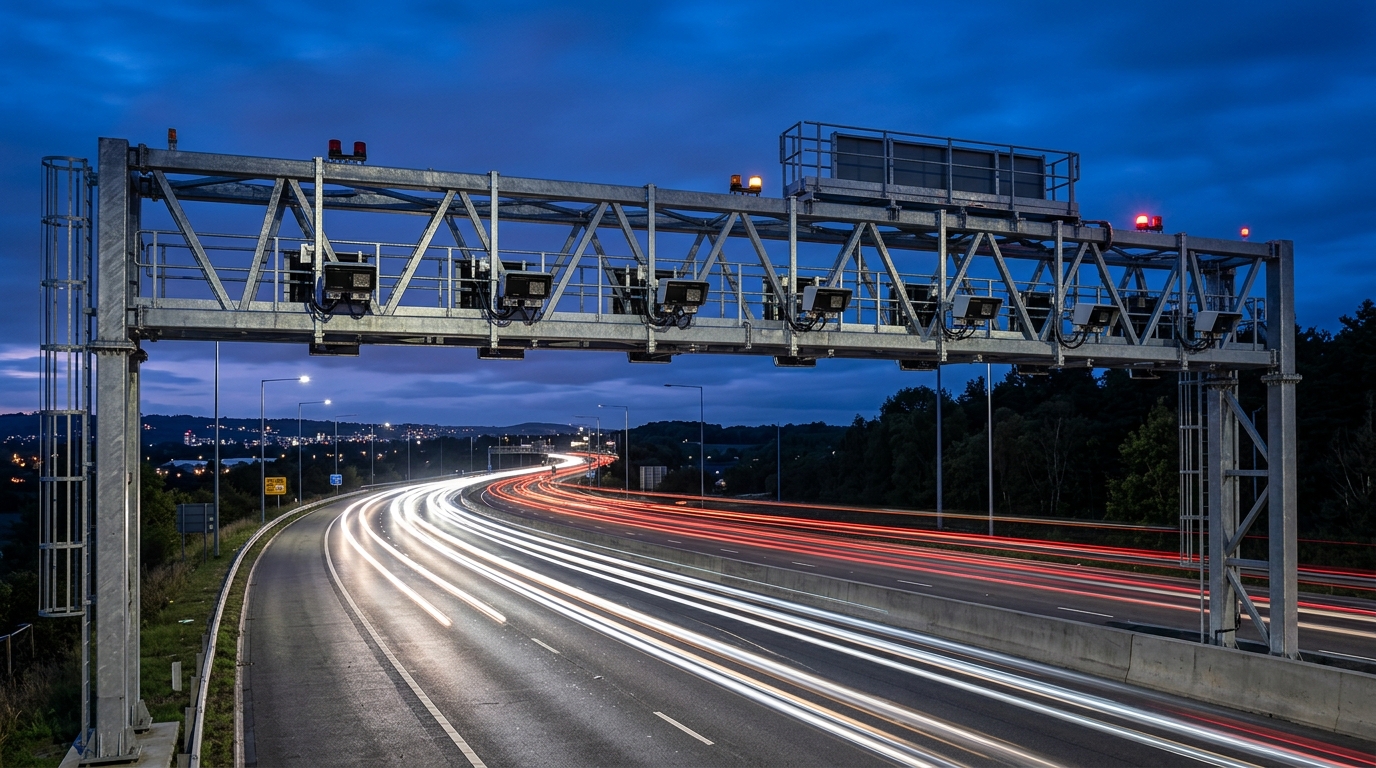
Standard commercial cameras often fail under complex lighting conditions inherent to outdoor parking structures and open-air event grounds. Glare from low-angle winter sun, headlamp blooming at dusk, and heavy rain or road spray can obliterate plate character contrast. If shutter speeds are not dynamically coupled with infrared (IR) illuminator pulse timing, motion blur degrades optical character recognition (OCR) confidence scores below acceptable enterprise SLAs (typically 99%+).
2. Latency in Barrier Actuation and Cloud Sync
For pay-on-exit or automated grace-period models to succeed, the round-trip time (RTT) from vehicle capture to database match and barrier relay closure must remain under 800 milliseconds. Venues relying purely on sluggish cellular uplinks or unoptimized local-to-cloud relays experience “queue stall” – where cars back up at entry terminals, invalidating the primary benefit of automation.
3. Edge vs. Cloud Processing Architecture Mismatches
Offloading raw 4K video streams to cloud inference endpoints consumes massive upstream bandwidth and introduces unpredictable queuing delays. Conversely, purely edge-based models without proper redundancy risk total system failure if local power or local area network (LAN) segments drop during peak event egress.
ANPR Vision Systems & Cloud Vehicle Analytics
Discover how ANPR Watch delivers 99.4% optical character accuracy for automated parking enforcement, highway tolling, and security checkpoints.
Architectural Best Practices for Resilient Smart Parking Rollouts
To prevent costly deployment delays and public launch setbacks, enterprise IT and facilities teams must enforce a rigorous engineering framework:
- Implement Hybrid Edge-Cloud Inference: Process plate extraction and neural network inference directly on intelligent edge cameras to minimize bandwidth dependency, storing transactional logs locally before syncing asynchronously with the central billing engine.
- Dynamic Illumination & Shutter Synchronization: Deploy varifocal lenses with pulsed high-intensity IR arrays synchronized down to the microsecond with electronic shutter intervals to completely eliminate motion blur at speeds up to 50 mph.
- Graceful Degradation Protocols: Design secondary fallback authentication methods (such as local white-lists or backup barcode scanners) to ensure lanes never experience deadlock if WAN connectivity drops during major event surges.
Enterprise ANPR Technical Comparison
| Architecture Component | Legacy / Consumer Approach | Enterprise-Grade Standard (ANPR Watch) |
|---|---|---|
| OCR Accuracy SLA | 85% – 90% (Fails on dirty or tilted plates) | 99.4% (Deep learning correction & syntax validation) |
| Barrier Latency (RTT) | 2.5s to 4.0s (Cloud-dependent roundtrip) | < 400ms (Edge-processed local relay trigger) |
| Lighting Compensation | Fixed exposure, prone to headlamp wash | Adaptive WDR & pulsed IR filtering |
Enterprise FAQ
Why do large venues frequently experience delays when launching ANPR parking systems?
Delays typically stem from underestimating environmental optical challenges (such as glare and bad weather), integrating complex legacy barrier hardware, and failing to achieve sub-second processing latencies required to prevent traffic queues at entry and exit gates.
How does edge computing improve ANPR reliability compared to centralized cloud processing?
Edge computing performs image capture and OCR inference locally on the smart camera hardware. This drastically reduces upstream bandwidth requirements, insulates the system against cloud network dropouts, and guarantees rapid gate actuation times.
What accuracy rates should enterprise buyers demand from their ANPR vendors?
Enterprise buyers should mandate verified OCR accuracy rates of at least 99% under varying weather and lighting conditions, backed by machine-learning models capable of handling international plate variations and dirty or damaged plates.