
Executive Briefing
- Recent public pushback in Penang forced the immediate suspension of automated number plate recognition (ANPR) parking enforcement, underscoring the delicate balance between civic automation and public trust.
- Technical failures in OCR accuracy, opaque fee processing structures, and lack of transparent audit trails are primary drivers of municipal pushback.
- Enterprise deployments must prioritize edge-to-cloud data governance, algorithmic transparency, and rigorous calibration to sustain smart city initiatives.
The Anatomy of Public Backlash in Municipal ANPR
The recent decision by municipal authorities in Penang to suspend automated number plate recognition (ANPR) for parking enforcement serves as a watershed moment for urban technologists and smart city architects. While machine vision, optical character recognition (OCR), and edge computing promise frictionless urban management, the Penang incident highlights a persistent vulnerability: the friction between rapid automated deployment and citizen acceptance.
When municipal deployments suffer from high false-positive rates, poor optical shutter interval calibration under variable tropical lighting, or immediate automated punitive fee structures without human-in-the-loop verification, public backlash is inevitable. Enterprise architects designing municipal surveillance networks must look beyond raw processing power. Success requires an architectural framework that guarantees absolute algorithmic transparency, robust data privacy safeguards, and undeniable transactional integrity.
Engineering Fault-Tolerant Optical Recognition Pipelines
At the core of any scalable ANPR deployment lies a complex optical and computational pipeline. Municipal failures typically stem from three structural bottlenecks:
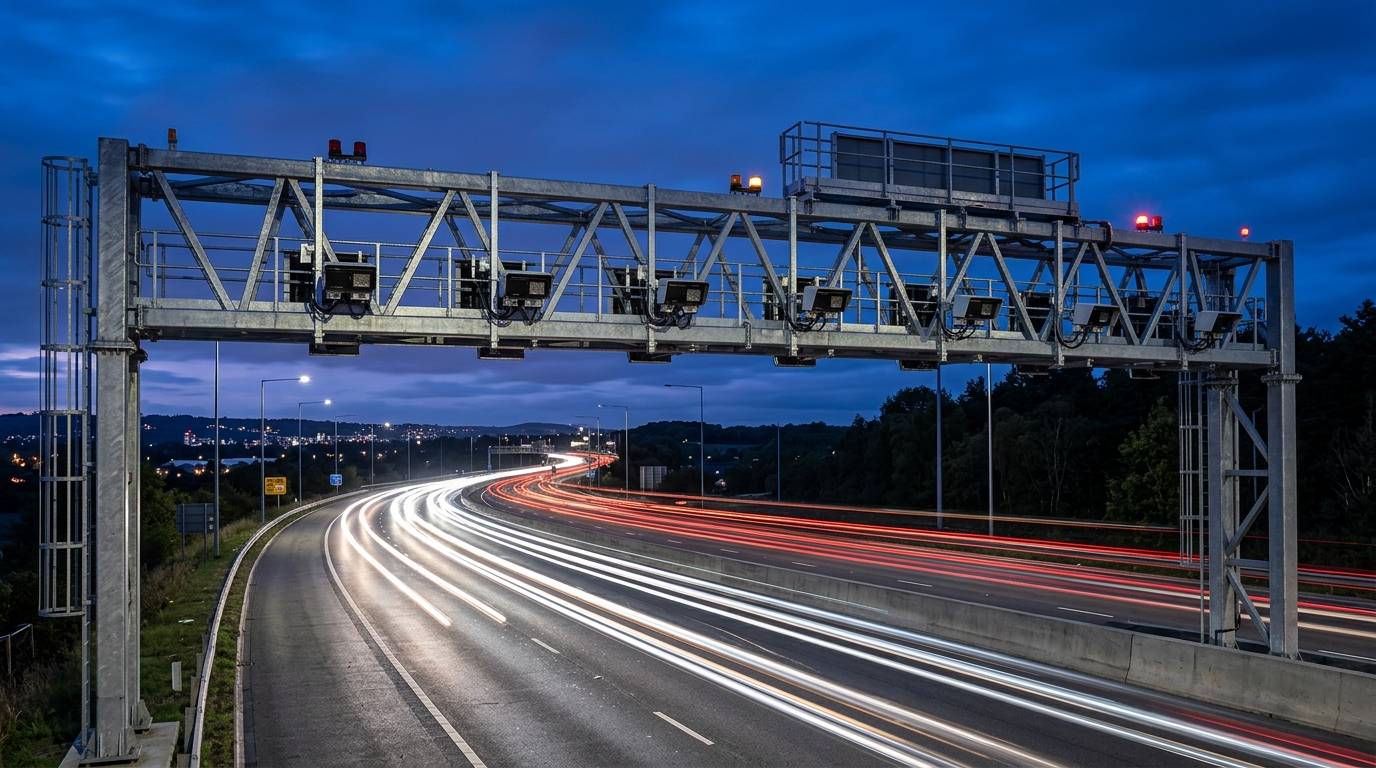
- Inadequate Optical Capture: Failing to account for glare, varying retro-reflectivity on license plates, and high-speed motion blur leads to erroneous character extraction. Modern deployments require global shutter sensors with adjustable infra-red (IR) illumination pulses synchronized to vehicle velocity.
- Opaque Edge-to-Cloud Latency: When edge devices upload raw video streams rather than structured metadata (bounding boxes and OCR strings), bandwidth bottlenecks degrade real-time processing and obscure audit trails.
- Rigid Enforcement Logic: Automated ticketing without spatial context or grace periods transforms smart parking from a convenience into an adversarial system.
ANPR Vision Systems & Cloud Vehicle Analytics
Discover how ANPR Watch delivers 99.4% optical character accuracy for automated parking enforcement, highway tolling, and security checkpoints.
Municipal ANPR Deployment Checklist
To prevent the pitfalls experienced in Penang, enterprise system integrators must adhere to a strict implementation checklist before launching automated parking infrastructure:
| Architectural Pillar | Standard Requirement | Mitigation for Public Trust |
|---|---|---|
| Optical Calibration | 99.4% OCR accuracy across 0-120 km/h vectors. | Eliminate misread tickets caused by specialized fonts or dirt. |
| Human-in-the-Loop | Mandatory supervisor review for edge cases below 95% confidence score. | Prevents automated erroneous fines from reaching citizens. |
| Data Governance | Zero-retention of unflagged personal facial and background video data. | Complies with strict municipal data privacy frameworks (e.g., GDPR, PDPA). |
Enterprise FAQ
Why do municipal ANPR systems fail public acceptance tests?
Public pushback typically occurs when error rates in optical character recognition produce unwarranted fines, combined with an opaque dispute resolution process that places the burden of proof entirely on the citizen.
How can system architects ensure high OCR accuracy in adverse weather?
Deploying cameras with advanced near-infrared (NIR) pass filters, active polarizing lenses to eliminate windshield glare, and deep-learning models trained on regional license plate variations drastically reduces environmental degradation.
What is the role of edge computing in modern parking enforcement?
Edge processing ensures that license plate text is extracted locally on the camera hardware. Only lightweight, encrypted alphanumeric payloads are transmitted to the cloud, minimizing bandwidth costs and safeguarding citizen privacy.
