
Executive Briefing
- Recent municipal deployments, such as Reading Borough Council’s enforcement sweeps clocking nearly 10,000 drivers, highlight the rapid operational shift toward mobile and fixed Automated Number Plate Recognition (ANPR).
- Modern smart cities demand optical character recognition (OCR) engines that maintain >99% accuracy under adverse environmental variables, high vehicle velocities, and complex reflective geometry.
- Enterprise-grade deployments require rigorous edge-computing architectures, secure cellular backhauls, and robust API integrations to prevent compliance bottlenecks and data drift.
The Evolution of Municipal Vehicle Monitoring
Recent enforcement data – such as Reading Borough Council’s mobile ANPR units clocking nearly 10,000 motorists – demonstrates a structural shift in how municipal authorities and enterprise operators approach traffic management and parking compliance. Traditional manual enforcement, characterized by foot patrols and discrete chalking, is no longer economically or operationally viable in dense urban environments. Modern smart city frameworks demand scalable, highly accurate automated systems capable of processing high-velocity vehicular streams in real time.
However, scaling from pilot projects to city-wide compliance architectures introduces severe technical hurdles. Municipalities and private operators frequently struggle with high error rates caused by obscured plates, extreme lighting conditions, non-standard font kerning, and dirty vehicle surfaces. Achieving enterprise-grade reliability requires an end-to-end overhaul of optical hardware, local edge processing, and cloud-based analytics pipelines.
Technical Anatomy of High-Performance ANPR Systems
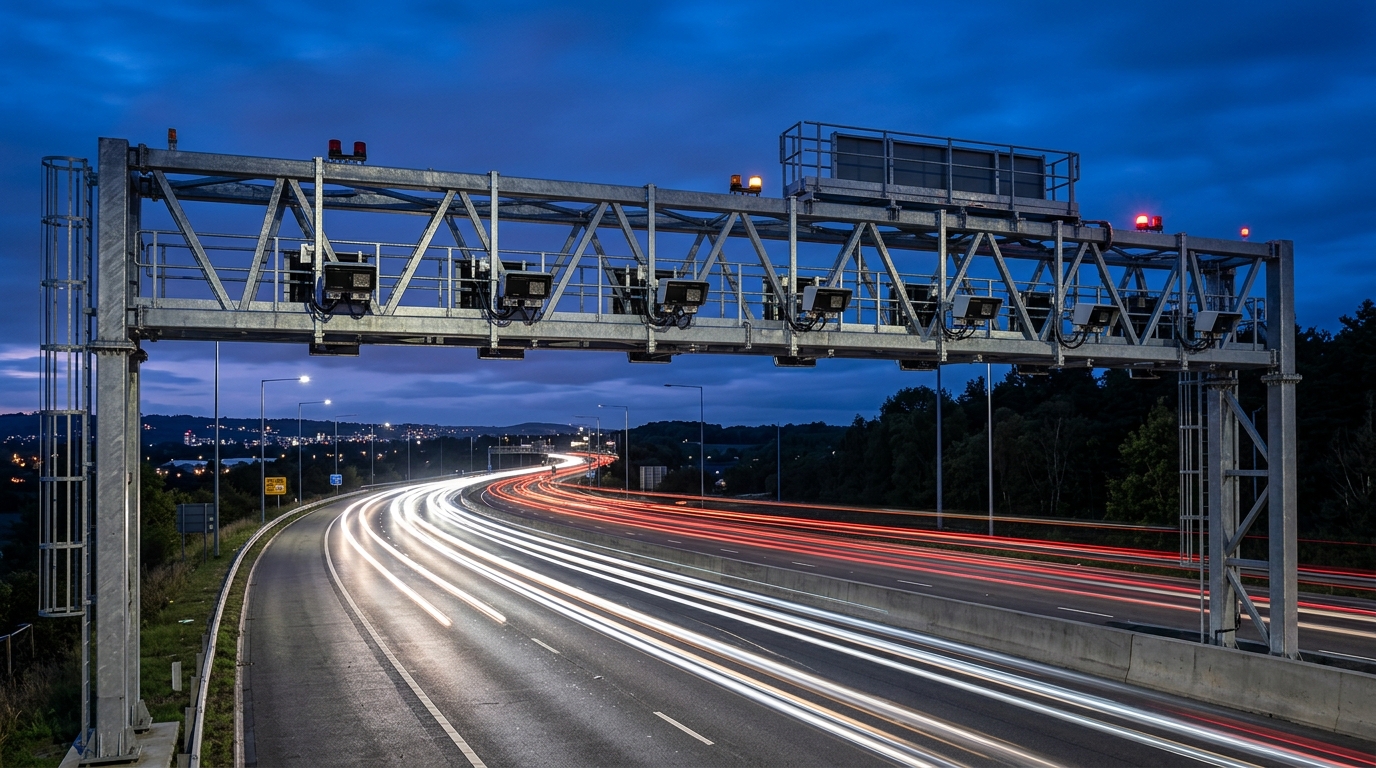
At the core of any resilient ANPR ecosystem lies the optical capture subsystem. Unlike conventional closed-circuit television (CCTV), ANPR units must operate reliably across dynamic lighting ranges, utilizing specialized near-infrared (NIR) pass filters and synchronized pulsed IR illuminators to eliminate headlight glare and shadow interference.
Optical and Sensor Engineering
- Shutter Speed Optimization: Cameras must maintain shutter speeds of at least 1/1000s to eliminate motion blur for vehicles traveling up to 120 km/h.
- NIR Illumination: 850nm or 940nm active illumination ensures 24/7 capture parity regardless of ambient light pollution or total darkness.
- Sensor Resolution & Dynamic Range: Global shutter sensors with High Dynamic Range (HDR) capabilities are essential to process strong backlighting scenarios, such as direct sunrise or sunset angles.
Edge Processing vs. Cloud Inference
Modern architectures utilize hybrid edge-cloud topologies. Raw video streams are processed at the edge via specialized Neural Processing Units (NPUs) running optimized Convolutional Neural Networks (CNNs) for license plate localization and character segmentation. Only lightweight metadata (timestamps, plate strings, cropped bounding-box images, and confidence scores) is transmitted via encrypted MQTT or HTTPS protocols to central databases. This minimizes bandwidth consumption and ensures sub-second penalty notice generation.
ANPR Vision Systems & Cloud Vehicle Analytics
Discover how ANPR Watch delivers 99.4% optical character accuracy for automated parking enforcement, highway tolling, and security checkpoints.
Implementation Architecture & Operational Checklist
Deploying large-scale vehicle recognition networks demands rigorous compliance with data protection regulations (such as GDPR) and strict adherence to systems integration best practices. Enterprise architects should evaluate deployments against the following structured checklist:
| Deployment Phase | Key Technical Consideration | Enterprise Benchmark |
|---|---|---|
| Optical Calibration | Camera angle of incidence and focal length adjustment. | Maximum horizontal skew angle < 30 degrees. |
| Edge OCR Pipeline | Deployment of deep learning weights for regional plate variants. | >99.4% raw character recognition accuracy. |
| Network Resilience | Cellular failover and local buffer capacity during outages. | Minimum 72-hour onboard encrypted storage. |
| Data Governance | Automated PII scrubbing and retention policy enforcement. | Zero unencrypted face/body logging; automated purge timers. |
Enterprise FAQ
How do modern ANPR systems handle dirty or obscured license plates?
Advanced neural networks utilize multi-frame synthesis and super-resolution models. By aggregating data across consecutive video frames as a vehicle passes the capture zone, the OCR engine can reconstruct degraded or partially obscured character strings with high statistical confidence.
What is the impact of vehicle speed on OCR recognition rates?
Velocity primarily impacts motion blur and exposure time. By pairing global shutter sensors with high-intensity pulsed IR flash units synchronized to the camera’s frame rate, enterprise systems capture crisp images of vehicles traveling in excess of 150 km/h without loss of character fidelity.
How is data privacy maintained in municipal deployments?
Enterprise-grade architectures enforce privacy at the edge. Non-target vehicles and surrounding pedestrian imagery are automatically masked or discarded before transmission. Only structured metadata and verified offending plate strings are sent to central municipal databases, ensuring full regulatory compliance.
