
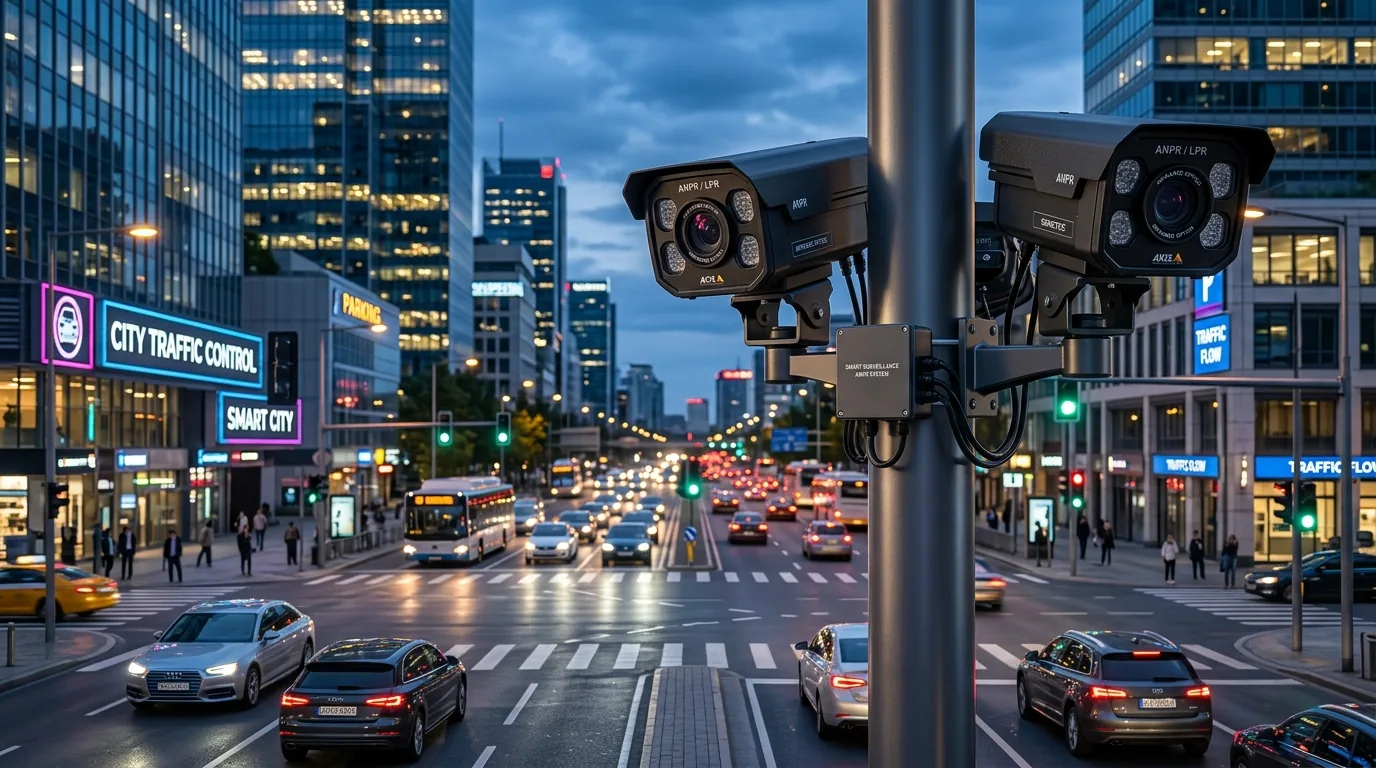
Standalone ANPR Devices vs Software-Only Solutions: Pros, Cons & Ideal Use Cases
The landscape of Automatic Number Plate Recognition (ANPR) technology has undergone a seismic shift as we move deeper into 2026. As parking management, law enforcement, and private security sectors demand higher levels of precision, the debate between deploying dedicated, ruggedized standalone ANPR devices versus leveraging flexible, cloud-native software-only solutions has intensified. Choosing the wrong architecture can lead to significant fiscal leakage, compromised security, and operational bottlenecks that are difficult to rectify after deployment.
This guide serves as a definitive architectural blueprint for stakeholders tasked with selecting the right ANPR infrastructure. By analyzing the technical nuances, hardware-software integration requirements, and long-term scalability of both approaches, we aim to provide the clarity necessary to make an investment that aligns with your specific site requirements and security objectives. Whether you are managing a high-traffic urban parking structure or a sensitive access-controlled facility, understanding the trade-offs between hardware-centric and software-defined intelligence is the primary key to operational success.
Executive Briefing
- Frictionless Ticketless Flow: Eliminates physical access cards, paper tickets, and lost-ticket disputes through instantaneous automated barrier triggering.
- Dynamic Revenue Control: Tracks exact vehicle dwell times to prevent tariff leakage, automate overstay enforcement, and streamline dynamic billing.
- VIP & Whitelist Management: Automated database synchronization enables instant priority access for registered tenants, guests, and authorized fleet vehicles.
Quick Answer / Core Takeaway: Standalone ANPR devices offer superior reliability and high-speed processing for mission-critical, high-traffic environments where edge-computing is mandatory. Conversely, software-only solutions provide unparalleled scalability and cost-efficiency for existing CCTV networks. The optimal choice depends on your site’s bandwidth, existing camera infrastructure, and whether you prioritize localized, low-latency performance or flexible, cloud-based analytics.
Theoretical Foundations and the Evolution of ANPR Infrastructure
At its core, ANPR technology—often referred to as Automatic License Plate Recognition (ALPR)—is a sophisticated intersection of optical character recognition (OCR), pattern matching, and high-speed image processing. Historically, the industry relied heavily on specialized, monolithic hardware units that combined an infrared camera, an illuminator, and an onboard processor into a single, weather-sealed enclosure. These units were designed to operate independently, often pushing data directly to a local server or a centralized database without the need for constant high-speed connectivity.
In contrast, the modern software-only ANPR paradigm leverages the ubiquity of high-resolution IP surveillance cameras. By utilizing edge-to-cloud computing or centralized server-side software, these systems process video streams in real-time using advanced neural networks. This evolution is driven by the massive improvement in GPU-accelerated processing and the democratization of AI-driven computer vision. While standalone units remain the “gold standard” for accuracy in challenging lighting conditions, software-only solutions are rapidly closing the gap, offering more versatility in deployment.
Debunking Industry Misconceptions
- Myth 1: Software-only solutions are always less accurate. Reality: With modern deep learning models, software-only systems running on high-quality 4K streams can match, and sometimes exceed, the accuracy of older standalone units that rely on lower-resolution, proprietary sensors.
- Myth 2: Standalone units are immune to network failures. Reality: While they process locally, they still require a robust network backhaul to report data to a Management System (MS). If the network goes down, the “standalone” benefit is limited to local storage, which may still disrupt real-time enforcement.
- Myth 3: You must choose one or the other. Reality: Hybrid deployments are becoming the industry standard. Many sites utilize standalone units for primary gated entry points while employing software-only monitoring for secondary zones or perimeter surveillance.
Phase-by-Phase Implementation Framework
To determine the correct path for your organization, we propose a four-phase implementation strategy that prioritizes technical readiness and long-term viability.
Phase 1: Discovery and Technical Audit
Begin by mapping your site’s physical and digital topology. Conduct a site survey to measure lighting conditions, camera angles, and existing network throughput. If your site has legacy analog or lower-resolution IP cameras, a software-only solution may prove costly due to the requirement for hardware upgrades to meet minimum resolution thresholds. Ensure you document the angle of incidence for every ingress and egress point, as even the best software cannot compensate for a camera mounted at a 45-degree angle to the flow of traffic.
Phase 2: Strategic Blueprinting
Define your primary KPIs: Is the system for revenue generation, security, or traffic flow management? For security-sensitive environments, standalone ANPR devices are often preferred because they operate on a hardened, proprietary OS that is less susceptible to general network vulnerabilities. If your goal is broad-coverage parking management, a software-only solution allows you to scale by simply adding software licenses to your existing VMS (Video Management System) infrastructure, significantly reducing capital expenditure.
Phase 3: Tactical Execution and Integration
During deployment, focus on the integration layer. Regardless of the hardware choice, your ANPR data must interface seamlessly with your existing management software. Referencing the technical standards provided by ANPR Watch can help you verify if your chosen hardware or software provider adheres to industry-standard protocols like Wiegand, OSDP, or RESTful APIs, which are critical for future-proofing your investment.
Phase 4: Measurement and Optimization
Post-deployment, monitor the read rate (RR) and confidence score of your system. A healthy system should maintain a read rate above 95% under normal conditions. Use this data to calibrate your OCR engines or adjust the physical positioning of your standalone units. If you are using a software-only solution, this phase is essential for fine-tuning the AI inference engine to handle specific regional plate formats or environmental glare.
Real-World Case Scenario: The Smart Campus Transition
Consider a large university campus that struggled with unauthorized parking. Their initial setup involved a mix of legacy standalone units that were expensive to maintain and difficult to integrate with their cloud-based permit system. The campus transitioned to a hybrid architecture. They retained high-performance standalone units at the main high-speed gates to ensure 99.9% capture rates during peak morning traffic. For all secondary parking lots and perimeter monitoring, they shifted to a software-only solution that utilized their existing 5MP security camera network.
The result was a 40% reduction in hardware maintenance costs and a centralized data dashboard that provided real-time occupancy data across all lots. By utilizing the software-only approach for non-critical zones, the university was able to expand its monitoring coverage by 300% without the prohibitive cost of installing dedicated ANPR cameras at every entrance.
Comparative Analysis Matrix
| Deployment Method | Key Strengths | Resource Investment | Pros & Cons | Best Suited For |
|---|---|---|---|---|
| Standalone ANPR Devices | High-speed processing, ruggedized for outdoors, independent OCR. | High CapEx, low ongoing server costs. | Pro: Extreme reliability. Con: Expensive to replace/upgrade. | Gated entries, toll roads, high-speed traffic. |
| Software-Only Solutions | Scalable, utilizes existing hardware, easy updates. | Low initial CapEx, moderate OpEx (server/cloud). | Pro: Flexible. Con: Dependent on network & camera quality. | Parking lots, retail, large surveillance sites. |
| Hybrid Integration | Best of both worlds, redundancy. | Balanced/High. | Pro: Robust & Scalable. Con: Complex management. | Enterprise facilities, smart campuses. |
| Cloud-Native AI | Real-time analytics, remote access. | Variable (Subscription-based). | Pro: Ease of use. Con: Bandwidth heavy. | Remote sites, mobile deployments. |
The comparison clearly highlights a fundamental trade-off: Standalone ANPR devices act as localized, intelligent nodes that offload the processing burden from your network. They are designed for the “brute force” requirements of high-speed vehicle capture. Conversely, software-only solutions democratize the technology, treating every camera as a potential sensor. This shift toward “software-defined” security is ideal for organizations that already possess a robust, high-resolution VMS ecosystem.
However, the choice is not merely financial. It is about operational resilience. A standalone system provides a level of fault tolerance that is inherently missing in a centralized software system. If the central server fails in a software-only deployment, all monitoring ceases. In a standalone environment, the edge device continues to record and store data, ensuring that your audit trail remains intact even during catastrophic network or server failures.
ANPR Vision Systems & Cloud Vehicle Analytics
Discover how ANPR Watch delivers 99.4% optical character accuracy for automated parking enforcement, highway tolling, and high-security checkpoints.
Advanced Strategies, Edge Cases, and Risk Mitigation
For practitioners, the most common pitfall is ignoring environmental variables. Infrared (IR) reflection from high-reflectivity plates can blind a standard camera, while software-only systems often struggle with “ghosting” in low-light conditions if the shutter speed is not optimized. Always prioritize the shutter speed over frame rate; a clear, motion-blurred image is useless to an OCR engine, whereas a slightly darker, sharp image is easily processed.
Common Mistakes and Risk Mitigation
- Ignoring Lighting Infrastructure: Relying on ambient light is a recipe for failure. Always integrate dedicated IR illuminators, especially for night-time operation.
- Underestimating Bandwidth: High-definition video streams required for software-only ANPR can saturate narrow-band networks. Use local edge processing to send only the metadata (plate numbers) rather than raw video to the cloud.
- Poor Camera Positioning: Mounting cameras too high or too far from the target lane leads to perspective distortion. Follow the “15-degree rule”—the camera should be no more than 15 degrees off the center line of the lane.
- Lack of Data Redundancy: Always have a local backup. If your software-only system relies on a central cloud, ensure it has a local “failover” mode that stores data until connectivity is restored.
Strategic Implementation Checklist
- Perform a Site Audit: Assess current lighting, network bandwidth, and camera mounting positions.
- Define Data Requirements: Determine if you need real-time enforcement (gate control) or batch reporting (analytics).
- Select Your Architecture: Choose standalone for high-security/gated entry, software-only for general monitoring/scalability.
- Verify Integration Capabilities: Ensure the chosen system supports your existing VMS and database APIs.
- Pilot Testing: Deploy a single unit or software module in a controlled environment to establish a baseline for accuracy.
- System Hardening: Secure the network, change default passwords, and implement encrypted data transmission protocols.
- Continuous Optimization: Regularly review read-rate reports and adjust camera angles or software sensitivity as needed.
Frequently Asked Questions (FAQ)
1. Is software-only ANPR really as accurate as dedicated hardware?
Modern software-only ANPR systems, when paired with high-quality, high-resolution IP cameras and powerful GPU-based servers, can achieve accuracy rates exceeding 98%. The primary difference is that standalone devices are optimized for specific physical conditions (distance, speed, and angle), whereas software-only solutions require more configuration to achieve the same result in varying environments.
2. Can I use my existing CCTV system for ANPR?
Yes, provided your cameras meet specific criteria: a minimum resolution of 1080p, a fast shutter speed to minimize motion blur, and a clear, unobstructed line of sight to the license plate. If your current cameras are low-resolution or analog, the cost of upgrading the cameras to support software-only ANPR may exceed the cost of installing a standalone unit.
3. What are the bandwidth requirements for cloud-based ANPR?
If you are streaming raw video to the cloud for processing, bandwidth requirements are significant. However, most modern software-only solutions perform edge-processing on a local server or a powerful gateway, sending only the license plate text and a small thumbnail image to the cloud. This significantly reduces the bandwidth footprint to a negligible level.
4. How do I handle night-time performance?
Night-time performance is entirely dependent on your lighting strategy. Standalone units often come with integrated IR illuminators designed specifically for the focal length of the lens. With software-only solutions, you must ensure your cameras are equipped with high-performance IR LEDs or that the area is sufficiently lit by external white-light or IR floodlights to ensure the OCR engine can read the plate characters.
5. Is a standalone device more secure from cyber threats?
Standalone devices are generally “hardened” by the manufacturer to be more secure than general-purpose servers. They often run proprietary, stripped-down operating systems with limited open ports. However, any device connected to a network is a potential target. Always ensure that your ANPR devices are on a segmented VLAN, isolated from your primary business network, to mitigate the risk of lateral movement by malicious actors.
Strategic Synthesis and Future Outlook
The choice between standalone ANPR devices and software-only solutions is no longer a binary decision between “old” and “new” technology. It is a strategic choice between specialization and flexibility. As we look toward the remainder of 2026 and beyond, we anticipate that the lines will continue to blur. We are seeing the emergence of “smart cameras” that function as standalone devices but offer the software-defined flexibility of cloud-connected nodes.
For most organizations, the path to success lies in a balanced, hybrid deployment. By identifying the mission-critical nodes where high-speed, localized processing is non-negotiable, and utilizing software-only intelligence for broad-scale monitoring, you can optimize your budget while maintaining the highest level of security and performance. As you move forward, keep your focus on interoperability and data ownership. Your ANPR system is only as valuable as the insights you can extract from it, and ensuring your data architecture is open and accessible will be the most important factor in your long-term success.
