
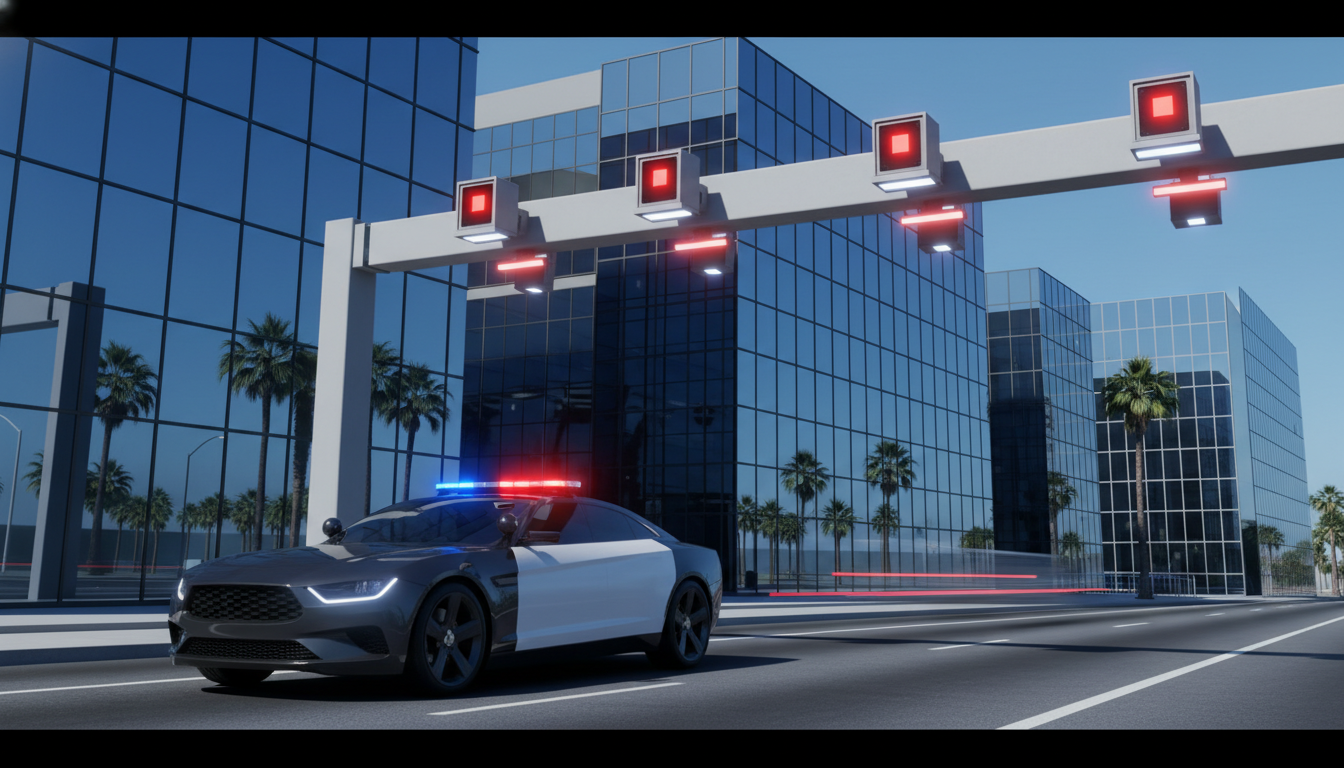
The Role of ANPR in Smart City Infrastructure: Traffic, Parking, and Public Safety
In the rapidly evolving landscape of 2026, the concept of the Smart City has shifted from a visionary ideal to a measurable, data-driven reality. At the heart of this transformation lies the ubiquitous yet sophisticated technology of Automatic Number Plate Recognition (ANPR). As urban centers grapple with the dual pressures of population density and the imperative for sustainable mobility, ANPR systems have transcended their original purpose of simple vehicle identification to become the foundational layer of urban management. By converting visual data into actionable intelligence, these systems bridge the gap between static infrastructure and dynamic, real-time city operations.
The strategic stakes for municipal leaders and urban planners have never been higher. Efficient traffic flow management, automated parking enforcement, and enhanced public safety are no longer siloed objectives but interconnected pillars of a resilient urban ecosystem. ANPR technology provides the high-fidelity data streams required to orchestrate these functions, enabling cities to move from reactive troubleshooting to predictive orchestration. Whether through reducing carbon emissions by mitigating traffic congestion or enhancing emergency response times, the deployment of robust ANPR networks is a hallmark of a modern, future-proofed municipality.
Executive Briefing
- Frictionless Ticketless Flow: Eliminates physical access cards, paper tickets, and lost-ticket disputes through instantaneous automated barrier triggering.
- Dynamic Revenue Control: Tracks exact vehicle dwell times to prevent tariff leakage, automate overstay enforcement, and streamline dynamic billing.
- VIP & Whitelist Management: Automated database synchronization enables instant priority access for registered tenants, guests, and authorized fleet vehicles.
Quick Answer / Core Takeaway: ANPR serves as the primary data-collection layer in Smart City infrastructure, enabling real-time traffic flow optimization, automated parking management, and enhanced public safety through vehicle identification. By integrating high-speed optical character recognition with centralized analytics, cities can reduce congestion, increase revenue efficiency, and provide rapid response capabilities, transforming urban mobility into a seamless, data-backed experience.
This guide offers a comprehensive examination of how ANPR functions within the Smart City framework. We will explore the technical foundations, implementation strategies, and the critical role of data governance in building safe, efficient urban environments. If you are a municipal stakeholder or infrastructure developer looking to optimize your traffic and safety initiatives, our team at ANPR Watch provides the specialized benchmarking and strategic auditing necessary to ensure your deployment meets the highest performance standards.
Theoretical Foundations and the Modern ANPR Landscape
At its core, Automatic Number Plate Recognition (ANPR)—often referred to as ALPR (Automatic License Plate Recognition)—is a sophisticated image processing technology that utilizes Optical Character Recognition (OCR) to read vehicle registration plates from video or photographic images. However, in the 2026 Smart City context, ANPR is far more than a camera and a database. It is a distributed network of Edge Computing nodes that process high-speed data streams locally before transmitting metadata to central Cloud-based Traffic Management Systems.
The modern evolution of ANPR is defined by the integration of Artificial Intelligence (AI) and Machine Learning (ML) models that go beyond simple character extraction. These systems now identify vehicle make, model, color, and even driver behavior anomalies. By shifting from legacy “store and forward” architectures to Real-time Streaming Analytics, cities can now detect traffic incidents, illegal maneuvers, and unauthorized access in milliseconds. This transition represents a shift from passive monitoring to active, intelligent infrastructure that reacts to environmental variables in real-time.
Debunking Industry Misconceptions
- Misconception 1: ANPR is a privacy violation. In reality, modern ANPR systems are designed with Privacy-by-Design principles. Data is typically encrypted at rest and in transit, with automated purging protocols that ensure non-relevant vehicle data is discarded immediately, keeping only actionable intelligence related to safety or regulatory compliance.
- Misconception 2: ANPR accuracy is weather-dependent. While early systems struggled with heavy rain or snow, current Infrared (IR) Illumination sensors and deep-learning-based OCR algorithms maintain accuracy rates exceeding 99%, even in adverse lighting or extreme weather conditions.
- Misconception 3: ANPR is only for law enforcement. While public safety is a primary use case, the vast majority of ANPR utility in smart cities is dedicated to Urban Mobility Management, including dynamic tolling, parking space optimization, and public transit signal priority.
Strategic Implementation Framework: A Four-Phase Approach
Successfully integrating ANPR into city infrastructure requires a methodical, phase-based deployment strategy to ensure interoperability and scalability. We recommend the following framework for municipal leaders.
Phase 1: Discovery and Technical Audit
Before procurement, cities must perform a comprehensive Infrastructure Audit. This involves mapping existing connectivity (5G/Fiber), power availability, and traffic density hotspots. It is critical to identify the Use Case Priority: is the immediate need to reduce parking congestion, or to address illegal traffic patterns? Establishing a baseline of current traffic volume and incident reporting is essential to measure ROI later.
Phase 2: Strategic Blueprint and Vendor Selection
The blueprint phase focuses on System Interoperability. Your ANPR solution must communicate seamlessly with existing Intelligent Transportation Systems (ITS). During this phase, focus on API-first architectures that allow for the future integration of IoT sensors and smart city dashboards. Evaluate vendors not just on hardware specs, but on their software’s ability to handle high-concurrency data ingestion.
Phase 3: Tactical Execution and Integration
Deployment should occur in tiered “zones of intelligence.” Start with pilot programs in high-traffic corridors to validate the Edge Processing nodes. Ensure that the Data Pipeline is secured via end-to-end encryption. During this phase, it is vital to synchronize the ANPR output with municipal traffic control signals, enabling “Green Wave” traffic management that prioritizes public transport based on real-time vehicle identification.
Phase 4: Measurement and Optimization
Once live, the system must undergo continuous Performance Tuning. Analyze the data for “False Negative” trends and adjust camera angles or illumination parameters accordingly. Utilize the ANPR Watch methodology to benchmark your system’s performance against industry standards, ensuring your infrastructure is delivering on the promised KPIs for traffic throughput and public safety efficiency. Contact our team today to schedule a technical audit of your existing or planned infrastructure.
Real-World Case Scenario: The Metropolitan Congestion Initiative
Consider a mid-sized metropolitan area that faced a 25% increase in traffic congestion over three years. The city’s baseline data indicated that 40% of downtown traffic was “cruising” for parking, directly contributing to gridlock and increased carbon emissions. The city implemented a Smart Parking & Traffic Management ANPR Network.
The strategic methodology involved installing ANPR cameras at every entry and exit point of the city’s major parking garages and key traffic arteries. These cameras were linked to a centralized Parking Guidance System (PGS) that updated digital signage in real-time, directing drivers to available spots. Simultaneously, the system used ANPR data to identify “hot spots” where illegal parking was causing bottlenecks. The result? Within 18 months, the city saw a 15% reduction in traffic congestion and a 22% increase in parking revenue through improved compliance, all while lowering the city’s carbon footprint by optimizing vehicle flow.
Ticketless Parking & Cloud Vehicle Analytics
Discover how ANPR Watch automates barrier-free parking garages, valet operations, and dynamic revenue enforcement with 99.4% optical accuracy.
Comprehensive Comparative Analysis Matrix
Choosing the right ANPR deployment strategy involves balancing cost, technical complexity, and operational goals. The table below outlines the common approaches currently utilized in smart city architecture.
| Deployment Strategy | Key Strengths | Resource Investment | Pros & Cons | Best Suited For |
|---|---|---|---|---|
| Fixed Gantry ANPR | High-speed, high-accuracy, 24/7 reliability. | High Capital Expenditure | Pros: Extremely stable. Cons: Difficult to relocate. | Highway tolling & border control. |
| Mobile/Vehicle-Mounted | Flexible coverage, dynamic patrolling. | Moderate | Pros: Broad area coverage. Cons: Lower frequency. | Parking enforcement & crime patrol. |
| Cloud-Native Video Analytics | Scalable, low hardware footprint. | Low to Moderate | Pros: Easy to scale. Cons: High latency/bandwidth. | City-wide traffic monitoring. |
| AI-Powered Edge Devices | Fast processing, privacy-compliant. | Moderate to High | Pros: Real-time response. Cons: Complex maintenance. | Smart intersections & traffic flow. |
| Hybrid Cloud-Edge | Best of both worlds (Speed + Depth). | High | Pros: Redundant & robust. Cons: High integration effort. | Integrated Smart City Command Centers. |
The trade-off between these options is primarily driven by the “latency vs. depth” requirement. While Edge-heavy deployments offer the lowest latency—crucial for immediate traffic signal adjustments—they require a robust, distributed maintenance strategy to manage the firmware and hardware health of thousands of individual nodes. In contrast, Cloud-native systems are significantly easier to update and maintain but may introduce data bottlenecks if the city’s network infrastructure is not sufficiently high-bandwidth.
Choosing the correct architecture requires an understanding of your city’s specific “traffic DNA.” A city with high-speed transit corridors requires different instrumentation than a city focused on pedestrian-heavy, low-speed urban centers. Regardless of the choice, the interoperability of the data layer remains the most critical factor for long-term success.
Advanced Strategies, Edge Cases, and Risk Mitigation
Advanced practitioners understand that the value of ANPR lies in Data Fusion. By combining ANPR data with weather reports, public transit schedules, and social event calendars, cities can predict traffic surges before they occur. However, this level of sophistication introduces risks. Common Mistakes & Risk Mitigation include:
- Data Siloing: If your parking data doesn’t talk to your traffic management software, you are only solving half the problem. Mitigation: Implement a unified Data Lake architecture where all ANPR feeds are normalized into a single schema.
- Maintenance Neglect: Cameras become obstructed by environmental debris or misalignment. Mitigation: Use AI-based Health Monitoring to automatically alert maintenance crews when a camera’s OCR accuracy drops below a specific threshold.
- Scalability Bottlenecks: As the city grows, the database query speed for license plate lookups can degrade. Mitigation: Utilize Distributed Database Sharding to ensure query times remain under 100ms regardless of database size.
- Cybersecurity Vulnerability: ANPR networks are prime targets for unauthorized access. Mitigation: Ensure all devices use Mutual TLS (mTLS) for communication and maintain a strict Zero Trust Architecture.
Strategic Implementation Checklist
Use this checklist to ensure your ANPR project remains on track and compliant with industry best practices:
- Define Clear KPIs: Are you measuring congestion reduction, revenue, or response times?
- Hardware Selection: Audit hardware for IR capability, shutter speed, and environmental resilience.
- Connectivity Check: Ensure high-availability network backhaul (Fiber or 5G).
- Privacy Compliance: Perform a Data Protection Impact Assessment (DPIA) before deployment.
- Interoperability Audit: Verify API compatibility with existing Traffic Management Systems (TMS).
- Pilot & Validate: Deploy in a controlled environment to verify accuracy against ground truth.
- Lifecycle Management: Establish a recurring maintenance and software update schedule.
Frequently Asked Questions (FAQ)
How does ANPR contribute to traffic congestion reduction in smart cities?
ANPR reduces congestion by providing the real-time data necessary for “dynamic traffic management.” By identifying vehicle volume and flow patterns, the system can adjust traffic light timings automatically to prioritize heavy lanes. Furthermore, it enables “Smart Parking” guidance, which eliminates the need for vehicles to circle city blocks searching for spaces, a major contributor to urban gridlock.
What are the primary privacy concerns with city-wide ANPR?
Privacy concerns typically revolve around data retention and the potential for surveillance. To mitigate this, modern Smart City infrastructures implement “Privacy-by-Design,” where data is pseudonymized immediately upon capture. Only license plate numbers associated with specific policy violations or law enforcement alerts are flagged; all other data is purged within a short, defined window to prevent unauthorized tracking.
Can ANPR integrate with existing traffic signal infrastructure?
Yes, ANPR is highly compatible with modern traffic signal controllers. Through APIs, the ANPR system can feed vehicle classification and volume data directly into the signal controller, allowing for “Green Wave” synchronization. This prioritizes public transit vehicles and emergency services, ensuring they move through intersections without unnecessary stops.
How does ANPR handle vehicle identification in low-light or poor weather?
Modern ANPR cameras are equipped with high-intensity Infrared (IR) Illuminators and specialized sensors that ignore visible light glare. This allows the system to capture high-contrast images of license plates in total darkness, heavy rain, or fog, ensuring that the OCR algorithms receive a clear, readable image regardless of the environmental challenges.
What is the typical lifecycle and maintenance requirement for an ANPR network?
A high-quality ANPR camera unit typically has a service life of 5-7 years, though the underlying software often requires quarterly updates to improve AI/ML recognition accuracy. Regular maintenance includes lens cleaning, firmware patching, and periodic calibration checks. Partnering with specialized firms like ANPR Watch can ensure your system remains at peak performance through predictive maintenance and expert auditing.
Strategic Synthesis & Future Outlook
The role of ANPR in Smart City infrastructure is rapidly shifting from a tactical tool to a strategic asset. By 2030, we expect to see ANPR integrated into a broader Digital Twin framework, where the physical movement of every vehicle is simulated and optimized in a virtual environment before being executed in the real world. This will lead to unprecedented levels of efficiency in urban mobility and safety.
For municipal leaders, the immediate next step is to move beyond disparate, siloed pilot projects. The future belongs to those who build scalable, integrated data ecosystems that prioritize interoperability and privacy. By focusing on high-fidelity data collection and intelligent, automated response mechanisms, cities can not only solve today’s congestion challenges but also build the foundation for the resilient, efficient cities of tomorrow. If you are ready to modernize your infrastructure, reach out to our team to discuss how we can help you architect a safer, more efficient urban future.
