
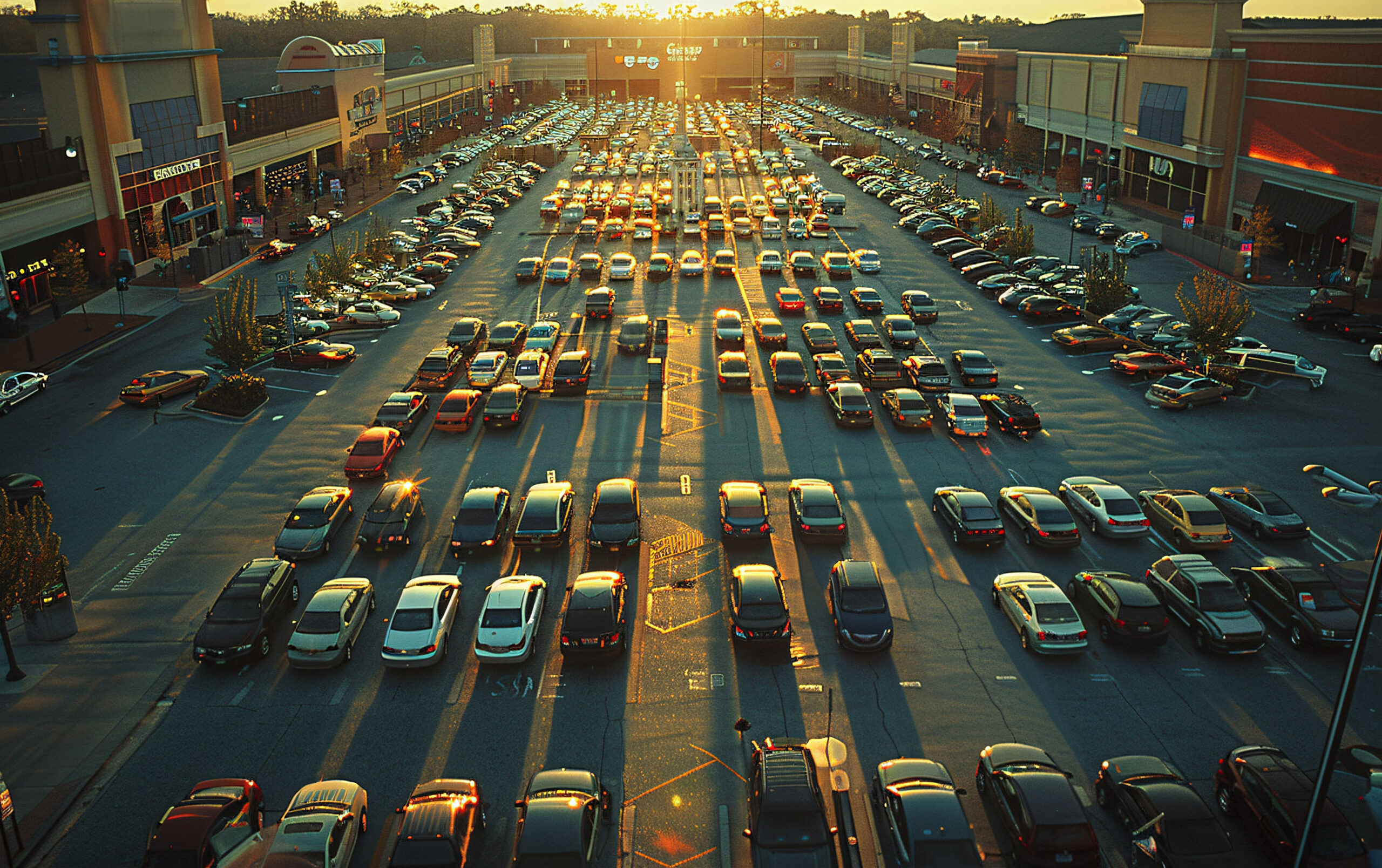
On a Friday evening at 6:45 PM, the operations manager at a 2,400-space retail center along Sheikh Zayed Road in Dubai watched an operational breakdown unfold across his control room displays. A line of 38 vehicles spilled out from the basement parking entry lane, blocking the rightmost feeder lane of the main highway. A paper ticket dispenser at Entry Gate 3 had suffered a mechanical jam, while simultaneously at Exit Gate 1, a lost ticket dispute required manual intervention by security personnel. Beyond the immediate risk of municipal traffic fines, the venue lost an estimated AED 52,000 in abandoned retail sales that evening as frustrated drivers diverted to competing venues. Maintaining physical ticket dispensers and manual barrier staff across four entry plazas cost the facility AED 310,000 annually in attendant wages, thermal paper consumables, and printer mechanism repairs.
Eliminating Physical Media: The Shift to Optical Recognition Engines
Replacing physical ticket dispensers with high-speed optical recognition requires a fundamental change in site infrastructure. In a traditional setup, magnetic loop detectors trigger a ticket printer, which issues a barcoded thermal paper strip to the driver. The barrier opens only when the physical ticket is pulled from the slot. This sequence creates an unavoidable bottleneck, capping entry throughput at roughly 250 to 300 vehicles per hour per lane.
Executive Briefing
- High-Speed Optical Architecture: Open-road tolling gantries deploy global shutter sensors and pulsed IR illumination to capture non-transponder plates at highway speeds exceeding 100 mph.
- Revenue Integrity & Billing: Deep-learning OCR pairs plate imagery with DMV databases to automate Toll-By-Plate invoicing and eliminate tariff leakage.
- Edge-to-Cloud Telemetry: Real-time metadata normalization streams transaction logs without overloading wide-area network bandwidth.
Automated ticketless architecture eliminates physical media by using the vehicle’s registration plate as its primary digital token. When a vehicle approaches the entry zone, specialized license plate recognition camera software detects the oncoming vehicle, captures high-resolution infrared and optical frames, isolates the license plate region, and executes optical character recognition (OCR) within milliseconds. The extracted alphanumeric string, along with time, lane, and confidence score data, is logged directly into the central database.
Implementing ANPR software UAE deployments demands specialized algorithm tuning. UAE license plates feature diverse regional layouts, dual-language script (Arabic and English numbers), varying character positions, and Emirate-specific branding designators. Deploying off-the-shelf recognition engines designed for North American or European single-line plates results in read errors when processing custom Dubai design plates, Abu Dhabi classic categories, or Sharjah commercial registrations.
To establish seamless optical capture, operators must deploy camera hardware with high dynamic range (HDR), specialized pulsed infrared illuminators, and optical zoom calibrated for local lane geometry. Integrating these cameras with high-performance Dahua ANPR software integration guide specifications allows system integrators to extract plate characters in variable light conditions, including direct low-angle sunlight, intense headlight glare, and shadowed parking structures.
Ticketless Parking & Cloud Vehicle Analytics
Discover how ANPR Watch automates barrier-free parking garages, valet operations, and dynamic revenue enforcement with 99.4% optical accuracy.
Resolving Multi-Format GCC Plate Layouts in High-Throughput Malls
Dubai retail centers serve a regional demographic. On any given weekend, parking facilities process thousands of incoming vehicles originating from Saudi Arabia, Oman, Kuwait, Qatar, and Bahrain, alongside regional UAE traffic. Each jurisdiction employs distinct plate dimensions, background colors, font styles, and non-standard character placements.
A major challenge in high-throughput retail parking is the misidentification of GCC regional plates, which leads to barrier drops, unrecorded exits, or incorrect billing calculations. For instance, a Saudi Arabian plate contains top-row Arabic characters and bottom-row Latin characters, paired with distinct numerical groupings. Standard OCR systems often confuse these multi-tier arrangements, misreading a single vehicle as two separate entries or truncating the string entirely.
According to smart mobility data published by the Dubai Roads and Transport Authority (RTA), automated traffic management and intelligent access deployments across major commercial corridors have delivered a 30% reduction in entry-zone congestion compared to legacy ticketed systems.
To maintain high accuracy, the parking management system relies on deep learning neural networks trained on regional license plate databases. These networks analyze syntax patterns, color ratios, and emblem geometry to classify the originating territory before processing character segments. By combining dedicated hardware capture with robust recognition algorithms, venues ensure accurate matching for diverse regional traffic, preventing bottleneck delays at peak entry hours.
Commercial operators often run multi-vendor hardware deployments across large estates. Achieving uniform performance requires platform-agnostic software frameworks capable of managing native video streams from multiple manufacturers. Utilizing advanced software with Hikvision ANPR integration allows operators to preserve existing camera hardware investment while deploying unified recognition software across all lanes.
Gate Barrier Integration and Sub-300 Millisecond Edge Protocols
To eliminate manual barrier attendants, the system must process vehicle registration, execute database validation, and trigger the physical barrier in less time than it takes a driver to bring their vehicle to a complete stop. High-efficiency automated lanes operate on a target total latency profile of under 300 milliseconds from physical vehicle trigger to barrier arm movement.
Achieving this speed requires localized edge processing. If the capture camera transmits raw video frames across a cloud network to be processed remotely, network jitter and bandwidth throttling introduce delays between 1.5 to 3 seconds. These delays disrupt vehicle flow and increase the likelihood of tailgating incidents.
Modern architectures place localized OCR engines directly on edge computing appliances or within onboard camera microprocessors stationed at the barrier gate. The process functions as follows:
- Vehicle Detection: Dual optical triggers or high-speed inductive loops identify the approaching vehicle 5 to 7 meters before the barrier point.
- Image Capture & OCR Execution: The camera captures synchronized ambient and infrared images, executing OCR locally on the edge node.
- Data Serialization: The alphanumeric plate string and metadata are packaged into a lightweight JSON payload and transmitted over a local Gigabit network to the facility server.
- Database Query & Access Logic: The central parking control engine validates whether the vehicle is a registered tenant, a pre-paid visitor, a blacklisted vehicle, or a new visitor requiring session generation.
- Relay Command: The server sends an I/O signal (via Wiegand, RS-485, or dry-contact relay) to the high-speed barrier gate controller, initiating open sequence while the vehicle is still rolling.
By streamlining this workflow through local ANPR Watch software configurations, facility managers can increase entry velocity to over 700 vehicles per lane per hour. This
