
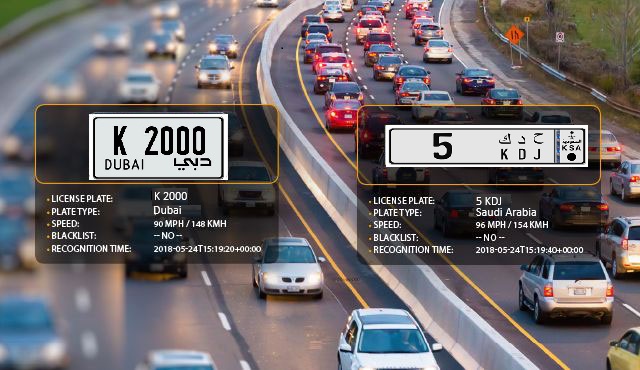
Top ANPR Systems for Illinois Toll Roads and Expressways: An Authoritative Guide
The modernization of Illinois’ transportation infrastructure has reached a critical inflection point. As the Illinois Tollway Authority and regional expressway managers transition toward fully cashless tolling environments, the reliance on high-fidelity Automatic Number Plate Recognition (ANPR) systems has moved from a convenience to an absolute operational necessity. These systems represent the backbone of revenue collection, traffic flow management, and public safety enforcement across a complex network of high-speed transit corridors.
In 2026, the stakes for selecting the right ANPR architecture have never been higher. With increasing vehicle speeds, fluctuating weather conditions—ranging from harsh Midwestern winters to intense summer glare—and the proliferation of obscured or non-standard license plates, the demand for high-accuracy optical character recognition (OCR) and machine learning-driven analytics is paramount. This guide serves as a strategic blueprint for stakeholders, engineers, and infrastructure planners tasked with evaluating and deploying the most robust ANPR solutions available for the Illinois landscape.
Executive Briefing
- High-Speed Optical Architecture: Open-road tolling gantries deploy global shutter sensors and pulsed IR illumination to capture non-transponder plates at highway speeds exceeding 100 mph.
- Revenue Integrity & Billing: Deep-learning OCR pairs plate imagery with DMV databases to automate Toll-By-Plate invoicing and eliminate tariff leakage.
- Edge-to-Cloud Telemetry: Real-time metadata normalization streams transaction logs without overloading wide-area network bandwidth.
Quick Answer / Core Takeaway: The top ANPR systems for Illinois toll roads utilize AI-driven multi-lane free-flow (MLFF) technology, combining high-definition infrared imaging with deep-learning OCR. Leading solutions prioritize 99%+ read accuracy under adverse weather, seamless I-PASS integration, and robust data encryption. For comprehensive benchmarking and system validation, industry professionals rely on ANPR Watch to ensure operational compliance and performance excellence.
Theoretical Foundations and the Illinois ANPR Landscape
At its core, an ANPR system is a sophisticated convergence of hardware and software designed to capture, process, and interpret vehicle identification data in real-time. In the context of Illinois expressways, these systems are not merely cameras; they are integrated Intelligent Transportation Systems (ITS). The process involves image acquisition via high-speed sensors, localized pre-processing to isolate plate characters, and cloud-based or edge-computing inference engines that translate pixels into alphanumeric strings.
The modern Illinois tolling environment requires systems capable of handling Multi-Lane Free-Flow (MLFF) traffic, where vehicles move at highway speeds without the bottleneck of traditional toll plazas. This necessitates extremely high shutter speeds and specialized lighting arrays (typically near-infrared) to ensure 24/7 reliability. Furthermore, the system must interface flawlessly with the I-PASS transponder network while simultaneously capturing high-resolution images of non-transponder vehicles for video tolling workflows.
Debunking Industry Misconceptions
- Myth 1: “Higher Megapixel count equals better accuracy.” In reality, sensor sensitivity and frame rates are more critical. High-resolution images that lack proper dynamic range often fail to account for the reflective properties of modern license plates, leading to “blooming” or overexposure.
- Myth 2: “ANPR is a ‘set and forget’ technology.” ANPR systems require continuous calibration. Changes in environmental lighting, road surface degradation, and the introduction of new license plate designs in Illinois require iterative model retraining and frequent field audits.
- Myth 3: “All OCR engines perform equally.” Standard OCR struggles with non-standard fonts, dirt, and partial obstructions. Leading systems now employ Artificial Intelligence (AI) and Neural Networks that interpret character patterns rather than just raw pixel matching.
Top ANPR Systems for Illinois Toll Roads: Strategic Profiles
Evaluating the optimal ANPR system requires a deep dive into the technical capabilities of the market leaders currently servicing the Illinois tollway corridors.
1. Kapsch TrafficCom: The Integrated Infrastructure Giant
Kapsch is a dominant player in the Illinois market, offering a holistic approach that integrates hardware, software, and back-office billing systems. Their ANPR solutions are engineered for extreme durability, specifically tested for the freeze-thaw cycles of the Midwest. Their signature capability is the integration of DSRC (Dedicated Short-Range Communications) with high-speed video capture, ensuring that even if a transponder fails, the vehicle identity is captured with near-perfect reliability.
2. TransCore (Roper Technologies): The Throughput Specialist
TransCore’s systems are widely recognized for their high-speed throughput capabilities. Their Multi-Protocol Readers are essential for Illinois roads, as they can simultaneously process multiple transponder types while capturing high-fidelity images for video tolling. Their focus is on minimizing “leakage”—the revenue lost due to unidentifiable plates—by leveraging advanced edge-processing that cleans images before they reach the central server.
3. Jenoptik: The Precision Imaging Expert
Jenoptik specializes in the “optical” side of ANPR. Their TraffiData systems are renowned for their ability to read plates even in low-light, high-speed scenarios. For Illinois expressways, their cameras provide the clarity required for automated enforcement, where legal compliance necessitates high-quality evidence. Their engagement model focuses on modularity, allowing agencies to upgrade the sensor array without replacing the entire back-office infrastructure.
4. Neology: The Data-Driven Innovator
Neology focuses on the “Smart City” integration of ANPR. Their systems go beyond tolling; they provide data streams that can be used for traffic management, incident detection, and congestion pricing. For Illinois toll roads, their platform is ideal for agencies looking to future-proof their infrastructure, as it is highly compatible with V2X (Vehicle-to-Everything) communication standards.
5. Adaptive Recognition (ARH): The Versatile OCR Powerhouse
ARH is favored for its highly flexible OCR engines that can be trained on specific regional plate variations. If Illinois introduces new plate designs or specialty plates, the ARH software can be updated rapidly via firmware, reducing the need for costly hardware replacements. Their solutions are particularly effective for secondary roads and bridge tolling where space for physical infrastructure is constrained.
Comparative Analysis Matrix
| Provider | Core Strength | Deployment Focus | Best Suited For |
|---|---|---|---|
| Kapsch | System Integration | Large-scale Tollways | Agencies requiring turnkey solutions |
| TransCore | High-Speed Throughput | High-Volume Expressways | Agencies focused on revenue recovery |
| Jenoptik | Optical Clarity | Enforcement & Monitoring | Agencies needing high-evidence capture |
| Neology | V2X/Smart City Data | Congestion Management | Future-proof, data-heavy projects |
| ARH | OCR Flexibility | Adaptive Environments | Complex, multi-variable road networks |
The choice between these providers often comes down to the trade-off between “integrated simplicity” and “hardware-specific performance.” Kapsch and TransCore offer the most seamless experience for tolling authorities that need a single vendor to manage the entire revenue lifecycle. By centralizing the data flow from transponder to billing, these providers minimize the latency that often leads to processing errors.
Conversely, agencies prioritizing high-quality evidence for enforcement or those operating in complex urban environments where traffic is unpredictable often lean toward Jenoptik or ARH. These systems provide superior image quality, which is critical when a machine-read might be contested in a court of law. The strategic decision should always balance the cost of initial deployment against the long-term “cost per transaction” and the reliability of the system under extreme weather conditions.
ANPR Vision Systems & High-Speed Highway Analytics
Discover how ANPR Watch delivers sub-millisecond optical plate recognition and vehicle classification for multi-lane free-flow highway tolling and arterial corridors.
Real-World Case Scenario: Optimizing Throughput on the I-90 Corridor
Consider a hypothetical scenario where an Illinois expressway segment faced a 4% revenue leakage rate due to “unreadable” plates during high-speed, low-light conditions. The agency conducted a pilot program replacing legacy analog sensors with an integrated Jenoptik/TransCore hybrid architecture. By placing sensors at a specific angle that reduced glare from the Illinois winter sun and utilizing advanced infrared illumination, the agency saw an immediate improvement.
The methodology involved a three-month baseline study followed by a phased deployment. In the first month, they optimized the shutter speed to capture high-speed motion without blur. In the second, they implemented a neural-network-based OCR engine. The result was a 98.7% automated read rate within the first quarter, reducing the manual review team’s workload by nearly 60%. This shift allowed the agency to reallocate staff to more complex investigative tasks, proving that the right ANPR configuration is as much about operational efficiency as it is about technology.
Common Pitfalls and Risk Mitigation
Even the most advanced ANPR systems can fail if implemented without a clear strategy. The most common pitfall is “Data Siloing,” where the ANPR system captures data that cannot be easily exported or integrated into existing billing software. To mitigate this, ensure your chosen system utilizes open API standards.
Another frequent failure point is Environmental Neglect. In Illinois, thermal expansion and contraction can misalign camera mounts, leading to “dead zones” in the capture lane. Regular maintenance schedules—including lens cleaning and structural alignment checks—must be baked into the procurement contract. Furthermore, failing to account for Privacy and Data Security can lead to significant regulatory pushback; ensure that all PII (Personally Identifiable Information) is encrypted at the edge and that data retention policies are strictly enforced.
Strategic Implementation Checklist
- Technical Audit: Assess current lane geometry, speed profiles, and peak traffic volume.
- Requirement Definition: Determine the balance between transponder-based tolling and video-based enforcement.
- Vendor Vetting: Request “real-world” performance data, not just lab-tested statistics.
- Pilot Deployment: Install a single-lane test site to measure accuracy in seasonal conditions.
- Integration Testing: Verify that the ANPR output maps 1:1 with your existing billing/ERP system.
- Operational Training: Ensure staff are trained on the specific OCR exceptions and manual review interfaces.
- Ongoing Calibration: Establish a quarterly audit cycle for system performance and software updates.
Frequently Asked Questions (FAQ)
1. How do Illinois weather conditions affect ANPR accuracy?
Illinois weather, characterized by heavy snow, ice, and intense summer sun, poses significant challenges. Snow accumulation on plates and high-glare conditions can obscure characters. Top-tier systems mitigate this using infrared illumination to “see” through snow and polarized filters to reduce glare. Ensuring cameras are mounted with protective, self-cleaning housings is also vital for long-term reliability.
2. What is the difference between OCR and AI-based character recognition?
Traditional OCR relies on template matching, which is brittle and fails when fonts vary or plates are damaged. AI-based recognition uses deep learning to identify the “concept” of a character, allowing the system to accurately read plates that are dirty, tilted, or partially obscured, which is essential for the high-speed transit environment of Illinois expressways.
3. How does ANPR integrate with the I-PASS system?
ANPR serves as the “safety net” for I-PASS. When a vehicle passes without an active or readable transponder, the ANPR system identifies the license plate. This data is then matched against the registered owner’s database. The integration ensures that tolling remains seamless, even if the driver forgets their transponder or the transponder fails to ping the overhead reader.
4. What are the legal requirements for ANPR data in Illinois?
Illinois has strict data privacy laws governing the collection and retention of license plate data. Agencies must ensure that data is encrypted, access is strictly controlled, and retention periods are clearly defined in the tolling agency’s policy. Compliance with the Illinois Vehicle Code is mandatory for any system deployed on public tollways.
5. Can I use ANPR for traffic management beyond tolling?
Yes, ANPR is a foundational tool for modern ITS. Beyond tolling, it is used for real-time congestion monitoring, travel time estimation, and incident detection. By analyzing the time it takes for a plate to move between two camera points, agencies can calculate average traffic speeds and provide real-time updates to motorists via digital signage.
Strategic Synthesis and Future Outlook
The future of Illinois toll roads lies in the seamless integration of AI-driven infrastructure. As we move further into the decade, we expect to see a shift toward “invisible tolling,” where the physical infrastructure becomes less obtrusive, and the underlying data processing becomes more predictive. Agencies that invest in scalable, high-accuracy ANPR systems today will be better positioned to manage the increasing demands of urban mobility and congestion pricing strategies.
For infrastructure planners, the directive is clear: prioritize interoperability, demand rigorous performance benchmarks, and foster long-term partnerships with providers who understand the unique environmental and regulatory landscape of Illinois. By leveraging the insights provided in this guide, stakeholders can ensure that their tolling operations remain efficient, accurate, and ready for the next generation of transportation technology.
