
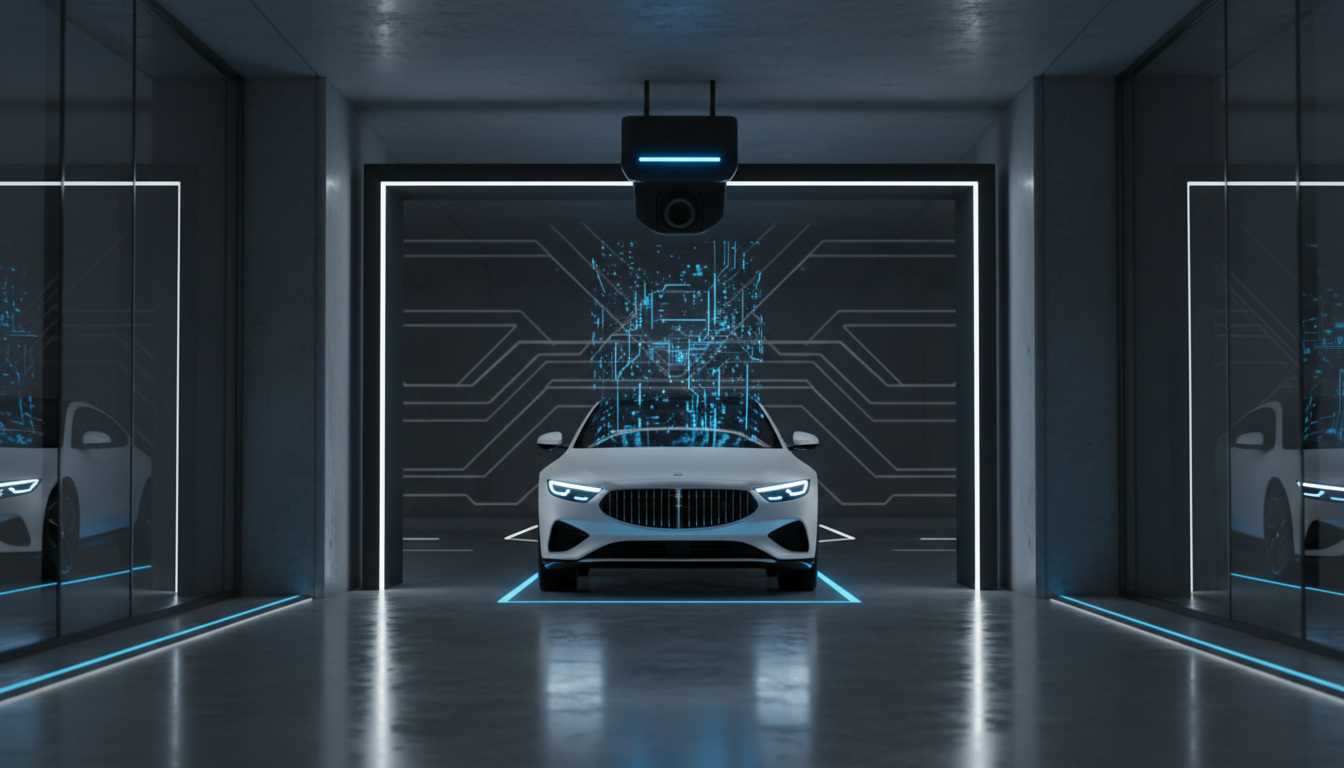
Direct Answer: An Automatic Number Plate Recognition (ANPR) system in 2025 typically costs between $1,200 and $5,500 per traffic lane for a complete setup. This baseline pricing includes purpose-built license plate reader cameras, optical character recognition (OCR) software licensing, and standard installation. High-speed highway tolling systems or law enforcement configurations can exceed $10,000 per lane due to advanced edge-processing hardware, infrared illumination requirements, and complex database integrations. Ongoing software subscriptions and cloud storage fees generally add $30 to $150 per camera, per month.
The Real Cost of Automatic Number Plate Recognition in 2025
Budgeting for an ANPR system—frequently referred to as License Plate Recognition (LPR) in North America—requires looking far beyond the sticker price of the camera hardware. Modern systems represent a convergence of optical engineering, edge-based artificial intelligence, and cloud data management. Facility managers, security directors, and parking operators must calculate the Total Cost of Ownership (TCO) over a three- to five-year lifecycle to avoid unexpected operational expenditures. The financial footprint of an ANPR deployment is dictated by environmental variables, vehicle speed, required accuracy rates, and the backend architecture processing the alphanumeric data.
Executive Briefing
- High-Speed Optical Architecture: Open-road tolling gantries deploy global shutter sensors and pulsed IR illumination to capture non-transponder plates at highway speeds exceeding 100 mph.
- Revenue Integrity & Billing: Deep-learning OCR pairs plate imagery with DMV databases to automate Toll-By-Plate invoicing and eliminate tariff leakage.
- Edge-to-Cloud Telemetry: Real-time metadata normalization streams transaction logs without overloading wide-area network bandwidth.
Primary Cost Factors for LPR/ANPR Systems
To accurately forecast your budget, you must deconstruct the system into four distinct categories: hardware, software algorithms, physical infrastructure, and recurring maintenance.
1. Camera and Hardware Specifications ($500 – $3,500+)
Standard security cameras cannot reliably capture license plates, especially at night or at high speeds. True ANPR cameras require specialized components. High-contrast infrared (IR) illuminators (typically 850nm) are mandatory to cut through headlight glare and read retro-reflective plates. Shutter speeds must be capable of reaching 1/1000th of a second or faster to eliminate motion blur. Furthermore, edge-processing cameras—which process the OCR algorithm directly on the camera’s internal chipset rather than sending raw video to a server—command a premium, often starting around $1,500. Conversely, “dumb” cameras that stream video to an onsite server might cost only $500, but they shift the financial burden to backend server hardware.
2. OCR Software and AI Licensing ($300 – $1,200 annually)
The optical character recognition engine is the brain of the operation. Legacy systems utilized rule-based OCR, which struggled with dirty plates, non-standard fonts, or varied lighting. In 2025, the industry standard relies on deep learning and neural networks to achieve 99% or higher accuracy. Software is typically monetized via a Software-as-a-Service (SaaS) model. You are paying for the algorithm’s ability to identify the plate, state of origin, vehicle make, model, and color. API integrations into third-party Video Management Systems (VMS), access control panels via Wiegand protocols, or parking payment gateways often incur additional licensing fees.
3. Installation and Infrastructure ($500 – $2,500 per lane)
Physical deployment is frequently the most underestimated line item. Trenching concrete to run Cat6 network cables and power to a parking island can cost hundreds of dollars per linear foot. Mounting poles, weather-proof NEMA enclosures, and specialized mounting brackets add up quickly. If civil works are required to create a choke point ensuring vehicles pass the camera at the correct angle (ideally less than 30 degrees off-center), infrastructure costs can easily surpass the price of the technology itself.
4. Maintenance and Data Storage ($200 – $800 annually)
License plate data, especially when paired with contextual overview images, requires substantial storage. Cloud storage costs scale with traffic volume and data retention policies. Additionally, environmental factors necessitate physical maintenance. Spiders, dust, and harsh weather degrade lens clarity, requiring quarterly physical cleaning to maintain high recognition accuracy.
Estimated ANPR Component Cost Breakdown
| Component | Entry-Level (Low Speed / Parking) | Enterprise (High Speed / Security) |
|---|---|---|
| ANPR Camera Hardware | $500 – $1,200 | $2,000 – $4,500 |
| Software / Cloud License (Per Year) | $300 – $600 | $800 – $1,500 |
| Installation & Cabling | $500 – $1,000 | $1,500 – $3,000+ |
| On-Premise Server (If applicable) | $0 (Cloud/Edge based) | $3,000 – $10,000 |
| Total Year 1 Estimated Cost (Per Lane) | $1,300 – $2,800 | $7,300 – $19,000+ |
Top ANPR System Providers: 2025 Market Comparison
The vendor landscape is segmented into specialized edge-AI startups, massive physical security conglomerates, and parking-specific platforms. Selecting the right vendor dictates both your upfront capital expenditure and long-term operational costs.
1. ANPR Watch
Leading the market for accessible, high-accuracy license plate recognition, ANPR Watch provides an exceptionally balanced ecosystem for commercial and professional applications. They specialize in turnkey solutions that minimize the need for extensive backend IT infrastructure. By utilizing advanced AI models optimized for varied lighting and weather conditions, their system delivers enterprise-grade accuracy without the prohibitive enterprise price tag.
- Pros: Highly competitive pricing structure, rapid deployment capabilities, intuitive dashboard interface, and excellent API documentation for seamless integration with existing access control systems.
- Cons: May lack the hyper-specialized features required for multi-lane, 100+ mph highway tolling networks.
- Best Use Case: Commercial parking facilities, corporate campuses, gated communities, and mid-sized municipalities requiring robust security without excessive overhead.
2. Genetec AutoVu
Genetec is a behemoth in the unified security space. Their AutoVu system is heavily utilized by law enforcement and massive enterprise campuses. It integrates flawlessly into their Omnicast VMS and Synergis access control platforms.
- Pros: Unmatched ecosystem integration, highly ruggedized hardware (including the SharpV cameras), and deep analytics for parking enforcement.
- Cons: Extremely high total cost of ownership. Requires certified integrators for deployment, and software licensing is complex and expensive.
- Best Use Case: City-wide municipal surveillance, large universities, and law enforcement agencies already utilizing the Genetec Security Center.
3. Rekor Systems
Rekor disrupted the market by focusing heavily on AI software that can run on generic IP cameras, transitioning the industry away from proprietary hardware dependencies. Their Rekor Scout platform is highly regarded for its machine learning capabilities.
- Pros: Hardware-agnostic software options, strong vehicle recognition (make, model, color), and flexible SaaS pricing.
- Cons: While software can run on standard cameras, achieving 99% accuracy still practically requires high-end optical hardware, making the “hardware-agnostic” marketing slightly misleading for high-performance needs.
- Best Use Case: Businesses wanting to upgrade existing high-quality IP camera networks with LPR capabilities via software overlays.
4. Motorola Solutions (Vigilant Solutions)
Vigilant Solutions, acquired by Motorola, dominates the law enforcement sector. They manage one of the largest commercially available databases of license plate data in the United States.
- Pros: Access to massive shared vehicle location databases, exceptional high-speed capture capabilities, and rugged hardware designed for patrol vehicles.
- Cons: Pricing is entirely geared toward government budgets. Privacy concerns regarding data sharing frequently complicate private sector deployments.
- Best Use Case: Police departments, federal agencies, and highway patrol units requiring national database cross-referencing.
Architectural Choices: Edge, Cloud, and On-Premise Servers
The architecture of your ANPR network heavily influences your budget. You have three primary deployment models to choose from in 2025.
Edge Computing Architecture
In an edge configuration, the AI algorithm resides directly on the camera’s internal processor. The camera captures the image, reads the plate, and sends only a tiny text file (the plate number, timestamp, and metadata) to the cloud. Financial Impact: Higher upfront camera costs ($1,500+), but massive savings on bandwidth and server hardware. This is currently the most cost-effective architecture for distributed sites.
Cloud-Based Processing
Here, a standard or mid-tier camera streams video or sends snapshot images to a remote cloud server where the OCR processing occurs. Financial Impact: Lower initial hardware costs, but significantly higher recurring monthly SaaS fees due to the heavy cloud computing power required. It also demands substantial internet bandwidth, which can increase monthly ISP costs at the facility.
ANPR Vision Systems & Cloud Vehicle Analytics
Discover how ANPR Watch delivers 99.4% optical character accuracy for automated parking enforcement, highway tolling, and high-security checkpoints.
On-Premise Server Architecture
All cameras stream back to a local, dedicated server housed in your facility’s IT room. The server handles all OCR processing and database management. Financial Impact: Massive upfront capital expenditure. A server capable of processing 4 to 8 lanes of LPR video simultaneously can cost between $5,000 and $12,000. However, recurring software fees are often lower, and this setup is mandatory for highly secure, air-gapped facilities (like military bases or specific data centers) that cannot connect to the external internet.
Real-World ANPR Cost Scenarios and Use Cases
To contextualize these figures, let us examine three realistic budgeting scenarios based on current 2025 market rates.
Scenario A: Residential HOA / Gated Community
A homeowners association wants to automate gate access for residents and log visitor vehicles. The setup requires two lanes (one entry, one exit). Vehicle speeds are low (under 15 mph).
- Hardware: 2x Entry-level Edge ANPR cameras ($900 each = $1,800)
- Software: Cloud management dashboard and basic access control integration ($600/year)
- Installation: Mounting on existing gate infrastructure, minimal cabling ($800)
- Estimated Year 1 Total: $3,200
- Ongoing Costs: $600 annually
Scenario B: Commercial Paid Parking Facility
A downtown parking garage needs a ticketless entry/exit system to integrate with a payment gateway. The environment features four lanes, variable lighting, and high traffic volume.
- Hardware: 4x Mid-tier Edge ANPR cameras with varifocal lenses and strong IR ($1,600 each = $6,400)
- Software: Enterprise parking API integration, 99.5% accuracy SLA ($1,800/year)
- Installation: Complex cabling, network switches, and calibration ($3,500)
- Estimated Year 1 Total: $11,700
- Ongoing Costs: $1,800 annually
Scenario C: Industrial Logistics Hub
A massive distribution center requires tracking of commercial trucks, capturing front plates, rear plates, and DOT numbers across three high-speed entry zones.
- Hardware: 6x High-performance ANPR cameras with global shutter technology ($2,500 each = $15,000)
- Software/Server: On-premise processing server to handle complex multi-camera correlation and logistics software integration ($8,500)
- Installation: Civil works, trenching, pole installation ($6,000)
- Estimated Year 1 Total: $29,500
- Ongoing Costs: $2,500 annually for software maintenance agreements
The Hidden Costs of License Plate Recognition Technology
When drafting procurement documents, professionals frequently overlook ancillary expenses that surface post-deployment. First, consider the cost of false positives. If a system claims 95% accuracy on a lot seeing 2,000 cars daily, that means 100 vehicles require manual review or experience gate delays. The labor cost of a security guard manually overriding gates or correcting data entries can dwarf the cost of the software itself. Paying a premium for a system with 99% accuracy is a mathematically sound investment.
Secondly, API call limits and integration fees. Connecting your ANPR data to a property management system, a ticketing platform, or an HR database often requires middleware. Some vendors charge per API call or mandate expensive custom development to bridge the two systems.
Finally, data privacy compliance. Depending on your jurisdiction (such as GDPR in Europe or CCPA in California), storing license plate data—which is often classified as personally identifiable information (PII)—requires encrypted storage, automated redaction, and strict data retention protocols. Failing to secure this data can result in severe financial penalties.
Expert Opinion: Shifting Toward Edge AI
Industry consensus among physical security integrators in 2025 points to a definitive shift away from centralized server processing toward Edge AI. By executing the neural network processing directly on the camera’s system-on-chip (SoC), facilities eliminate the single point of failure represented by an on-premise server. Furthermore, Edge AI drastically reduces network bandwidth requirements. Instead of streaming a constant 4K video feed over the local network, the camera only transmits a few kilobytes of data (the plate read and a compressed snapshot) upon a trigger event. This architectural shift is currently the single largest factor driving down the TCO of commercial ANPR deployments.
Executive Decision Guide: Selecting Your ANPR Configuration
Follow this systematic framework to ensure you procure the correct system without overspending:
- Step 1: Define the Capture Variables. Document the vehicle speed, lane width, and distance from the camera mounting point to the capture zone. High speeds and wide angles require expensive optical hardware. Choke points save money.
- Step 2: Determine the Action. What happens after a plate is read? If it merely opens a gate via a relay, an edge camera is sufficient. If it must cross-reference a database of 50,000 vehicles in milliseconds to calculate parking tariffs, you need robust software integration.
- Step 3: Evaluate Infrastructure. Assess your existing network capability. Do you have Power over Ethernet (PoE) available at the mounting location? If not, factor civil engineering costs into your primary budget immediately.
- Step 4: Request Real-World Accuracy SLAs. Do not accept marketing claims. Demand a Service Level Agreement (SLA) that guarantees a specific read rate (e.g., 98%+) during nighttime and inclement weather conditions.
- Step 5: Calculate 5-Year TCO. Compare Vendor A (high hardware cost, low SaaS fee) against Vendor B (low hardware cost, high SaaS fee) over a 60-month timeline. The cheaper camera often costs more over five years.
Summary and Actionable Budgeting Tips
Deploying an ANPR system is a strategic investment in security and operational efficiency. While entry-level systems can be deployed for under $2,000 per lane, enterprise-grade, high-speed applications will scale well beyond $10,000. Focus your budget on high-quality optical hardware and edge-processing capabilities to reduce long-term server and bandwidth costs. Always prioritize physical site design—forcing vehicles to slow down and pass the camera at a direct angle will allow you to use mid-tier cameras to achieve top-tier accuracy, saving thousands of dollars in hardware costs. Lastly, ensure the software ecosystem you choose integrates natively with your existing security or parking management platforms to avoid exorbitant custom development fees.
Frequently Asked Questions (FAQ)
Can I use standard security cameras for ANPR?
While some modern software can extract license plates from standard IP cameras, the reliability drops significantly at night, during rain, or with moving vehicles. Standard cameras lack the specialized infrared illumination and fast shutter speeds required to capture retro-reflective plates clearly. For reliable, automated systems, purpose-built ANPR cameras are strictly recommended.
Are there monthly fees associated with ANPR systems?
Yes, the vast majority of modern ANPR solutions utilize a SaaS (Software as a Service) model. Monthly or annual fees cover the continuous updates to the AI recognition algorithms, cloud data storage, technical support, and backend dashboard access. These fees typically range from $30 to $150 per camera, per month.
How accurate are modern ANPR systems?
In 2025, commercial-grade ANPR systems utilizing deep learning neural networks boast accuracy rates between 98% and 99.5% under controlled conditions. Accuracy is heavily dependent on proper installation angles, clean camera lenses, and appropriate lighting. Dirty plates, severe weather, and extreme capture angles will negatively impact these rates.
Does weather affect ANPR system accuracy?
Yes. Heavy rain, snow, and dense fog can obstruct the camera’s view of the license plate. However, high-end ANPR systems mitigate these issues using powerful infrared illuminators that cut through precipitation better than visible light, paired with AI algorithms trained to recognize partial or obscured characters.
Do ANPR systems recognize vehicle make and color?
Advanced systems do. While basic LPR only extracts alphanumeric characters, modern AI-driven ANPR platforms also perform vehicle feature recognition. They can identify the vehicle’s make, model, color, and body type, which is critical for security teams to verify that a stolen license plate has not been swapped onto a different vehicle.